
Summary
ChatGPT Ads is turning into a real performance marketing tool instead of just a visibility platform. OpenAI has added product feed support, so online stores can now run ads straight from their full catalog instead of building them one by one. Alongside this, there’s proper conversion tracking, smarter bidding that favors clicks more likely to convert, and shopping ads that now show images, prices, and ratings. Since people ask detailed questions on ChatGPT instead of typing quick keywords, brands have a chance to reach shoppers earlier in their research, before they’ve picked a product or brand. To make the most of this, businesses will need clean product data, solid conversion tracking, and ad messaging that speaks directly to what customers are actually trying to solve making ChatGPT Ads a channel worth taking seriously alongside Google and Meta.
ChatGPT Ads is no longer just about getting your brand noticed. OpenAI is turning it into a real performance marketing tool one that actually helps businesses sell things, not just show up in conversations.
Lately, OpenAI has rolled out a bunch of new features: product feed support, conversion-based optimization, smarter bidding, and shopping ads that look a lot more polished. Together, these changes could make ChatGPT Ads a serious option for ecommerce brands, retailers, agencies, and anyone running performance campaigns.
From “just being visible” to “actually driving results”
In the early days, ChatGPT ads were mostly about visibility showing up when someone was exploring a topic related to your brand. That’s changing fast.
Now advertisers can run campaigns built around real goals: more traffic, more sign-ups, more purchases. It’s starting to feel a lot like Google Ads or Meta Ads, where the whole point is measurable results, not just eyeballs.
The twist? People use ChatGPT differently than they use Google. They explain what they need in detail, compare options, and ask follow-up questions so the whole advertising environment behaves differently too.
Product feeds are a big deal for online stores
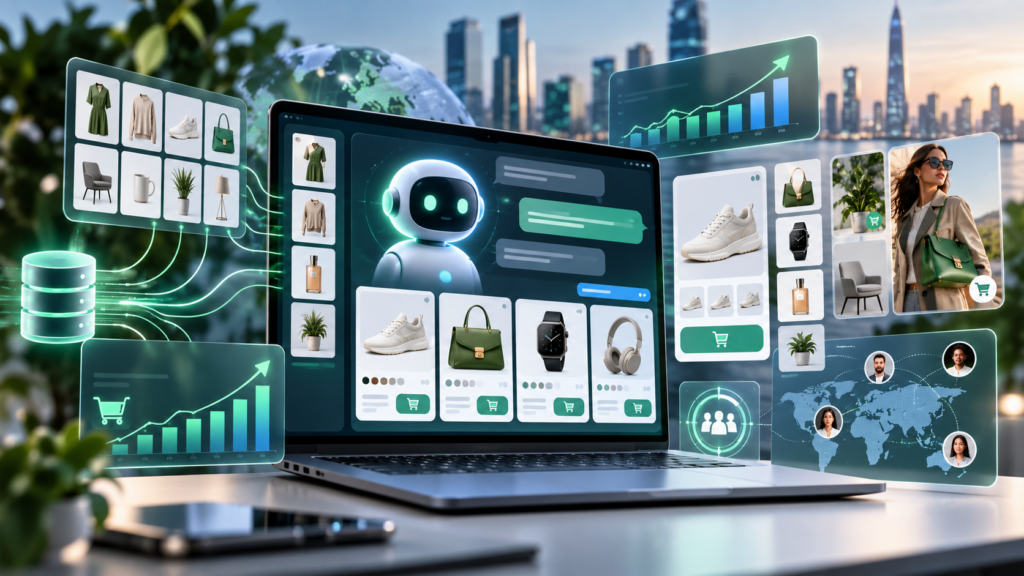
One of the most useful additions is product feed support. Retailers can now upload their entire product catalog into Ads Manager and build campaigns straight from it no more creating ads one product at a time.
A feed typically includes things like:
- Product name and image
- Regular price and sale price
- Stock availability
- Brand details
- The link to buy
- Other product info
If you’re running a store with hundreds or thousands of items, this saves a ton of manual work. It also keeps your ads accurate when a price changes or something goes out of stock, your feed updates it automatically.
Why this matters for shoppers using ChatGPT
People are increasingly turning to ChatGPT while shopping around asking things like “which laptop is good for video editing” or “what’s a good gift for someone who loves cooking.” These aren’t quick keyword searches; they’re detailed questions.
That gives advertisers a real chance to show relevant products right in the middle of that research phase before the shopper has even settled on a brand.
Shopping ads look better now too
ChatGPT’s shopping experience has become a lot more visual. Instead of plain text links, product ads can now show images, titles, star ratings, and prices much closer to what you’d see on Google Shopping or Instagram.
This is especially useful for categories like fashion, beauty, electronics, and home goods, where people want to actually see the product before clicking.
Conversion optimization: making ads work harder
Another major update is proper conversion optimization. Advertisers can now set up campaigns around a specific goal a purchase, a lead form, a sign-up and ChatGPT Ads will try to show the ad to people who are more likely to actually complete that action.
This is a shift away from just chasing clicks or impressions, and toward getting real business results.
oCPC: paying for clicks that are more likely to convert
There’s also a new bidding option called oCPC (conversion-optimized cost-per-click). Here, you still pay per click, but the system tries to prioritize clicks that are more likely to lead to a conversion not just any click.
This is very similar to what Google and Meta have been doing for years with automated bidding.
It can even factor in ad views, not just clicks
OpenAI has also added conversion tracking based on impressions meaning it can consider what happens after someone sees your ad, even if they didn’t click right away.
This matters because people often discover a brand on ChatGPT, keep researching, and come back later to actually buy. A simple “last click” model wouldn’t capture that whole journey, so this is a step toward better attribution.
Good tracking will be non-negotiable
None of this optimization works well without solid data. ChatGPT Ads reporting already covers the basics impressions, clicks, spend, CTR, CPC, CPM, and conversions and OpenAI has expanded its tracking tools, including a Pixel and a Conversions API.
So before jumping in, businesses need to make sure they’re tracking the right things:
For ecommerce: product views, add-to-carts, checkouts, purchases, revenue.
For service businesses: form fills, bookings, demo requests, calls, qualified leads.
Keywords are taking a back seat
Traditional PPC has always leaned heavily on keywords. But ChatGPT conversations carry way more context budget, location, preferences, concerns, what the person is already considering.
So instead of asking “which keywords should we bid on,” marketers will need to start asking things like:
- What problem does our product actually solve?
- What kind of conversation shows real buying intent?
- What info actually helps someone choose us?
It’s a different way of thinking about targeting altogether.
Clean product data will matter a lot
For ecommerce brands, having accurate, well-structured product feeds is going to matter more than ever. That means clear titles, good images, correct pricing, real-time stock info, and solid product descriptions. If your feed data is messy, your ads simply won’t perform as well this is already true for Google Shopping and Meta catalogs, and it’ll apply here too.
SEO, AI search, and paid ads are starting to blend together
For years, SEO and paid ads were treated as separate lanes. That line is getting blurry with AI. Brands now have to think about how they show up across regular search results, AI-generated answers, conversational platforms, and paid AI ads all at once.
This is exactly why AEO (Answer Engine Optimization) and GEO (Generative Engine Optimization) are becoming buzzwords. Brands that are well-optimized for AI discovery could end up winning across multiple channels, not just one.
A new channel worth watching
For ecommerce brands already running Google Shopping, Performance Max, Meta Advantage+, or Amazon Ads, ChatGPT Ads could become another channel to add to that mix.
What makes it different is timing ChatGPT often catches people earlier, while they’re still figuring out what they even want. That’s a real opportunity for newer or smaller brands to get noticed before the customer has already picked a favorite.
Ad copy needs to change too
Generic slogans probably won’t cut it here. Since people are having actual conversations, ads need to clearly say what the product does, who it’s for, what problem it solves, and why it’s worth considering. Specific, useful messaging will beat vague marketing-speak every time.
What should marketers actually do right now?
A few practical steps:
- Get your tracking and analytics in order first this is the foundation everything else depends on.
- Clean up your product feeds if you’re in ecommerce accurate, complete, and up to date.
- Think about the actual questions customers ask before buying, and make sure your content and ads answer them.
- Treat GEO/AEO and paid AI ads as part of the same overall AI visibility strategy, not separate efforts.
The bigger picture
ChatGPT Ads is still evolving, but the direction is pretty clear. Ads are moving into the middle of real conversations and research not just showing up after a keyword search or a social media scroll.
Product feeds make it ecommerce-friendly. Conversion optimization makes it useful for performance marketers. Better visuals make shopping easier. And stronger tracking means advertisers can finally tell if it’s actually working.
Going forward, the real competition in digital advertising might not be about who has the best keywords or the biggest audience it might be about who understands customer intent best, right inside these AI conversations.