
Quick Summary
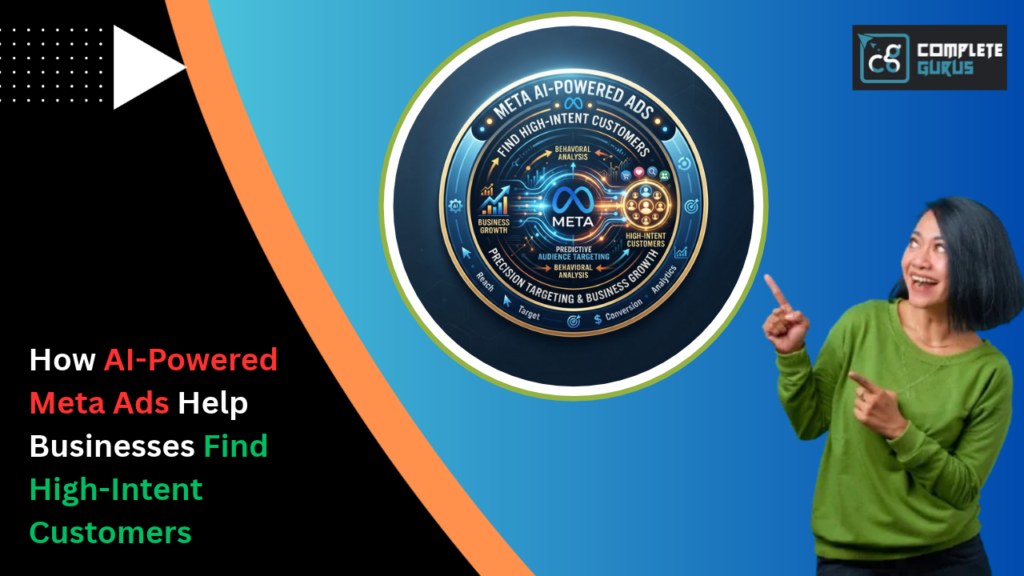
If you have ever put money into Facebook or Instagram ads and wondered why plenty of people clicked but hardly anyone bought, you are in good company. The problem is rarely the platform. It is usually how the platform is being guided. Meta’s AI has become remarkably good at spotting people who are likely to act, but it only learns from the signals, creativity and structure you hand it. This article walks through how that learning works, why intent matters more than reach, how to build campaigns that feed the system the right information, and what mistakes quietly drain budgets. You will also see how a specialist team like Complete Gurus approaches Meta Ads so that the algorithm works for your revenue and not just your impressions.
Why Clicks Alone Never Paid Anyone’s Bills
Let’s start with an uncomfortable truth. A click costs money, and a click from someone who was never going to buy costs the same as a click from someone with their card already in hand. Many business owners learn this the hard way, usually a few weeks into a campaign when the dashboard looks lively and the bank account does not.
High-intent customers are the people who are already leaning toward a decision. They have a problem, they have noticed your category, and something about your offer fits. A homeowner whose air conditioner has just died is high intent. So is a founder comparing three project management tools, or a shopper who has viewed the same pair of earrings four times this week. These people do not need a lecture on why your product exists. They need to see it at the right moment, in the right words, with an easy way to take the next step.
The challenge is that intent is invisible. Nobody walks around with a sign. What exists instead is a trail of behaviour: what someone watched, saved, searched, lingered on, and ignored. Reading that trail at scale is exactly where artificial intelligence earns its keep, and it is why Meta has steadily moved its advertising toward machine learning rather than manual audience picking.

How Meta’s AI Actually Spots a Likely Buyer
It helps to picture the system as a very attentive observer sitting across billions of daily interactions. Every time someone scrolls Instagram, taps a Facebook post, watches a Reel to the end, or buys something after clicking an ad, the platform notes a tiny piece of the puzzle. Individually those pieces mean little. Together they form patterns that predict what a person is likely to do next.
When you launch a campaign with a clear goal, such as purchases or qualified leads, the system uses those patterns to decide who sees your ad. It does not simply look for people who match a demographic description. It looks for people who behave like the ones who already converted. That distinction matters. A thirty-five-year-old woman in Texas might be perfect for your skincare brand, while another thirty-five-year-old woman in Texas never buys anything online. Demographics cannot tell them apart, but behaviour can.
This is also why the quality of your tracking is so important. If your pixel and conversion data are patchy, the AI is learning from a blurry photograph. If your data reports real purchases and real booked calls, the system sharpens quickly. In practical terms, a well-configured account teaches Meta what a valuable customer looks like, and then asks it to go find more of them.
The Quiet Shift From Targeting to Signals
Some years ago, advertisers prided themselves on stacking interests and building elaborate audience layers. Someone interested in yoga, aged 28 to 40, living near a particular city, and following three specific pages. It felt scientific. Today, that kind of tight control often works against you, because it limits the very pool the AI needs to learn from.
The modern approach leans on broader audiences combined with strong signals. Your signals are the conversion events you track, the customer lists you upload, the creative you test, and the engagement your ads earn. Instead of telling the platform exactly who to chase, you show it what success looks like and let it explore. Advertisers who cling to micro-targeting frequently find their costs creeping up, since a small audience gets saturated fast and the algorithm has little room to optimise.
That does not mean strategy disappears. It moves. The skill is no longer in guessing the perfect interest tag; it is in structuring campaigns, choosing the right optimisation event, protecting data quality, and feeding the system fresh creative. Those decisions are where an experienced media buyer separates themselves from someone who simply clicks the boost button.
Creative Is the Targeting You Can Control
Here is something that surprises many first-time advertisers: your ad itself acts as a filter. The image, the first line, the offer, the tone of voice all quietly tell the algorithm, and the human viewer, who this is for. An ad that speaks plainly to a specific problem attracts people who have that problem. A vague, glossy ad attracts casual scrollers.
Consider two ads for the same dental clinic. One says “Smile brighter with our premium services.” The other shows a short video of a dentist explaining how same-week emergency appointments work and what a root canal really feels like. The second ad will get fewer idle likes, but it will draw people who are actually in discomfort and ready to book. Meta’s AI notices who engages and who converts, then shows the ad to more people who resemble them.
Strong creative for high-intent audiences tends to share a few traits. It names a specific situation, it answers an obvious objection early, it shows proof such as real results or customer voices, and it makes the next step feel small and safe. Testing different angles matters too. One version might lead with price, another with speed, another with a founder’s story. The platform’s delivery system will reveal which message pulls in buyers, and that learning is often more valuable than the sales themselves.
Thinking in Funnels Instead of Single Ads
A person rarely goes from stranger to customer in one tap. They notice you, they think about it, they compare, they hesitate, and then they act. Good Meta campaigns respect that journey rather than shouting “buy now” at everyone.
At the top, cold prospecting introduces your brand to people the AI believes are likely to care. The content here should be useful or intriguing, not pushy. In the middle, warm audiences, meaning people who watched your videos, visited your site, or engaged with your page, see ads that deepen trust: reviews, comparisons, demonstrations, behind-the-scenes looks. At the bottom, retargeting reaches those who added something to a cart, started a form, or booked a consultation and then vanished.
This bottom layer is where high-intent customers are often hiding in plain sight. Someone who nearly bought and walked away is statistically far more valuable than a brand-new stranger. The Complete Gurus team has written in detail about this for specialised sectors, including how to retarget students who requested a free consultation but never enrolled and how to build a Facebook and Instagram funnel for USMLE prep companies. The lesson carries well beyond education: follow up with relevance, not repetition, and meet people exactly where they dropped off.
AI makes this layered approach more efficient. It can decide how often to show someone an ad, which version to serve, and when a person has seen enough. Your job is to supply the stages and the messages that make sense at each one.
Catalog Ads and the Power of Showing the Right Product
For online stores, one of the most direct ways Meta’s AI finds buyers is through dynamic product ads. Instead of you manually building an ad for every item, the system draws from your product catalog and shows each person the products they are most likely to want, often the very ones they browsed.
Imagine a shopper who spent a few minutes on a linen sofa on your site, left, and then opened Instagram that evening. A dynamic ad showing that same sofa, along with a couple of similar options, feels helpful rather than intrusive. The intent was already there; the ad simply closed the gap.
This format shines for Shopify stores and other catalog-heavy businesses, particularly in categories like fashion, jewelry, beauty, home decor and pet products, where people browse, compare and return several times before buying. Complete Gurus runs Meta Ads for Shopify stores and category-specific programs, such as Meta Ads for jewelry and Meta Ads for home decor, built around product margins, seasonal demand and revenue targets rather than vanity numbers. Catalog quality matters enormously here. Clean titles, accurate prices, sharp photos and correct stock information give the AI better material to match with shoppers.
Finding Qualified Leads When You Sell Services or B2B
Not everyone sells a product that ships in a box. If you run a clinic, a law practice, an HVAC company or a software firm, your “purchase” is a phone call, a form or a booked consultation. High intent here looks different, and so does the risk. It is dangerously easy to collect a pile of cheap leads that never answer the phone.
To avoid that, the campaign has to be taught what a good lead is. Instead of optimising for raw form fills, a smart setup can feed back information about which leads became qualified conversations or paying clients. Adding a few thoughtful screening questions to a lead form can also help, since a little friction filters out the merely curious. Instant forms that pre-fill contact details make it easy for the right person to raise their hand without leaving the app.
This is the philosophy behind how Complete Gurus handles lead generation: pipeline quality over lead volume, so your sales team talks to buyers rather than browsers. Whether you are a doctor looking for new patients, an HVAC company chasing local service calls, or a B2B firm trying to reach decision-makers, the same principle applies. Track cost per qualified lead, not just cost per lead, and the whole conversation about performance changes.
Mistakes That Quietly Burn Through Budgets
Even with powerful AI doing the heavy lifting, plenty of accounts underperform, and the causes tend to repeat. The first is changing things too often. Every major edit can send a campaign back into a learning phase, and impatient tinkering prevents the system from settling. Give campaigns enough time and enough conversions to learn before judging them.
The second is feeding the machine weak data. Broken tracking, duplicate events, or optimising for an action that does not reflect real value will train the AI to find the wrong people with great efficiency. A campaign that optimises for page views will happily deliver page views.
Third, many advertisers run a single creative and expect miracles. Audiences tire of the same ad, frequency climbs, and results sag. Fresh variations keep the algorithm supplied with new ways to connect. Finally, there is the gap between click and conversion. If your landing page loads slowly, asks for too much, or does not match the promise in the ad, even perfectly targeted traffic will leak away. The ad gets the credit when it works and the blame when it does not, but the page is often the real culprit.
Measuring What Actually Matters
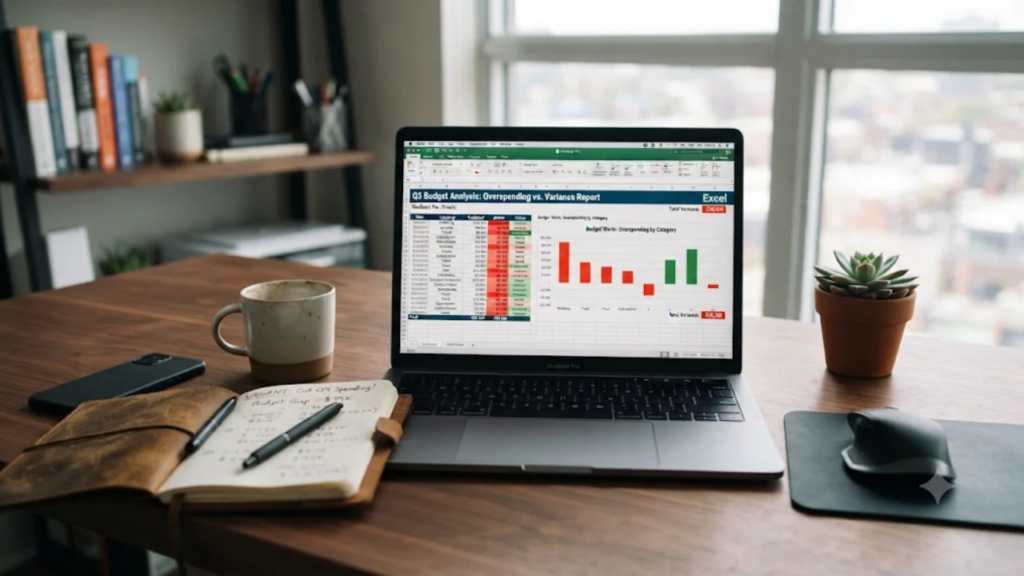
If intent is the goal, your reporting should reflect it. Impressions and likes make for pleasant screenshots but poor business decisions. The numbers worth watching are return on ad spend, cost per purchase or cost per qualified lead, conversion rate after the click, and how performance changes over weeks rather than hours.
It also helps to remember that Meta’s reporting is only one view. Customers may see an ad on their phone and buy later on a laptop, or call after seeing a retargeting reminder. Looking at overall revenue trends alongside platform numbers gives a steadier picture. Honest reporting, in plain language, makes it much easier to decide where to spend more and where to stop.
Weekly reviews work well because they are frequent enough to catch problems and spaced enough to let the algorithm do its job. A transparent dashboard that shows spend, revenue, ROAS and conversion data without jargon keeps everyone, from the founder to the marketing assistant, looking at the same truth.
What to Look for in a Meta Ads Partner
Since the platform now rewards structure, data discipline and creative testing, choosing who runs your campaigns is a bigger decision than it used to be. A few questions are worth asking before you sign anything. Will one dedicated strategist own your account, or will it pass between juniors? Will you see clear reporting you can understand? Do they build campaigns around your margins and goals, or copy a template? And will they stand behind the results?
That last point separates serious partners from the rest. Complete Gurus, for example, backs its work with a 90-day guarantee: a minimum 25 percent improvement in return on ad spend and a 20 percent reduction in cost per sale, with continued management at no extra charge until those benchmarks are reached. Whatever agency you consider, look for that kind of accountability in writing.
It is also worth comparing the options honestly. Building an in-house team can take weeks to hire and train and usually means a significant monthly cost, often with expertise limited to one or two channels. Freelancers can be fast and flexible, but quality and ownership vary widely. An agency with a transparent retainer, full-funnel experience and a written commitment can offer a different balance, particularly for businesses that want to focus on running the company rather than the ad account.
Suggested Reading: How to Create Facebook Ad Campaigns That Reach Customers Ready to Buy
Conclusion
AI has changed Meta advertising from a game of guessing audiences into a game of teaching a very capable system what a valuable customer looks like. When your tracking is clean, your creative speaks to real problems, your funnel respects how people make decisions, and your measurement focuses on revenue rather than noise, the platform becomes remarkably good at putting your offer in front of people who are ready to act. The businesses that win are not the ones with the biggest budgets; they are the ones that give the AI the best information and the clearest direction.
If you would rather have experienced hands guiding that process, Complete Gurus is worth a conversation. It is a performance marketing agency with more than 13 years in Google Ads and Meta Ads, managing over 3 million dollars in annual ad spend for eCommerce, D2C and B2B brands across the US, UK and Australia. Share your business details, receive a tailored growth plan within 48 hours, and work with a dedicated strategist who reports in plain English every week. You can request a free Facebook Ads audit to see where your current campaigns are losing money, explore the Meta Ads services, or simply start at https://completegurus.com/ and book a strategy call.

Ashutosh Mishra is an AI Visibility & Performance Marketing Expert with 14+ years of experience helping businesses grow through AI Visibility (AEO/GEO), Google Ads, Meta Ads, and SEO. He partners with founders and business leaders to build data-driven growth strategies that increase visibility, improve marketing performance, and help businesses get discovered, trusted, and recommended in the age of AI.