
Summary
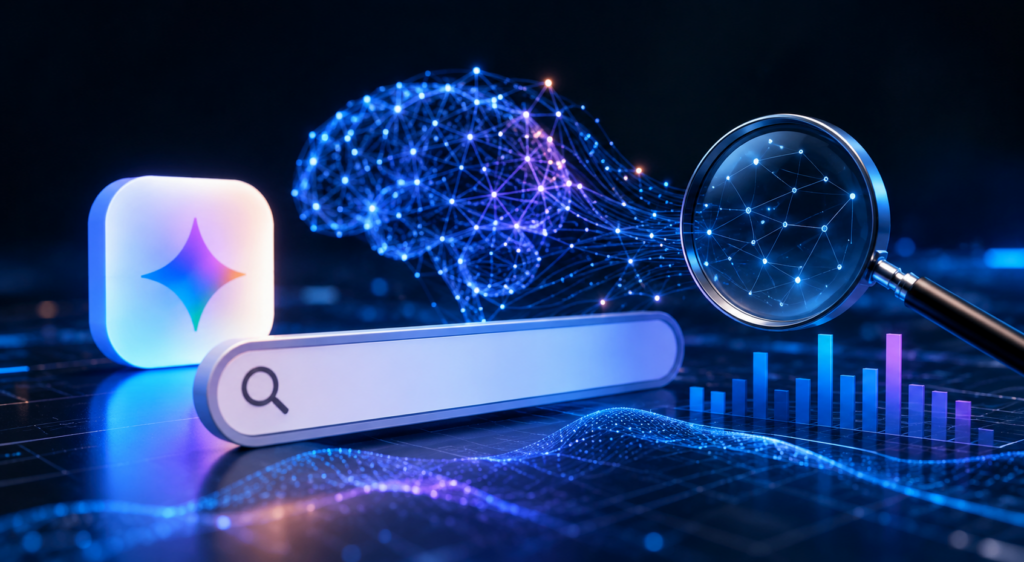
Google AI Mode is increasingly citing its own AI-generated responses and summaries instead of relying solely on traditional web pages, marking another shift in how search results are delivered. For SEO professionals and website owners, this highlights the growing importance of creating original, trustworthy, and well-structured content that AI can confidently reference. Rather than focusing only on ranking in classic search results, brands now need to build authority, demonstrate expertise, and publish genuinely helpful information if they want to remain visible in AI-powered search experiences.
Google’s AI-powered search isn’t just showing a list of blue links anymore. It writes out full answers, compares things for you, sums up topics, and even suggests what to ask next. But here’s something SEO folks have started noticing lately: Google AI Mode seems to be leaning more and more on Google’s own platforms when it picks sources for these answers.
That raises a real question for anyone running a website or managing a brand’s online presence:
If Google’s AI keeps pulling from Google’s own products, what does that do to your traffic and visibility?
There’s no one-line answer here. Sometimes these self-citations genuinely make the answer more useful. But they can also mean less room for independent sites to get seen. Either way, it’s pushing businesses to rethink how they write content, structure it, and build authority.
First, What Is Google AI Mode?
Think of it as Google’s attempt to let you have a conversation with search instead of just typing keywords. You can ask longer, messier questions, follow up on what it just told you, and get an answer pulled together from several places at once.
So instead of typing “best running shoes,” you could ask something like:
“Which running shoes work for beginners with flat feet, and what should I look at before buying?”
AI Mode breaks that down, goes and finds relevant info, and stitches together one answer often with product details, images, links, and a few follow-up questions thrown in.
This is a real shift. Old-school SEO was mostly about getting your page to rank. Now, AI search optimization is also about whether your content is clear and structured enough that the AI actually picks it as a source.
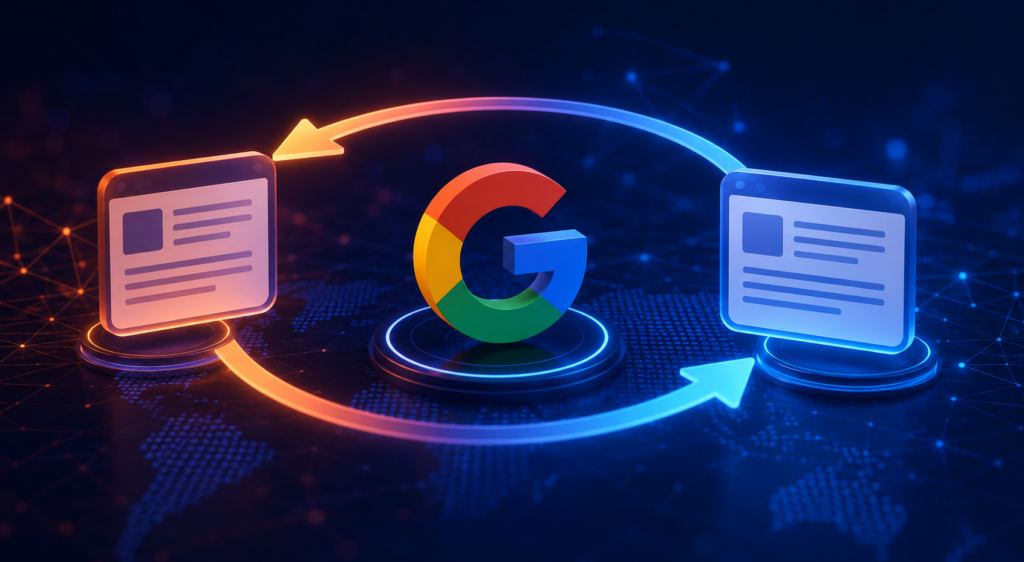
So What Does “Google Citing Google” Actually Mean?
Google isn’t just a search engine it owns a huge stack of products: Maps, YouTube, Business Profiles, Shopping, Images, Flights, Hotels, News, Finance, Books, Play. When AI Mode answers a question, it often pulls from one or more of these.
A few examples:
- Ask about a local shop, and you’ll likely see Maps or a Business Profile show up.
- Ask about a product, and Shopping data comes in.
- Ask about “how to,” and a YouTube video might answer it.
- Ask about travel, and Flights or Hotels data appears.
- Ask about current events, and Google News surfaces.
None of this is new by itself Google properties have always shown up in search. What’s different is that AI Mode answers are becoming the first (and sometimes only) thing people see before they’d normally click through to a website. If Google keeps favoring its own stuff in these answers, that’s fewer clicks for everyone else.
Why Would Google Cite Its Own Properties More?
A few likely reasons.
1. Google already has the data
Maps has business hours, reviews, addresses, directions. Shopping has prices, availability, product images. All of it lives inside Google’s own systems already, so it’s just easier for the AI to grab and use.
2. Structured data is simpler for AI to read
AI works better with information that’s neatly organized think product name, price, rating, availability, all clearly labeled rather than a wall of text. Google’s own products are built that way by default.
The takeaway for anyone writing content: don’t just write long paragraphs. Break things into headings, tables, FAQs, and clear product specs. Give the AI something easy to parse.
3. Freshness matters
For things like store hours, prices, or news, Google’s own platforms tend to get updated constantly by business owners, merchants, and creators. That freshness makes them attractive sources for time-sensitive questions.
4. Google’s ecosystem covers almost every kind of search
| What you’re searching for | Google property that might answer it |
| A local business | Google Maps |
| A tutorial | YouTube |
| Product comparison | Google Shopping |
| Travel options | Flights / Hotels |
| Recent news | Google News |
| Company info | Google’s knowledge panels |
| Images | Google Images |
Since AI Mode tries to answer everything, Google’s own products naturally show up across a huge range of queries.
5. It’s rarely just one source
One important thing a Google citation in an answer doesn’t automatically mean your site got shut out. AI Mode often blends multiple sources: an official company site, a government page, a trusted publisher, a niche blog, and a Google property, all in the same answer. The mix changes depending on the query, so it’s not accurate to assume every Google citation is a loss for independent sites.
Is There Actual Data On This?
Not really not a solid public number showing exactly what percentage of AI Mode citations come from Google itself. Citation patterns shift too much based on the query, your location, the topic, and how fresh the data needs to be. So be wary of anyone claiming “Google cites itself in most answers” without solid backing.
What’s more useful than a global percentage is tracking your own space your industry, your competitors, your keywords, and how your own site is showing up (or not).

How This Changes SEO
Rankings alone won’t tell the full story anymore
A page can rank #1 in classic search and still barely show up in AI-generated answers. Meanwhile, a page ranked lower could get cited if it answers the question clearly. That means SEO reporting needs to expand beyond rankings and clicks you’ll want to track AI citation visibility, brand mentions inside AI answers, and how much traffic is actually coming from AI search.
More “zero-click” searches for basic questions
If someone asks “what is performance marketing?” and AI Mode gives a full answer right there, they may never click through. This doesn’t mean basic content is worthless it still builds authority and trust but it does mean you need to offer something beyond a textbook definition if you want the click.
Brand visibility matters even without the click
Even if someone doesn’t visit your site, seeing your brand name inside an AI answer still counts for something. Brands that consistently show up as reliable, knowledgeable sources benefit here which pulls SEO closer to brand-building and reputation work than ever before.
Original content gets more valuable, generic content gets replaced
AI is very good at summarizing stuff that’s already been said a thousand times elsewhere. A generic post titled “What Is D2C Marketing?” is easy for AI to replace. But something like “How a D2C Brand Cut Customer Acquisition Cost by 28%: A Campaign Breakdown” that’s original, specific, and much harder to summarize away.
Quality of traffic beats quantity
AI search might eat into casual, low-intent clicks while sending you more high-intent visitors for complex decisions. Someone asking “which Shopify strategy works for a skincare brand with a tight budget” is a lot closer to buying than someone asking “what is Shopify.” So track leads, conversions, and revenue not just total traffic because a drop in raw numbers doesn’t necessarily mean a drop in business.
What Should You Actually Do About This?
Don’t try to out-Google Google. Instead, make your content something AI systems can easily understand and trust enough to cite.
Answer the question early. Don’t bury the definition three paragraphs in lead with a clear, direct answer, then expand with examples and detail.
Structure everything. Headings, short paragraphs, bullet points, tables, FAQs, step-by-step breakdowns. Easy for humans to skim, easy for AI to parse.
Use structured data properly. Schema markup (Organization, Product, FAQPage, Review, etc.) but only where it accurately reflects your actual content, not as a trick to game visibility.
Build stuff competitors can’t copy. Original research, real campaign numbers, customer surveys, internal benchmarks, product testing. This is what actually makes you a source instead of just another rehash.
Keep your business info current. Name, address, phone number, hours, prices especially important for local businesses since AI local answers lean heavily on Google Business Profile data.
Get mentioned beyond your own site. Industry publications, credible media coverage, expert interviews, genuine guest posts, real customer reviews. Build actual authority, not link-farm backlinks.
For E-commerce and Shopify Stores
Product discovery is shifting too. People are asking things like “which cotton bedsheet works best in hot weather” or “compare king-size bedsheets under ₹X.” To stay visible, product pages need to be genuinely detailed clear titles, real specs, sizing, materials, care instructions, pricing, original photos, and actual customer reviews. Shopify stores especially need to keep product feeds accurate and consistent everywhere they appear.
For Performance Marketing
The customer journey is getting longer and messier. Someone might research and compare through AI Mode first, then search for your brand by name later, then convert through an ad. That means marketers need to watch branded search growth, assisted conversions, and how these newer, longer journeys actually lead to a sale not just look at last-click numbers.
Where SEO Is Headed
The old path was simple: Keywords → Rankings → Clicks.
The new path looks more like: Questions → AI Understanding → Getting Picked As A Source → Brand Visibility → Clicks or Conversions.
Getting there takes a mix of solid technical SEO, genuinely helpful content, entity and structured data optimization, real brand authority, and original research not just chasing keywords.
Bottom Line
Google leaning on its own platforms inside AI Mode is a real and important shift, mostly because Google’s own data is structured, current, and easy for AI to use. But that doesn’t mean independent websites are out of the game.
What you can offer that Google’s own properties usually can’t: original research, real expert opinions, detailed case studies, hands-on product experience, and genuinely unique insight. Rankings alone aren’t the whole story anymore the goal now is becoming a source that both people and AI systems trust enough to reference.