


Quick Summary
Google Ads retargeting helps eCommerce businesses reconnect with visitors who showed interest but did not complete a purchase. By keeping relevant products and offers visible across the customer journey, retargeting can improve brand recall, increase conversion opportunities and make better use of advertising spend. The blog covers key retargeting formats including standard remarketing, dynamic remarketing, RLSA and video remarketing.
For stronger results, eCommerce brands should segment audiences based on behaviour, personalise ads, control ad frequency, use clear CTAs and test incentives such as discounts or free shipping. Combining Google Ads retargeting with email marketing and social media advertising can also help create a more consistent multi-channel strategy that brings high-intent users back to complete their purchase.
Introduction:
In the competitive world of eCommerce, attracting new customers is essential. However, the true power of your digital marketing efforts lies in turning those initial visitors into loyal customers. This is where Google Ads retargeting comes into play. Retargeting is a powerful strategy that allows you to reconnect with website visitors who didn’t convert the first time. By strategically engaging these potential customers with relevant ads, you can increase conversions and maximize your ad spend. In this blog, we’ll explore the various Google Ads retargeting tactics that every eCommerce business should be using to boost their marketing efforts.
What Is Retargeting?
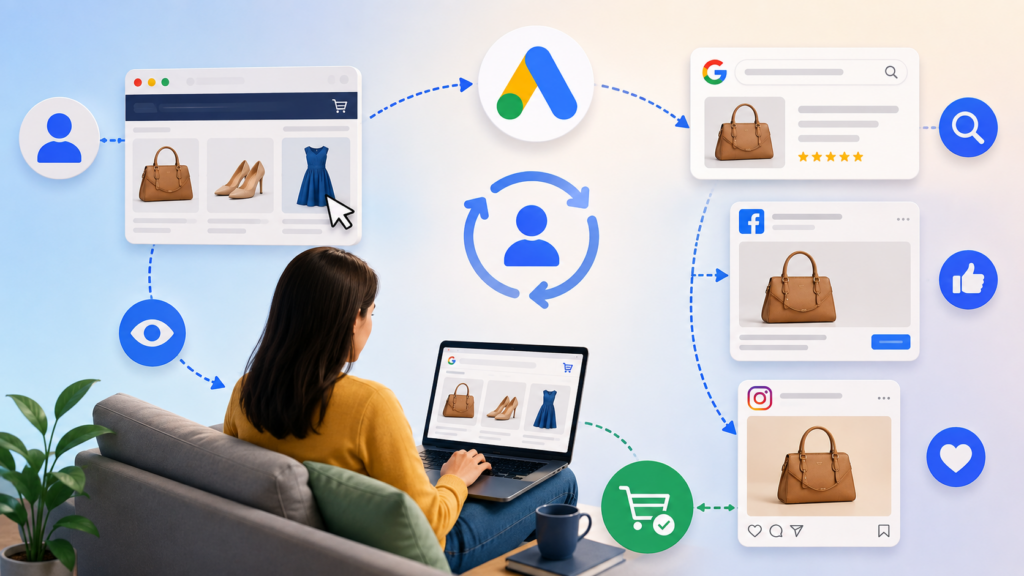
Retargeting, also known as remarketing, is a form of online advertising that targets individuals who have previously interacted with your website but didn’t make a purchase or complete a desired action. The concept revolves around showing tailored ads to those users as they browse other websites or use social media platforms. This helps remind them of the product or service they showed interest in, nudging them toward making a purchase.
Through Google Ads retargeting, businesses can follow potential customers across the web, increasing the chances of conversion by keeping the brand and products at the forefront of their minds.
Why Is Retargeting Important for ECommerce?
In the world of eCommerce, conversion rates are critical. Studies show that most website visitors do not make a purchase on their first visit. However, retargeting can significantly improve your chances of conversion. According to Google, retargeted visitors are 70% more likely to convert. This makes retargeting a crucial tactic for eCommerce businesses aiming to maximize their return on investment (ROI) from Google Ads campaigns.
Some of the key benefits of Google Ads retargeting include:
- Increased conversion rates: Re-engaging users who have shown interest in your products or services increases the likelihood of them completing a purchase.
- Brand recall: Retargeting keeps your brand visible to potential customers, reminding them of your offerings as they browse other websites.
- Cost-effectiveness: Retargeting ads often have a lower cost per click (CPC) than other forms of advertising because they target a warm audience.
Understanding Google Ads Retargeting for ECommerce
Google Ads offers several retargeting options that can help businesses achieve their goals. These include:
- Standard Remarketing:
This type of retargeting displays ads to users who have previously visited your website. For example, if someone added an item to their shopping cart but left without completing the purchase, you can show them ads for that specific item as they browse other sites. - Dynamic Remarketing:
Dynamic remarketing takes standard remarketing a step further by showing personalized ads based on the specific products or pages a user viewed. This allows you to serve highly relevant ads that are tailored to the individual’s interests. - Remarketing Lists for Search Ads (RLSA):
RLSA allows you to target users who have previously visited your website when they perform a related search on Google. This strategy allows you to bid more aggressively on search terms that are more likely to result in conversions from users who have shown interest in your business. - Video Remarketing:
With video remarketing, you can engage users who have interacted with your videos or YouTube channel. By showing them ads on YouTube or across other websites, you can encourage them to revisit your website and take action.
5 Winning Strategies for Scaling Your ECommerce Store with Meta Ads
 Effective Retargeting Google Ads Tactics for ECommerce
Now that we understand the types of retargeting available, let’s dive into the Google Ads tactics you should implement to maximize the effectiveness of your retargeting campaigns. Whether you’re just getting started with Google Ads or looking to optimize your existing efforts, these tactics will help boost your eCommerce success.
1. Segment Your Audience
Not all visitors to your website are the same. Some may have viewed a specific product, while others may have browsed a category page. Segmenting your audience based on their behavior allows you to serve more relevant ads.
For example:
- Show ads to users who abandoned their shopping carts.
- Target users who visited high-conversion pages (like product pages) but didn’t complete a purchase.
- Focus on users who spent more time on your website but didn’t make a purchase.
By segmenting your audience, you can tailor your messaging to speak directly to their interests, increasing the likelihood of conversion.
2. Personalize Your Ads
With dynamic remarketing, you can automatically generate personalized ads that display the exact products a user viewed. Personalized ads are more likely to catch the attention of potential customers and encourage them to return to your website to complete their purchases.
For example, if a user viewed a specific pair of shoes but didn’t buy them, your retargeting ads could display those same shoes along with a special offer or reminder of why they’re a perfect choice.
3. Set Up Frequency Caps
One mistake many businesses make when running retargeting campaigns is overwhelming their audience with too many ads. Frequency capping allows you to limit the number of times your ads are shown to a single user over a specific period. This prevents ad fatigue and ensures that your ads remain effective without being annoying.
A good rule of thumb is to show your retargeting ads no more than 3-5 times per week per user.
4. Use Clear and Compelling Call-to-Actions (CTAs)
The goal of retargeting ads is to encourage users to return to your website and take action. Therefore, it’s important to include a clear and compelling call-to-action (CTA) in your ads. Whether it’s a “Shop Now” button or a “Complete Your Purchase” message, make sure your CTA stands out and entices users to click on the ad.
5. Offer Exclusive Discounts or Incentives
To increase the likelihood of conversion, consider offering exclusive discounts or incentives in your retargeting ads. For example, you could offer a time-limited discount for visitors who abandoned their cart or a free shipping promotion to entice them to return and complete their purchase.
Integrating Retargeting with Other Marketing Strategies
While Google Ads retargeting is powerful on its own, it’s even more effective when combined with other digital marketing strategies. For example:
- Email Marketing: Combine retargeting with email marketing to re-engage users who abandoned their carts. Send them a reminder email with a link to their abandoned cart, and follow it up with a retargeting ad to encourage them to complete the purchase.
- Social Media Advertising: Retargeting can also be used on social media platforms such as Facebook and Instagram. By combining social media retargeting with Google Ads, you can reach potential customers across multiple platforms, increasing your chances of conversion.
If you’re unsure how to integrate these strategies into your business, consider consulting with digital marketers who specialize in retargeting campaigns.
Unlocking ECommerce Success: How to Maximize Your ROI with Google Ads
Final Thoughts: Maximize Your ROI with Retargeting
Google Ads retargeting is an essential tactic for any eCommerce business looking to increase conversions and maximize the effectiveness of their ad spend. By leveraging the power of retargeting with strategies such as dynamic remarketing, audience segmentation, and personalized ads, you can boost your chances of turning website visitors into loyal customers.
If you need assistance with setting up or optimizing your Google Ads campaigns, you can hire a developer or hire digital marketers from Complete Gurus who can help you navigate the complexities of online advertising. For businesses looking to enhance their website’s user experience, hiring a professional designer can make all the difference in conversion rates.
Ready to take your eCommerce business to the next level with retargeting? Contact us today at Complete Gurus for a consultation, and we’ll help you develop a tailored strategy that drives real results. Don’t forget to explore our comprehensive accounting services to streamline your financial management as you grow your business.

Ashutosh Mishra is an AI Visibility & Performance Marketing Expert with 14+ years of experience helping businesses grow through AI Visibility (AEO/GEO), Google Ads, Meta Ads, and SEO. He partners with founders and business leaders to build data-driven growth strategies that increase visibility, improve marketing performance, and help businesses get discovered, trusted, and recommended in the age of AI.