

Quick Summary
This blog explains how Amazon SEO helped a product achieve page-one rankings organically without relying heavily on paid advertising. The strategy focused on understanding buyer intent, researching high-converting long-tail keywords, optimising titles, bullet points, descriptions and backend search terms, and creating compelling listings with strong images and customer-focused content.
It also highlights the importance of conversion rates, positive customer reviews, competitor monitoring, analytics, seasonal optimisation and continuous improvement. By consistently refining these areas over time, the product achieved sustainable page-one visibility for multiple high-intent keywords, generating sales without ongoing advertising costs.
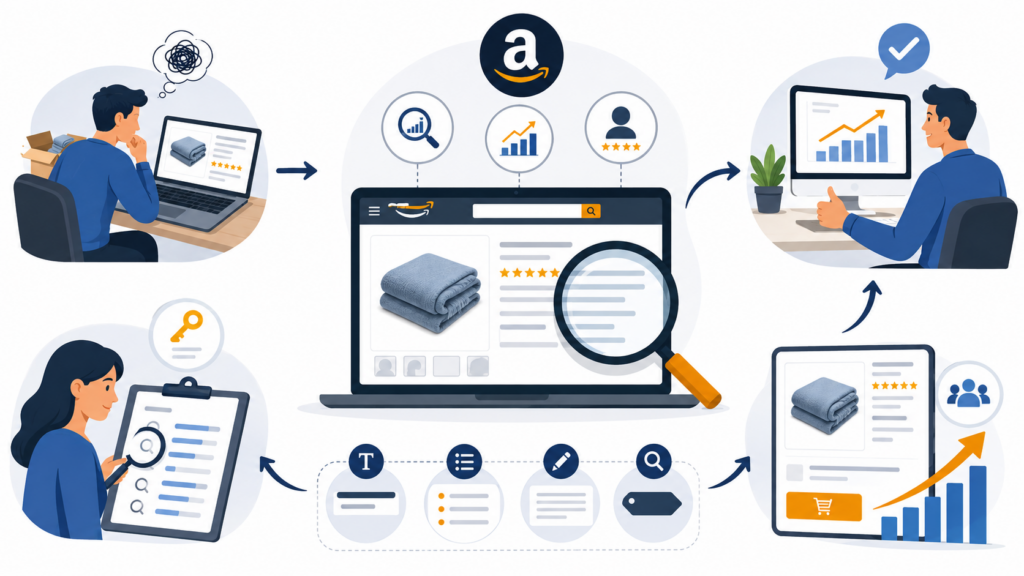
When I first launched my product on Amazon, I was excited but nervous. I had invested time, energy, and resources into creating something I genuinely believed in, but as many sellers know, simply listing a product isn’t enough. I quickly realized that the marketplace was saturated, competitive, and constantly shifting. At first, I tried boosting my visibility with small ad campaigns, but the returns were inconsistent, and the costs added up faster than expected. That’s when I turned my attention to Amazon SEO, a strategy that transformed my product’s performance entirely.
Understanding the Power of Amazon SEO
Amazon SEO isn’t just about sprinkling keywords into your listing. It’s about understanding the algorithm, known as A9, which determines how products are ranked on search results. The algorithm considers relevance, performance, and customer satisfaction. By optimizing for these factors, I could naturally elevate my product’s visibility, reaching the right audience without spending heavily on ads.
I started by analyzing my target audience. Who were they? What were they searching for? Which products were they comparing mine to? Complete Gurus had insightful resources on understanding market trends and search behavior, which helped me refine my approach.
Keyword Optimization: The Heart of Amazon SEO
The first and most crucial step was identifying the right keywords. I used tools suggested by Complete Gurus to find high-volume, low-competition terms. Instead of going for generic phrases, I focused on long-tail keywords that were specific to my niche. For instance, rather than “baby blanket,” I used “ultra-soft organic baby blanket for sensitive skin.” This specificity attracted buyers who knew exactly what they wanted.
Once I had my list, I carefully integrated these keywords into my product title, bullet points, description, and backend search terms. The goal was to appear naturally in search results, ensuring that both the algorithm and customers found my listing relevant.
Crafting a Listing That Converts
Optimizing for Amazon SEO isn’t just about keywords, it’s about conversion. Complete Gurus emphasizes that relevance and performance go hand in hand. Even if your product appears on page one, poor images or unclear descriptions can hurt your ranking due to low conversion rates.
I invested time in professional images, showing the product from multiple angles and highlighting key features. I wrote compelling bullet points, focusing on benefits rather than just features. Customer-focused descriptions created trust, making potential buyers more likely to purchase. Over time, higher conversions signaled to Amazon that my product was valuable, further boosting its ranking.
The Role of Customer Reviews and Engagement
Reviews are a crucial factor in Amazon SEO. I encouraged satisfied customers to leave honest feedback, making sure to engage politely with every review. Responding to concerns promptly and addressing issues publicly built trust. Complete Gurus highlighted that products with consistent, positive reviews tend to climb search rankings faster because Amazon prioritizes products that customers favor.
Additionally, I monitored review patterns to identify areas of improvement. If multiple customers mentioned a similar issue, I would address it either in product enhancements or in listing clarifications. This proactive approach improved satisfaction and kept negative reviews from piling up.
How Amazon SEO Helped My Product Rank on Page 1 Without Ads
When I first launched my product on Amazon, I was both excited and nervous. After months of research, preparation, and sleepless nights perfecting every detail, it finally went live. Yet, excitement quickly turned to frustration. Despite having a high-quality product, it was buried under thousands of listings, barely visible to potential buyers. I tried using Amazon ads initially, thinking that spending money would solve the visibility problem. But the cost was high, and the returns were inconsistent. That’s when I discovered the real game-changer: Amazon SEO.
Amazon SEO, unlike ads, allowed my product to gain organic traction. It required effort, strategy, and patience, but once implemented correctly, it propelled my product to page one of search results without spending a dime on advertising. Through trial, analysis, and learning from resources like Complete Gurus, I discovered strategies that transformed the trajectory of my Amazon business.
Understanding the Power of Amazon SEO
Amazon SEO is much more than keyword stuffing. It’s about understanding the A9 algorithm that governs search rankings. This algorithm evaluates relevance, performance, and customer satisfaction. Optimizing your listing for these factors ensures it is not just discoverable but also appealing to buyers.
Initially, I spent time analyzing my target audience. Who were they? What problems were they looking to solve? What products were they comparing? Complete Gurus helped me understand how buyers think and behave on Amazon. It highlighted the importance of understanding intent, not just traffic. A product with high traffic but low conversions would never sustain a top ranking. SEO on Amazon is holistic; it’s about attracting the right buyer and guiding them to make a purchase seamlessly.

Keyword Optimization: The Heart of Amazon SEO
The foundation of Amazon SEO is keywords. But the process isn’t as simple as choosing the most popular terms. I needed a strategic approach. Complete Gurus provided insights into identifying long-tail, high-converting keywords. Instead of targeting “baby blanket,” which was highly competitive, I optimized for “ultra-soft organic baby blanket for sensitive skin.” These long-tail phrases may have lower search volumes, but the intent is clear, and buyers are more likely to convert.
Keyword placement became my next focus. Titles, bullet points, product descriptions, and backend search terms were all optimized with a careful balance of relevance and readability. I avoided keyword stuffing and focused on natural phrasing that resonated with buyers. This approach ensured that the algorithm recognized my product as relevant, while the listing still felt human and persuasive to potential customers.
Crafting a Listing That Converts
Amazon SEO is about more than visibility, it’s about conversion. Even with perfect keywords, poor images or unclear descriptions can prevent buyers from clicking “Add to Cart.” Complete Gurus emphasized that conversion rates directly impact search rankings.
I invested in professional images showcasing the product from multiple angles, highlighting unique features and benefits. Each image told a story: how the product could make life easier, more comfortable, or more enjoyable. My bullet points focused on benefits rather than just features. Instead of saying “made of cotton,” I wrote “ultra-soft cotton that keeps your baby comfortable all day.” This subtle shift in language created emotional appeal and increased conversion rates.
Descriptions were written in a conversational tone, anticipating questions and objections. I painted a clear picture of the product in use, helping buyers visualize themselves benefiting from it. By combining keyword relevance with compelling content, my listing became irresistible to both Amazon’s algorithm and customers.
The Role of Customer Reviews and Engagement
Reviews are a critical component of Amazon SEO. Products with consistent, positive reviews tend to rank higher because Amazon prioritizes listings that customers favor. I encouraged satisfied buyers to leave honest feedback and made sure to engage politely with each review. Responding to questions, thanking customers, and addressing concerns publicly built trust.
Complete Gurus highlighted the importance of analyzing review trends. If multiple customers mentioned a similar issue, I would either update the product or clarify the listing. This proactive approach not only reduced negative reviews but also demonstrated to potential buyers and to Amazon that my product met customer expectations. Over time, the accumulation of positive reviews contributed significantly to my page-one ranking.
Backend Search Terms: The Hidden SEO Weapon
Most sellers overlook the power of backend search terms. These hidden fields allow you to include relevant keywords that may not fit naturally in your visible listing. I researched common variations, synonyms, and misspellings of my primary keywords. Including them in the backend increased the likelihood of my product appearing in a wider range of searches.
Complete Gurus taught me to avoid repeating keywords in the backend that were already in my title or description. Instead, this space should target additional phrases that buyers might use. Over time, this strategy expanded my listing’s reach without cluttering the visible content or confusing potential customers.
Monitoring Competitors and Adapting
Amazon is dynamic. What works today might not work tomorrow. I made it a habit to monitor competitors examining their listings, keywords, and customer feedback. This wasn’t about copying; it was about understanding market trends and adapting accordingly.
If a competitor introduced a new feature that resonated with buyers, I would evaluate whether it made sense to highlight similar benefits or clarify my unique selling points. Complete Gurus stressed that proactive adaptation is key to maintaining page-one rankings. SEO isn’t a set-and-forget process; it’s continuous optimization and refinement.
Leveraging Analytics for Growth
Amazon provides a wealth of data if you know how to interpret it. I tracked metrics like conversion rates, click-through rates, and keyword performance. By analyzing which search terms led to purchases, I could optimize my listing further.
Complete Gurus suggested setting small, incremental goals rather than aiming for overnight success. Every tweak, every keyword adjustment, and every updated image contributed to a cumulative improvement in ranking. The data-driven approach allowed me to make informed decisions rather than relying on guesswork.
Seasonal Optimization and Trend Awareness
Some products perform better during specific seasons or trends. Understanding these patterns allowed me to anticipate changes in buyer behavior. For instance, my product saw spikes during holiday seasons, so I adjusted listings to include seasonal keywords and refreshed images to align with current trends.
Complete Gurus emphasized the importance of staying relevant. Updating listings regularly signals to Amazon that the product is active, responsive, and trustworthy factors that positively influence ranking.
The Long-Term Benefits of Amazon SEO
The most rewarding aspect of organic Amazon SEO is sustainability. Unlike ads, which stop driving traffic once your budget runs out, SEO continues to work for your product over time. The higher your product ranks and the more reviews you accumulate, the easier it becomes to maintain visibility.
I found that after six months of consistent optimization, my product consistently appeared on page one for multiple high-intent keywords. This visibility translated to higher sales without additional advertising costs. Organic rankings built credibility, trust, and brand recognition, creating a self-reinforcing cycle of success.
Suggested Reading: Why Travel Agencies Must Use PPC to Get Real Bookings
Conclusion
Amazon SEO transformed the way I approached selling online. By focusing on relevance, conversion, reviews, backend optimization, and continuous improvement, I was able to achieve page-one rankings without spending heavily on ads. It required patience, strategy, and a customer-centric mindset but the results were worth every effort.
For anyone struggling to gain visibility on Amazon, the insights and tools available at Complete Gurus can provide a roadmap for success. Their guidance on keyword research, listing optimization, and performance monitoring equips sellers with actionable strategies that produce tangible results. Thanks to their resources, my journey from frustration to page-one ranking became achievable, proving that with the right approach, organic Amazon SEO is a powerful tool for any seller.
Learn more about these strategies at Complete Gurus.

Ashutosh Mishra is an AI Visibility & Performance Marketing Expert with 14+ years of experience helping businesses grow through AI Visibility (AEO/GEO), Google Ads, Meta Ads, and SEO. He partners with founders and business leaders to build data-driven growth strategies that increase visibility, improve marketing performance, and help businesses get discovered, trusted, and recommended in the age of AI.