

Quick Summary:
If you’re running or working with a medical test prep business whether it’s NEET coaching, USMLE prep, MCAT tutoring, or nursing entrance exam training you already know that getting someone to click your ad is the easy part. The real challenge is figuring out what happens after that click. Did they fill out a form? Did they call? Did they ghost you for three weeks and then suddenly enroll after seeing a retargeting ad? This blog walks you through the entire journey of tracking a lead from that very first click all the way to a paid enrollment, explaining the tools, the logic, and the small details most people overlook. By the end, you’ll understand exactly why so many test prep businesses waste money on marketing they can’t actually measure, and what it takes to fix that.
Let’s be honest for a second. Marketing for medical test prep isn’t like selling shoes or subscription boxes. A student deciding to enroll in a USMLE Step 1 course or a NEET coaching program doesn’t make that decision in five minutes. They research. They compare. They ask friends, check Reddit threads, watch YouTube reviews, maybe attend a free demo class, and only then sometimes weeks later do they actually pay. Somewhere in that long, winding path, most businesses lose track of who came from where. And when you can’t trace a lead back to its source, you end up guessing which ads are working and which ones are quietly burning your budget.
This is exactly why lead tracking, done properly, isn’t a “nice to have” for education businesses. It’s the difference between scaling with confidence and throwing money at ad platforms hoping something sticks.
Why Medical Test Prep Marketing Is Harder to Track Than Most Industries
Most marketing guides you’ll find online are written with e-commerce in mind. Someone clicks an ad, adds a product to cart, checks out. The entire journey takes minutes, sometimes seconds. Test prep doesn’t work that way, and pretending it does is where a lot of tracking setups fall apart.
A prospective student researching a medical entrance exam course might see your Instagram ad on a Tuesday evening, forget about it, then Google your brand name two days later, land on your website through an organic search, browse your course pages, leave without converting, come back a week later through an email you sent, book a free counseling call, get on that call with your admissions team, ask a dozen questions, go quiet for another ten days while deciding between you and a competitor, and finally enroll after a WhatsApp follow-up. That entire arc might involve five or six different touchpoints across different channels and devices.
If your tracking only captures the last click which is what happens by default in most basic analytics setups you’ll credit WhatsApp follow-up with the entire sale. You’ll have no idea that the Instagram ad was what actually planted the seed. This is the core problem. Medical test prep sales cycles are long, emotionally weighted, and multi-touch, which means single-click tracking gives you a distorted, sometimes completely wrong picture of what’s actually driving revenue.

Understanding the First Click: Where the Journey Actually Begins
Before you can track anything meaningful, you need to correctly capture that very first interaction a person has with your brand. This is where UTM parameters come into play, and if you’re not already using them religiously across every single link you share, you’re leaving critical data on the table.
A UTM parameter is essentially a small tag you add to the end of a URL that tells your analytics tool exactly where a visitor came from. So instead of just seeing “someone visited your website,” you can see that this particular someone came from a Facebook ad, specifically the one targeting final-year MBBS students, specifically the version with the video testimonial rather than the static image. That level of granularity matters enormously when you’re spending money across Google Ads, Meta, YouTube, and organic content simultaneously, because it tells you which specific creative, platform, and audience segment is actually pulling weight.
The mistake many test prep institutes make is tagging their paid ads but forgetting to tag links shared in emails, WhatsApp broadcasts, or even the link in their Instagram bio. If half your traffic sources aren’t tagged, your reporting will show a huge chunk of leads coming from “direct” traffic, which is really just a black hole where untracked clicks go to disappear. Getting this first-click capture right is genuinely the foundation everything else is built on. Skip it, and every later stage of your funnel will be working with incomplete data.
Turning an Anonymous Click Into an Identifiable Lead
A click, on its own, tells you almost nothing about a person. You know someone visited your landing page, but you don’t know their name, their exam target, their timeline, or whether they’re even a serious prospect. The next job in this chain is converting that anonymous visitor into a named lead, and this is where your landing page design and form strategy start to matter a great deal.
For medical test prep specifically, the form fields you choose to ask for should align with how your admissions counselors actually sell. Asking only for a name and email might get you more form fills, but it gives your team almost nothing to work with when they follow up. On the other hand, asking too much upfront exam scores, current college, preferred batch timing, budget range can scare off someone who’s still in the early “just exploring” phase. The sweet spot usually involves capturing the essentials at the first touch, like name, phone number, and which exam they’re targeting, and saving the deeper qualifying questions for a follow-up call or a progressive form later in the journey.
What’s often overlooked here is the moment right after form submission. This is prime real estate. A well-built thank-you page, a scheduling link for a free counseling session, or even an immediate WhatsApp opt-in can dramatically increase the odds that this lead actually moves forward instead of sitting untouched in a spreadsheet. Every hour of delay between someone submitting interest and someone from your team actually reaching out reduces the chance of conversion, and this holds especially true for a competitive, deadline-driven audience like exam aspirants who are comparing multiple coaching options at once.
Connecting the Dots With a CRM: The Backbone of Lead Tracking
Once a lead exists, spreadsheets stop being enough. You need a system that can hold every interaction this person has with your brand in one place, and that’s the role of a properly configured CRM. This is genuinely where most medical test prep businesses either win or lose the tracking game, because a CRM isn’t just a contact database, it’s the connective tissue between marketing and enrollment.
Here’s what a well-set-up CRM does that a spreadsheet simply can’t. It automatically logs which ad campaign brought the lead in, timestamps every call, email, and WhatsApp message exchanged with that lead, tracks how many times a counselor has followed up and when the next follow-up is due, and flags leads that have gone cold so nobody falls through the cracks. When your admissions team is juggling hundreds of prospective students across different exams, batches, and timelines, this kind of visibility isn’t optional, it’s survival.
The part that trips people up is integration. A CRM that isn’t actually connected to your ad platforms and website forms is just another manual data-entry job waiting to create errors. The goal is a setup where a Facebook lead form submission, a website contact form, and a phone call routed through a call-tracking number all land in the same CRM record automatically, tagged with the original source. When that’s working correctly, your team can look at any single lead and see their entire story, from the exact ad that caught their attention to every conversation that followed.
The Role of Call Tracking When Phone Conversations Close the Deal
Here’s something a lot of digital marketing advice completely ignores: for medical test prep, a huge percentage of enrollments happen over the phone, not through an online checkout. Parents call to ask about safety and outcomes. Students call to negotiate fees or ask about faculty credentials. Someone deciding between your institute and a competitor often wants to hear a human voice before committing thousands of dollars to a course.
If your marketing tracking stops at the website form and ignores phone calls entirely, you’re blind to a massive part of your funnel. This is where dynamic call tracking becomes essential. It works by assigning different, trackable phone numbers to different marketing sources, so when someone calls the number displayed on your Google Ad, that call gets automatically logged and attributed to that specific campaign, rather than lumped together with every other phone inquiry.
Beyond attribution, recorded calls are genuinely useful for improving your admissions process itself. Listening back to calls that converted versus calls that didn’t often reveal patterns you’d never catch otherwise. Maybe prospects keep asking a question your counselors aren’t prepared to answer confidently. Maybe certain objections about pricing or batch timings come up repeatedly and nobody has a solid response ready. This kind of insight doesn’t just help your tracking, it directly improves your close rate.
Multi-Touch Attribution: Giving Credit Where It’s Actually Due
Now we get to the part that separates basic tracking from genuinely useful tracking. Attribution models determine how credit for a conversion gets distributed across the multiple touchpoints a lead interacted with before enrolling. Get this wrong, and you’ll make decisions based on a false story about what’s actually working.
Last-click attribution, the default in most free analytics tools, gives 100% of the credit to whatever channel the person interacted with right before converting. This sounds reasonable until you realize it systematically undervalues everything that happens earlier in the journey, like the awareness-stage YouTube video or the Instagram ad that first introduced someone to your brand. First-click attribution has the opposite problem, giving all the credit to the very first interaction and ignoring everything that nurtured the lead afterward.
For a sales cycle as long and touchpoint-heavy as medical test prep enrollment, a multi-touch model that distributes credit across several interactions gives you a far more honest picture. This might mean giving meaningful credit to the ad that first sparked interest, additional credit to the retargeting campaign that brought them back, and further credit to the counseling call that sealed the deal. It’s more complex to set up, and it requires your tracking infrastructure to actually capture every touchpoint rather than just the first or last one, but the payoff is that you stop cutting budget from channels that are quietly doing the heavy lifting of building trust and awareness, even if they rarely get the “final” click.
What Happens Between the Lead and the Enrollment: Nurture and Follow-Up Tracking
There’s a stretch of the journey that gets almost no attention in most marketing conversations, and it’s arguably the most important part for test prep businesses specifically. It’s the gap between someone becoming a lead and someone actually paying for enrollment. This gap can stretch for weeks, sometimes months, especially for students planning several exam cycles ahead.
During this window, your tracking needs to capture more than just “did they open the email.” You want to know which nurture sequences actually correlate with eventual enrollment, whether leads who attended a free demo class convert at a meaningfully higher rate than those who didn’t, and how many touches, on average, it takes before someone who started as a cold lead becomes a paying student. Without this data, you’re essentially running your nurture process on instinct.
A practical way to approach this is lead scoring, where you assign points to different actions a lead takes, like opening a follow-up email, attending a webinar, downloading a study guide, or replying to a WhatsApp message. Leads that cross a certain score threshold get flagged as sales-ready and pushed to the top of your counseling team’s call list, while leads that stay cold get moved into a longer, more automated nurture track. This way, your team’s time gets spent on the people most likely to actually enroll, instead of treating every lead with the same urgency regardless of how engaged they actually are.
Closing the Loop: Tying Enrollment Data Back to the Original Ad Spend
This is the step that makes the entire chain worthwhile, and it’s the one most businesses never fully complete. Once someone enrolls and pays, that revenue data needs to flow back into your marketing platforms so you can see, in cold hard numbers, exactly which campaigns, keywords, and creatives are actually generating paying students, not just leads or clicks.
Without this closed loop, you’re stuck optimizing for vanity metrics like cost per lead or click-through rate, which sound useful but can be dangerously misleading. A campaign might generate leads at a very low cost while those leads almost never actually enroll, while a more expensive campaign might bring in fewer leads that convert to enrollment at a much higher rate. If you’re only looking at cost per lead, you’d cut the second campaign and pour more money into the first, which is exactly backwards.
Closing this loop usually involves feeding your CRM’s enrollment and payment data back into platforms like Google Ads and Meta Ads Manager, often through offline conversion imports or server-side tracking setups. This lets the ad platforms themselves optimize toward actual enrollments rather than just clicks or form fills, which over time tends to improve the quality of leads the algorithm brings you, not just the quantity. It’s a technical step, it requires some setup work, and it’s genuinely one of the highest-leverage things a test prep marketing team can do.

Common Tracking Mistakes That Quietly Drain Marketing Budgets
A few patterns show up again and again when test prep businesses struggle with lead tracking, and it’s worth naming them plainly. Relying entirely on a single platform’s built-in reporting, like only trusting what Facebook Ads Manager shows you, tends to inflate performance because every ad platform has an incentive to claim credit for conversions. Not tracking offline touchpoints like walk-ins or referrals means a meaningful chunk of your enrollments show up as “unknown source,” making your data look worse than it is and hiding word-of-mouth wins. Letting leads sit untouched for days because there’s no automated alert system means genuinely interested prospects go cold before anyone even calls them. And perhaps most common of all, treating tracking as a one-time setup rather than something that needs regular auditing means broken UTM links, expired tracking pixels, and misconfigured form integrations quietly corrupt data for months before anyone notices.
Fixing these isn’t about buying more expensive software. It’s about building the discipline of tagging every link, checking your data weekly rather than monthly, and making sure your marketing and admissions teams are actually looking at the same numbers instead of working off separate, disconnected reports.
Suggested Reading: How to Set Up the OpenAI Pixel on Your Website? A Complete Step-by-Step Guide
Bringing It All Together: What a Healthy Tracking Funnel Looks Like
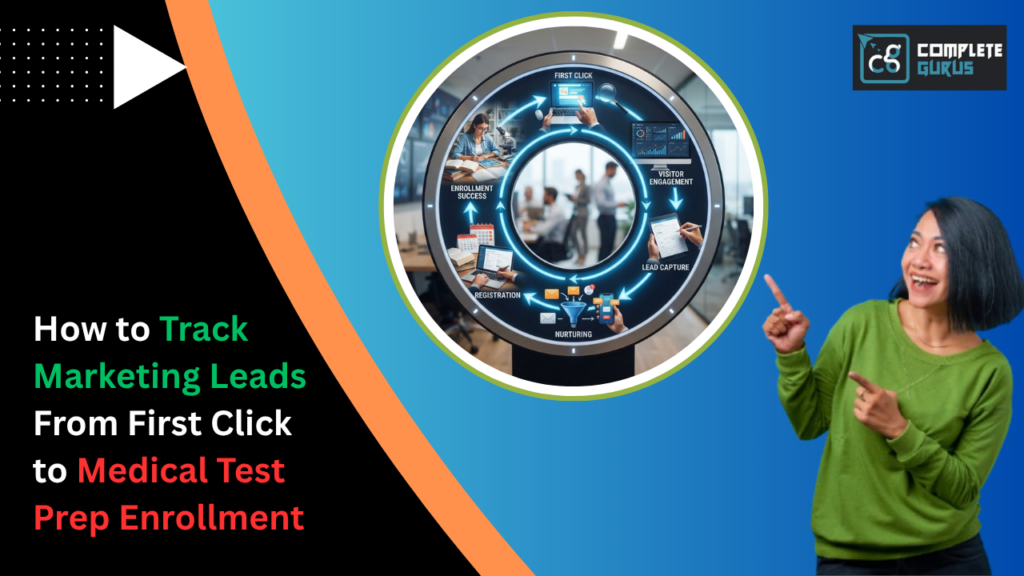
When everything described above is working in sync, here’s roughly what the journey looks like from the outside. A prospective student clicks a properly tagged ad, lands on a landing page built specifically for their exam interest, fills out a form that captures just enough information to start a real conversation, gets contacted quickly by an admissions counselor whose CRM already shows exactly which campaign brought them in, receives a nurture sequence tailored to how engaged they’ve been so far, eventually books a call that gets logged and recorded through call tracking, and finally enrolls, with that enrollment data flowing straight back into the ad platforms so the algorithm learns what a real conversion actually looks like.
None of this happens by accident, and none of it happens with a single tool. It’s the result of your website, your ad accounts, your CRM, your call tracking system, and your admissions process all talking to each other instead of operating as separate silos. Most test prep institutes have pieces of this in place already; very few have all of it connected end to end, and that gap is usually where the biggest, most avoidable losses in marketing efficiency hide.
Getting this right isn’t a one-time project either. Exam patterns shift, new platforms emerge, student behavior changes year over year, and your tracking setup needs regular attention to keep pace. But institutes that invest the time to build this kind of connected system consistently outperform competitors who are still guessing based on last-click data and gut feeling, because they can see, with actual evidence, what’s working and double down on it with confidence.
If you’ve read this far, you already understand something a lot of marketing teams miss: tracking isn’t a technical afterthought bolted onto your campaigns, it’s the thing that tells you whether your campaigns are actually working at all. Building this properly takes a mix of skills that rarely live in one person, someone who understands paid ad platforms, someone who can build and integrate a CRM, someone who can set up call tracking and offline conversion imports, and someone who understands the specific psychology of a student deciding whether to enroll in a medical entrance exam course. Complete Gurus brings exactly that mix together, offering website development, SEO, digital marketing, and virtual assistant support under one roof, so education businesses don’t have to stitch together five different freelancers to get a tracking system that actually works. Whether you need a landing page built to convert exam aspirants, a marketing team that understands multi-touch attribution, or a CRM properly integrated with your ad accounts, Complete Gurus provides that complete, affordable solution so you can finally see the real story behind every enrollment, from the first click to the final payment.

Ashutosh Mishra is an AI Visibility & Performance Marketing Expert with 14+ years of experience helping businesses grow through AI Visibility (AEO/GEO), Google Ads, Meta Ads, and SEO. He partners with founders and business leaders to build data-driven growth strategies that increase visibility, improve marketing performance, and help businesses get discovered, trusted, and recommended in the age of AI.