
Quick Summary
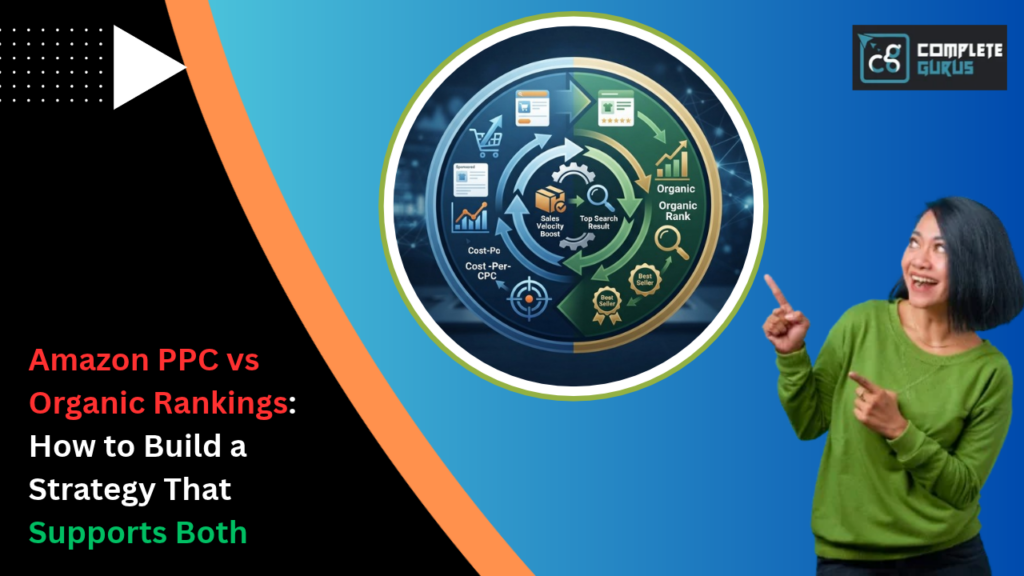
If you sell on Amazon, you have probably wondered whether your money should go into ads or into climbing the organic results. The honest answer is that this is the wrong question. Paid ads and organic rankings feed each other on Amazon. Ads put your product in front of shoppers fast. The sales those ads produce tell Amazon your product deserves a better organic position. Better organic position then lowers how much you need to spend on ads to keep sales steady. This article walks through how to set that loop up properly: fixing your listing first, structuring campaigns so they build rank instead of just burning budget, tracking the metrics that show real progress, and knowing when to push ads harder or ease off. You will also see where expert help makes the biggest difference.
Why This Is Not an Either-Or Decision
Most sellers I hear from fall into one of two camps. The first camp pours everything into sponsored ads, watches sales climb, and then panics when the monthly ad bill starts eating the profit. The second camp insists on “doing it the right way” through listing optimization and reviews alone, then waits months while competitors with ad budgets take the best shelf space.
Both camps are leaving money on the table, and both are working against how the marketplace behaves. Amazon is a store, but it is also a search engine with a very specific goal: show shoppers the products most likely to be bought. Anything that proves a product sells, whether the traffic arrived through an ad or through an organic search, strengthens that product’s case.
So think of PPC and organic ranking as two people carrying the same couch up the stairs. One lifts from the bottom, the other guides from the top. If either drops their end, the whole thing slides back down. Your job is not to choose a favorite. It is to make sure both are pulling in the same direction.
How Amazon Decides Who Shows Up First
Before you can build a strategy that supports both, it helps to know what Amazon is actually weighing when it orders search results. The platform has never published the exact recipe, and anyone claiming to know every ingredient is guessing. But years of seller experience point to a consistent pattern.
Relevance comes first. Does your listing contain the terms a shopper typed, in places where Amazon reads them, like the title, bullet points, backend search terms, and product attributes? If the words are not there, you will not show up, no matter how good the product is.
Performance comes second. This is where sales velocity, conversion rate, click-through rate, review quality, and stock availability come in. A listing that shows up for a search term and then gets ignored will drift downward. A listing that gets clicked and bought will rise.
That second layer is the crucial detail for our topic. Amazon does not care very much how a sale happened. It cares that the sale happened for that keyword. A purchase that begins with a sponsored click still teaches the system that your product satisfies that search. That is the doorway through which PPC influences organic rank, and it is why advertising is so much more than a rented billboard.
What PPC Actually Does for Your Rankings
Let me be careful here, because this point gets oversold. Running ads does not magically push you to page one. What ads do is create the conditions in which you can earn page one.
When you launch a new product, you have no sales history, no reviews, and no momentum. Amazon has no evidence that shoppers want what you are selling. If you rely on organic discovery alone, you may sit invisible for weeks, and invisible products do not collect sales or reviews. It is a frustrating chicken-and-egg problem.
Sponsored ads break that deadlock. By bidding on your most relevant keywords, you buy the impressions you could not earn yet. Shoppers see the product, some click, and a portion buy. Each purchase adds a data point connecting your listing to that keyword. Over time, if the conversion rate holds up, Amazon becomes more comfortable placing you higher in the unpaid results for those same terms.
Ads also give you information that organic data alone cannot. Search term reports show you what real shoppers typed before they bought. You will often discover phrases you never thought to put in your listing, or find that a keyword you assumed was your best performer converts poorly. That feedback is gold for the organic side of your strategy, and I will return to it shortly.
Different ad formats serve different roles in this process. Sponsored Products target specific keywords and products, making them the workhorse for rank building. Sponsored Brands help with visibility and brand recognition, especially when you have several related items. Sponsored Display can bring back shoppers who looked at your page and left. Using all three with some thought, instead of defaulting to one, gives you a broader reach across the shopping journey.
Where Organic Rankings Quietly Earn Their Keep
If ads are the fast lane, organic rankings are the highway you own. Once your listing holds a strong position for a valuable keyword, you receive clicks and sales without paying per click. That changes your economics in a way ads alone never can.
Imagine two sellers with identical products and identical monthly sales. One gets most orders through ads, the other gets most through organic search. When the second seller’s profit margin is calculated, there is no ad cost eating into each unit. The first seller has to keep paying to maintain the same result, and if a competitor raises their bids, the first seller either pays more or loses volume.
Organic position also carries a trust factor. Many shoppers scroll past anything labeled sponsored, assuming those slots are bought. A product sitting naturally in a top position signals that other people chose it. That perception can lift your conversion rate, which feeds back into your ranking. It is a virtuous cycle, but only if you reach it.
There is another benefit that gets less attention: resilience. Ad auctions are volatile, especially during peak seasons when everyone raises bids. If a large share of your sales comes from organic placement, you are far less exposed when costs spike. That stability is what turns a good product into a lasting business.
Fix the Listing Before You Spend a Dollar
Here is something I wish more sellers heard before launching their first campaign: advertising a weak listing is like paying to drive customers to a shop with a messy window display. You will get visitors, but they will walk out. And every click you paid for without a sale is a signal telling Amazon your product does not satisfy that search.
So start with the foundation. Your title should lead with the most important keyword in natural language, not a cluttered string of terms. Your images should answer questions at a glance, showing scale, use, and details that a shopper cannot get from a thumbnail. Your bullet points should address real concerns, such as materials, compatibility, sizing, and what is in the box, rather than repeating generic praise.
Enhanced brand content matters too. A+ content, with comparison charts and lifestyle visuals, tends to help shoppers feel confident, which supports conversion. If you have a registered brand, a well-organized Brand Store gives you a place to send ad traffic that tells your full story and keeps shoppers browsing your catalog rather than hopping to a competitor.
Complete Gurus handles this foundational stage through its Amazon SEO and listing optimization work, including A+ content optimization and Brand Store SEO. The reasoning is simple: when the listing is tuned for both discoverability and conversion, every advertising dollar you add later works harder, and your organic position has something solid to stand on.
Building Campaigns That Feed Organic Growth
Once the listing is ready, campaign structure becomes the next lever. A common mistake is throwing every keyword into a single campaign with a loose budget and hoping the algorithm sorts it out. That setup makes it nearly impossible to learn anything.
A cleaner approach separates your goals. Start with a campaign focused on discovery, using automatic targeting to let Amazon show you which searches and products connect with your listing. Let it run long enough to gather real data, then harvest the winning search terms.
Those winners move into a manual campaign where you control bids precisely. Exact match targeting is where you protect and push your most valuable terms. Phrase and broad match can capture variations and uncover new opportunities. Keeping these match types in separate campaigns lets you adjust bids based on how each really performs, rather than averaging everything together.
If your goal is to rank for a particular keyword, be deliberate about it. Choose terms with real search volume that are closely relevant to your product, and bid aggressively enough to win a visible position, especially at the top of the search results. That visibility is where you collect the clicks and conversions that build your reputation for that keyword. It will probably cost more than your long-term target during the push, and that is fine, as long as you treat it as an investment with an end date rather than a permanent condition.
Negative keywords deserve a mention here as well. Every irrelevant click drags down your conversion rate and wastes budget. Regularly reviewing search term reports and excluding the phrases that attract the wrong shoppers keeps your campaigns lean, and it protects the conversion data that Amazon uses to judge your listing.
Using Ad Data to Strengthen Your Organic Side
This is where the two halves of your strategy start talking to each other. Your advertising reports are a live survey of what shoppers want, and most sellers only use them to adjust bids.
Look at which search terms generate orders at a healthy rate. If a phrase converts well but does not appear in your title or bullets, work it in naturally. If you notice shoppers using a certain word to describe your product that you never used, such as a particular use case or a size reference, that language belongs in your copy and backend terms.
Look at the reverse as well. Keywords that spend heavily and never convert might point to a mismatch between what you offer and what shoppers expect. Maybe the main image sets the wrong expectation, or the price sits awkwardly against competitors. Fixing those problems helps both your paid performance and your organic standing.
Over time, you can also identify keywords where your organic rank has become strong enough that ad spend on them is largely redundant. Pulling back on those terms, carefully and gradually, frees the budget to push into new territory. This is the practical heart of balancing the two approaches: ads open doors, organic position keeps them open, and you shift money toward wherever it creates the most new growth.
Watching the Numbers That Actually Matter
Sellers often obsess over ACoS, the percentage of ad sales you spend on advertising. It is a useful number, but it can mislead you when you are building rank. A campaign targeting a competitive keyword might run an ACoS that looks uncomfortable while quietly improving your organic position, which pays off for months afterward.
That is why many experienced sellers also track TACoS, which compares total advertising cost to total sales, both paid and organic. If your ad spend stays steady while total revenue grows, TACoS falls. That is a strong sign your organic rankings are gaining strength and your ads are doing their job of lighting the fire rather than feeding it forever.
Beyond those two, keep an eye on conversion rate, click-through rate, and the split between ad-attributed and organic sales. If organic share is rising over a few months, your strategy is working. If your organic share stays flat despite heavy spending, something is off, and the cause is usually the listing, the pricing, the reviews, or the keywords you are targeting.
Be patient with timing, too. Ranking changes rarely show up overnight. Give a campaign several weeks of consistent data before judging it, and avoid the temptation to change bids and budgets every other day. Constant tinkering resets the learning and muddies your results.
Mistakes That Quietly Drain Budgets
Some errors come up so often that they are worth naming plainly. The first is turning ads off the moment the organic rank improves. Amazon rankings are not permanent rewards. If you stop the activity that earned the position, such as steady sales on that keyword, the rank can slip, and you will find yourself paying to recover ground you already held.
The second is chasing broad, high-volume keywords too early. A new product with few reviews rarely converts well against established competitors on the biggest terms. Starting with more specific, intent-rich phrases builds a conversion record you can then leverage toward the bigger terms.
The third is ignoring stock and pricing. Running out of inventory in the middle of a ranking push can erase weeks of progress, and an uncompetitive price can sabotage conversion no matter how well the ads are built. Operational basics matter as much as keyword strategy.
The fourth is treating reviews as an afterthought. Strong ratings and a healthy review count lift conversion across both paid and unpaid traffic. Following Amazon’s rules for earning reviews, through excellent products, careful packaging, and compliant follow-up, pays back across everything else you do.

Knowing When to Push and When to Ease Off
A good strategy is not a fixed budget; it is a rhythm. During launches, seasonal peaks, and moments when you want to claim a new keyword, you lean harder into ads. During stable periods, when your rankings are solid and your conversion is strong, you can trim spending on terms where you already dominate and use the savings elsewhere.
Competitive moves matter, too. If a rival launches a heavy campaign on your core keyword, you may need to respond temporarily to defend your position. If a competitor goes out of stock, an opportunity may open to capture shoppers they lose. Staying flexible, and checking performance weekly rather than monthly, helps you spot these swings before they become expensive.
It also helps to match your approach to the product stage. A brand-new item needs ads to generate initial data. A growing item benefits from structured keyword expansion. A mature bestseller may be best served by defending key terms while testing new ones. Applying a growth-stage tactic to a mature product, or the reverse, is one of the most common reasons sellers feel stuck.
Suggested Reading: How to Reduce Amazon Advertising Costs While Maintaining Profitable Sales
Conclusion
Amazon PPC and organic rankings are not rivals competing for your budget. They are partners in a single system, and the sellers who thrive understand how each one strengthens the other. Ads create early traction and reveal what shoppers really want. Those sales train Amazon to favor your listing. A strong organic position then reduces your dependence on paid traffic and improves your margins. Get the listing right first, structure your campaigns with intent, use search data to refine your copy, measure total performance rather than a single ratio, and adjust your spend as products mature.
If managing all of this feels like a second full-time job, that is where Complete Gurus can step in. With over 13 years of experience and more than $3 million in annual ad spend managed, the team offers Amazon PPC management, Amazon SEO and listing optimization, A+ content, Brand Store SEO, and broader third-party store management across marketplaces. You get a dedicated strategist, weekly dashboards in plain English, and a written 90-day guarantee of at least a 25% ROAS improvement and 20% lower cost per sale, with continued management at no extra charge until those benchmarks are met. You can also start with a free audit to see exactly where your ad budget and organic ranking are leaking revenue. Visit https://completegurus.com/ to book a strategy call and build an Amazon plan where both halves work together.

Ashutosh Mishra is an AI Visibility & Performance Marketing Expert with 14+ years of experience helping businesses grow through AI Visibility (AEO/GEO), Google Ads, Meta Ads, and SEO. He partners with founders and business leaders to build data-driven growth strategies that increase visibility, improve marketing performance, and help businesses get discovered, trusted, and recommended in the age of AI.