
Summary
OpenAI is giving ChatGPT Ads a smart new trick: from late October 2026 (October 29 per OpenAI’s Help Center, October 30 per an advertiser email), the platform will automatically tweak your ad headlines, descriptions, images, languages and landing page links to match what users are chatting about. It can save marketers hours of manual work and make ads feel more relevant, but there’s a catch. Advertisers won’t get to preview every AI-made variation before it goes live. The good news is that you can switch the feature off in Ads Manager, so now is the time to check your settings, clean up your landing pages and keep a close eye on performance. Results aren’t guaranteed, and human strategy still matters.
OpenAI is about to let ChatGPT Ads change ad headlines, descriptions and other creative parts on its own. The idea is to show people ads that match what they are talking about, and to save marketers from writing many versions of the same ad.
The feature will switch on automatically for new and existing campaigns in late October 2026. Advertisers can turn it off in their Ads Manager settings.
What Is Automatic Ad Rewriting?
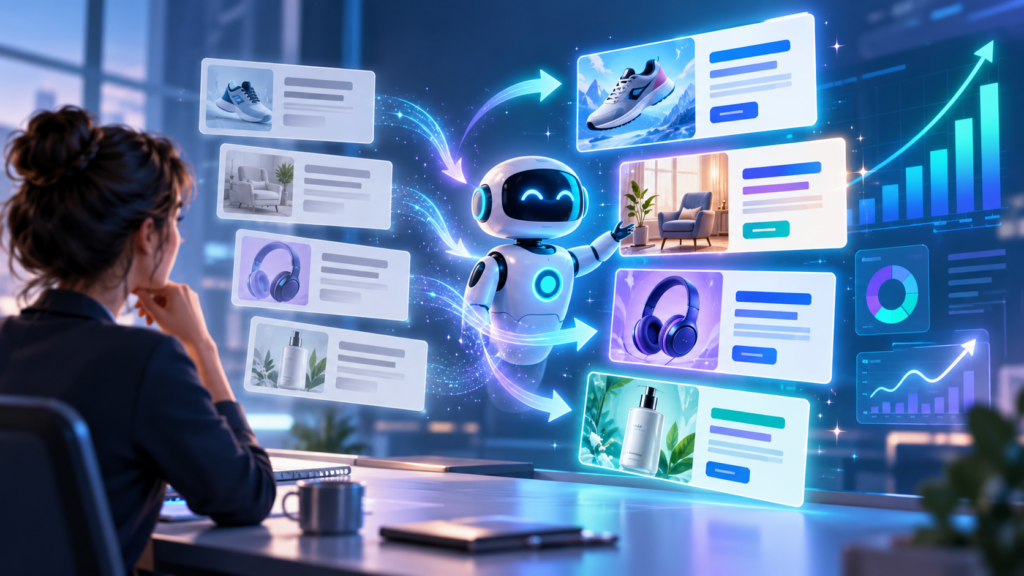
It is part of a new feature called creative enhancements. ChatGPT Ads will use AI to tweak the ads you have already made so they fit what a person is looking for.
Normally, advertisers write several headlines, descriptions and images, test them, and then check which one works best. With this feature, the system can create those variations for you.
Here is a simple example. A company that sells home office furniture runs an ad with the headline “Explore Our Collection of Office Chairs.” Someone in ChatGPT is asking how to make their home office more comfortable. The system might change the headline to “Find Comfortable Chairs for Your Home Office.” This is only an example, not a real ad from OpenAI.
The system is built to adjust your existing ads. It is not meant to create completely new messages that have nothing to do with your offer.
How Will It Work?
According to OpenAI’s documentation, the system looks at three things: your original ad, the information on your landing page, and the context of the user’s conversation or interests. Based on these, it can do the following.
- Rewrite headlines. Instead of showing the same words to everyone, the system can show a different headline depending on the topic of the conversation.
- Improve descriptions. It can change the description so it explains your product in a way that fits what the user needs right now, while staying true to your original offer.
- Resize images. It can resize your existing images to fit the different ad formats. This saves some manual work.
- Translate ads. It can translate your ad text into other languages. This can help if you advertise in several countries. You still need to make sure your offers, product details and landing pages suit each market.
- Optimize landing pages. The system can send people to the most relevant page on your website instead of always using the same one. For stores with many product categories, this could help a lot.
When Will It Start?
OpenAI’s Help Center says the feature will be turned on automatically on Thursday, October 29, 2026. But an advertiser email, reported by Search Engine Roundtable on October 20, says it will start on Friday, October 30, 2026, for new and existing self-service campaigns.
Because the two dates are slightly different, check the notifications and settings in your own Ads Manager instead of assuming one date for every account.
If you have already turned this off at the account or campaign level, those settings will stay as they are. Campaign-level settings take priority over the account default.
Will Advertisers Lose Control?
This is the biggest question. With the feature on, AI-written versions of your ads can run without your approval for each one. OpenAI also says advertisers will not be able to preview every enhanced ad before it goes live. So you may not always see the exact wording that people see.
This matters a lot if you work in an industry where prices, offers or product claims must be checked carefully. The good news is that you can turn the feature off in Ads Manager. If your brand needs strict control over its messaging, look at the settings and decide whether automatic changes are right for your campaigns. Also make sure your original ads and landing pages are accurate and up to date.
Why Is OpenAI Doing This?
Traditional ad platforms depend a lot on keywords, audience groups and creative made by hand. Conversational AI adds something new: what people tell the assistant while they explain their needs and compare options.
For example, someone might be researching website development, comparing business software, or looking at home improvement products. An ad that speaks directly to that topic could be more useful.
OpenAI says this feature should help advertisers get relevant messaging with less work. But whether it brings more conversions or lower costs depends on real campaign results. There is no guarantee.
What Does It Mean for Marketers and PPC Agencies?
Marketers may need to spend less time writing endless ad variations and more time on the information they give to the system. Clear product descriptions, helpful landing pages, correct offer details and strong customer benefits will matter more.
Agencies will also have new jobs. If you manage ads for many clients, you need to know how creative enhancements are set up in each account. You should also check whether AI-written messaging suits each client’s industry and rules, and keep watching brand consistency.
Marketers are still needed. Strategy, conversion tracking, budgets, landing page quality and performance analysis are still key to good results. AI can help with creative production, but people still have to make the big decisions about direction and business goals.
How Could Ecommerce Businesses Benefit?
Online stores often have big product catalogs, different customer groups and campaigns in several markets. Writing separate ads for every category takes a lot of time.
Take a clothing store with separate categories for casual wear, winter clothes and formal outfits. Instead of using one general message, the system could adjust the description to fit the shopping topic, as long as the original ad and landing page support it. An electronics store could get ads that highlight the right features when people compare devices. Automatic translation could also help with selling in other countries.
That makes this update interesting for Shopify stores, online retailers and ecommerce agencies. Still, don’t assume automatic changes will always give better results. Product relevance, pricing, website experience and customer trust still matter.
How Does It Compare With Google Ads and Meta Ads?
This move follows a larger trend toward AI and automation in advertising. Google Ads already uses machine learning in Performance Max and responsive search ads. Meta has its Advantage+ tools. These platforms use automation for creative delivery, targeting and campaign optimization.
ChatGPT is different because people explain what they need in long, natural conversations. So ads can use that conversation as a signal, not just search terms or social media behavior. Ads could show up at the moment someone is actively researching or comparing options.
But the technology is still new. Advertisers will need to test how it performs compared with the channels they already use.
Privacy and Transparency
As ads grow inside ChatGPT, privacy and transparency remain important. OpenAI says ads are separate from ChatGPT’s answers and do not influence what the assistant says. It also says advertisers cannot see users’ private conversations. The conversation may help the system pick a relevant ad, but the advertiser does not get the conversation itself.
Ads are clearly labeled as sponsored. Users need to be able to tell the difference between an AI answer and a paid ad, and keeping that line clear will stay important for OpenAI.
ChatGPT Ads Is Getting Bigger
Automatic ad rewriting is not a one-off change. OpenAI has added many ad tools throughout 2026.
- In September, it announced more AI creative tools, Shopify and HubSpot integrations, and tests of Sponsored Agents. These let users chat with a business-sponsored assistant after they click an ad.
- It has opened self-service ads to more countries, so more businesses can create campaigns directly in Ads Manager.
- In August 2026, OpenAI said ChatGPT Ads had reached a $1 billion annualized revenue run rate in under 200 days after launch. It also said tens of thousands of advertisers were already using the platform.
All of this shows that OpenAI sees advertising as a major part of its business. Automatic creative enhancements could make it easier for businesses to try conversational ads without preparing every version by hand.
What Should Advertisers Do Before the Update?
If you run ChatGPT Ads, review your account before the automatic start date. Here are a few simple steps.
- Review your current ads. Check that your headlines and descriptions explain your products or services correctly.
- Update your landing pages. Make sure prices, offers, product details and availability are current.
- Check your creative enhancement settings. Look at the account and campaign settings and decide whether you want automatic changes to stay on.
- Protect your brand voice. If you have strict messaging rules, check whether AI-written variations meet your standards.
- Watch your performance. Keep tracking impressions, clicks, click-through rate, spend and conversions where you can measure them.
OpenAI also points out that a change in performance does not prove that creative enhancements caused it, whether up or down. You will need to review results carefully to see the real value of the feature.
Is AI-Written Advertising the Future of PPC?
This update suggests AI will play a bigger part in making ads. In traditional PPC, marketers spend a lot of time on keyword research, headlines, descriptions, images and testing. AI can take over some of that repeated work. Over time, advertisers may spend more of their energy on strategy, understanding customers, positioning and measurement.
But automation brings new problems too. Advertisers must make sure AI-written messages stay accurate, useful and in line with their brand. They also need good reporting to know whether automation is really helping the business.
So the future of PPC will not depend on automation alone. It will need machine learning, good information, human oversight and clear goals.
Conclusion
OpenAI’s automatic ad rewriting is another big step in AI-powered advertising. By letting ChatGPT Ads adjust headlines, descriptions, languages, images and destination URLs, OpenAI wants to make ads more relevant and cut down manual work.
For agencies, PPC professionals and ecommerce businesses, this is a chance to try ads that respond to the conversation. But it also makes accuracy, brand consistency and campaign monitoring more important than before.
With the feature expected to go live in late October 2026, advertisers should check their settings and get their ad content ready. In the long run, its value depends on whether it creates relevant ads and real results for businesses.