
Quick Summary
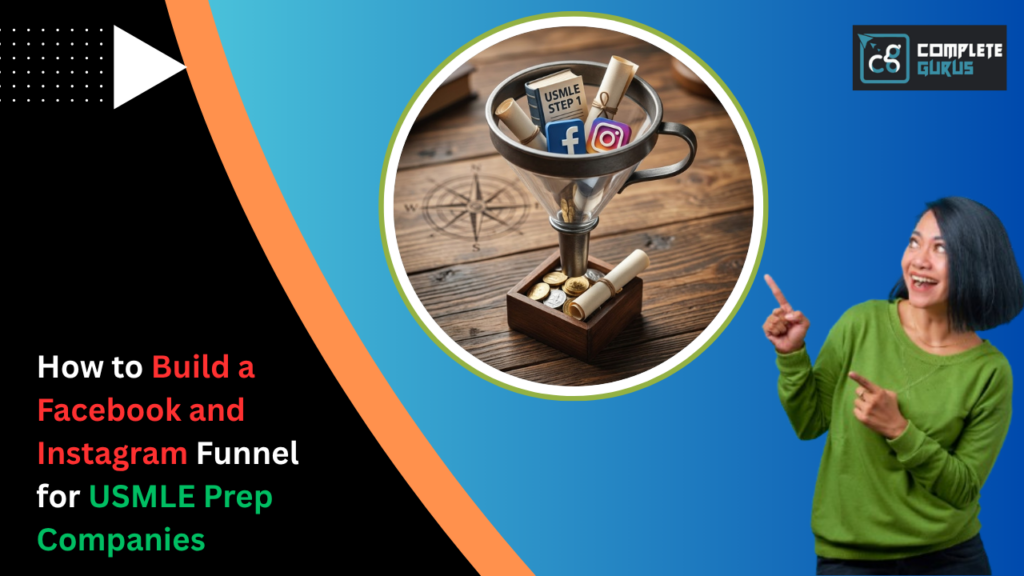
If you run a USMLE prep company, you already know the pattern. A student clicks your ad, browses your site, maybe watches a free lecture, and then disappears for three weeks. Then they buy a question bank from a competitor. A Facebook and Instagram funnel exists to fix that. It guides a medical student or graduate from “I’ve never heard of you” to “I’m ready to enroll” through a sequence of connected steps, so you stop relying on one lucky ad. This article walks through how to build that funnel for a prep business: who you’re talking to, what to say at each stage, how to follow up, and where agencies like Complete Gurus fit in if you’d rather not build it alone.
Why a USMLE Student Doesn’t Behave Like a Normal Buyer
Start with the person on the other side of the screen. A medical student studying for Step 1 is tired and short on time. They are also anxious in a way that few other buyers are, because this one exam can shape their residency options and, over time, their career.
They also research obsessively. They read Reddit threads, ask seniors what worked, compare pass-rate claims, and watch several YouTube reviews before they spend a dollar. A fast “buy now” push can feel almost insulting to someone in that state of mind.
That is why a funnel suits this audience so well. You can’t sell trust in one ad, but you can earn it across several touches. A funnel lets the student meet you, test you, doubt you, come back, and finally commit, all without feeling hustled. Each stage below is built around that slower, more skeptical way of deciding.

Why Facebook and Instagram Are Still Worth Your Budget
Plenty of prep companies assume students only live on Reddit, Discord, or YouTube. The reality is messier. Medical students and international medical graduates scroll Instagram between study blocks and check Facebook groups for exam advice, which makes both platforms a natural place to catch them during their downtime.
Meta’s strength is that one ad account lets you reach cold audiences, warm visitors, and past leads, depending on how you structure things. Complete Gurus runs this kind of setup for its clients. Its Meta Ads work covers full-funnel campaigns on Facebook and Instagram, from cold prospecting to retargeting and retention, and it has a dedicated line of work in digital marketing for medical test prep companies. That specialization matters because a funnel for a USMLE brand is a different animal from one for a sneaker store.
Map the Journey Before You Touch Ads Manager
Before you create a single campaign, sketch what a student goes through. Most prep companies skip this step and jump straight to ads, which is why their results feel random.
Picture a second-year student named Priya. She’s three months from her dedicated study period. At first she doesn’t know which resources to use, so she is simply trying to figure out what a good study plan looks like. A little later she’s comparing question banks and video courses. Eventually she’s close to buying but nervous about picking wrong.
Each of those moments needs a different message. Priya in the first moment wants a free study schedule, not a pricing page. In the second she wants proof that your material is different. By the third she needs a reason to act now, such as a reassuring guarantee, a trial, or a cohort start date. Write these three states down in plain language before building anything. Your whole funnel is just a set of answers to the question each state is asking.
The Top of the Funnel: Earning Attention Without Begging for It
Cold audiences don’t know you, so your first ads should give something away and ask for very little. This is where many USMLE companies go wrong. They run a “Buy our Step 1 course” ad to people who’ve never seen their name, then wonder why the cost per sale is brutal.
Strong top-of-funnel assets for this market tend to be useful in their own right. A free Step 1 study planner, a short diagnostic quiz, a recorded mini-lecture on a notoriously confusing topic, or a “how to read your NBME score” guide all work well. Each of them solves a real problem and gives the student a small taste of how you teach.
On Instagram, short Reels that explain one high-yield concept in thirty seconds can do the heavy lifting. They show the teaching style, not just describe it. On Facebook, slightly longer posts and video work well for audiences who like to read and compare. Run both, but let the creative differ. A Reel and a Facebook feed ad should not be the same file pasted twice.
For targeting, resist the urge to micromanage. Meta’s delivery system has become much better at finding the right people when it’s fed a strong creative and a clean conversion signal. Interests like medical education, specific exam names, and relevant study communities can seed things, but your message and your offer will do more of the sorting than any audience setting.
The Middle of the Funnel: Turning Curiosity Into a Conversation
Once a student grabs your free planner or finishes the diagnostic quiz, you have something precious: an email address and a reason to talk. What happens next separates average funnels from good ones.
A lot of prep companies capture the lead and then go quiet, or blast a generic discount. Instead, think of the next two weeks as a mini course in who you are. Send the student a short sequence that delivers value, shares a real success story, and answers the objections you know they carry. If you hear “Is this too expensive?” often, address price directly. If you hear “Does this actually match the real exam?”, show how your content is built and updated.
This is where email and marketing automation earn their keep. A sequence that responds to behavior, such as whether the student opened the quiz results or clicked the pricing page, feels personal in a way a one-size blast never will. Complete Gurus offers both email marketing and marketing automation services, and for a prep company those are often the quiet engine that makes paid traffic profitable. Social ads bring people in, but a good nurture sequence is frequently what moves them to a decision.
It also helps to mix channels here. A lead who saw your ad, got your planner, and then sees a friendly Instagram Story from your team a few days later starts to feel like they know you. Instagram marketing done well isn’t about polished posts. It’s about showing up consistently with faculty faces, student wins, and honest answers to common doubts.
Retargeting: The Part Most Prep Companies Underuse
Here is a truth that should change how you spend your budget. Most students who visit your site won’t enroll on that first visit, and that’s normal for a high-stakes, high-consideration purchase. The money you’ve already spent getting them there is wasted unless you bring them back.
Retargeting on Facebook and Instagram does exactly that. You show tailored ads to people who visited your site, watched part of a video, opened a lead form, or interacted with your page. The trick is to match the message to what they did. Someone who watched half of a lecture preview should see the rest of it or a related lesson. Someone who looked at the pricing page but didn’t buy might see a testimonial from a student with a similar background, or a short explainer about your refund or guarantee policy.
Complete Gurus has published a good deal on this very idea for medical test prep audiences, including pieces on why prep academies should retarget on Facebook and Instagram and how to win back students who visited a prep website without buying. The underlying logic is simple. Warm audiences cost less to convert than cold ones, and a student who has already spent time with your content is far closer to buying than a stranger.
Be careful about frequency, though. Showing the same ad six times a day will make an exhausted student resent your brand. Rotate creative, cap exposure, and let a few days pass between touches so the retargeting feels helpful, not stalkerish.
The Bottom of the Funnel: Making the Decision Easy
When a student is ready to buy, your job is to remove friction and calm the last doubts. This is the stage where trust signals matter most.
Show real outcomes, with permission and honestly framed, since medical students are sharp at spotting inflated claims. Make your offer clear. Spell out what’s included, how long access lasts, what the refund terms are, and how a student can reach a human with questions. If you run live cohorts or have enrollment windows, make those dates visible, because genuine deadlines motivate better than invented urgency.
Lead forms on Meta can work well at this stage, but only if someone follows up quickly. A student who requested a call and heard nothing for two days has already moved on. Speed to contact is one of the cheapest improvements a prep company can make, and it often matters more than any tweak inside the ad platform. If your sales or enrollment team is small, automate the first reply and then hand off to a person within the same day.
Your landing page deserves attention too. It should match the promise made in the ad, load quickly on a phone, and make the next step obvious. Many prep companies pour money into traffic and send it to a cluttered homepage. A focused page for each offer will almost always beat that.
Measuring What Actually Matters
Dashboards can make you feel productive while hiding the truth. Clicks and likes are pleasant, but they don’t pay your faculty. What you need to track is the cost of acquiring an enrolled student, how many leads at each stage move forward, and how long the journey takes from first click to purchase.
With a long consideration cycle like USMLE prep, resist the temptation to judge a campaign after three days. A student who sees your ad this week may not buy for a month. Look at trends across a reasonable window, and compare cohorts rather than single days. Also keep an eye on lead quality, not just volume. A hundred poorly matched leads are worse than twenty who truly fit your product.
This is where plain-language reporting helps. Complete Gurus builds its client reporting around weekly dashboards showing spend, revenue, ROAS, and conversion data in plain English, rather than vanity numbers. Whether you work with an agency or handle it in-house, ask for that kind of clarity. If a report can’t tell you whether you’re making or losing money, it isn’t doing its job.
Common Mistakes That Quietly Drain Budgets
A few patterns show up again and again. The first is running only bottom-of-funnel ads and starving the top, which works for a while and then collapses once the warm audience dries up. The second is treating every exam the same. A Step 1 student, a Step 2 CK student, and an international graduate navigating ECFMG and residency timelines have very different worries, so they deserve different messaging.
Another is neglecting creativity. Meta rewards fresh, engaging content, and an ad that performed well in March can fatigue by June. Build a habit of testing new hooks, new faces, and new formats regularly. Finally, many companies forget to connect their funnel to their offline reality. If your ads promise personalized support but your response time is slow, the funnel will leak no matter how clever the targeting is.

Doing It Yourself Versus Bringing in Help
You can absolutely build this funnel internally, especially if you have a marketer who knows Meta well. But be honest about the workload. A real funnel means creative production, audience structure, landing pages, email sequences, retargeting logic, tracking, and weekly optimization, all running at once. For a small prep company where the founder also teaches and handles support, that adds up fast.
An agency with real experience in your niche can shorten the learning curve considerably. Complete Gurus, for instance, works through a simple process: you share your business details and what isn’t working, receive a tailored growth plan, and then the team launches and manages campaigns with regular performance reviews and a dedicated strategist. The agency also states a 90-day growth guarantee tied to improved ROAS and lower cost per sale. Whatever route you take, ask any partner how they’d handle the stages above, because a team that only talks about “driving traffic” probably doesn’t understand how students really decide.
Suggested Reading: 7 Meta Ads Mistakes That Can Increase Your Medical Test Prep Cost Per Lead
Conclusion
A Facebook and Instagram funnel for a USMLE prep company is less about clever tricks and more about respecting how a stressed, skeptical student makes a big decision. You meet them with something genuinely useful, keep the conversation going through email and thoughtful content, bring them back with relevant retargeting, and then make saying yes feel safe. Measure the real cost of an enrolled student, keep your creative fresh, and fix the small leaks, like slow follow-ups and mismatched landing pages, before pouring in more budget.
If you’d like experienced hands on this, visit https://completegurus.com/. Complete Gurus is a performance marketing agency with more than thirteen years in Google Ads and Meta Ads, with specific work in digital marketing for medical test prep companies. The team can build and manage your Facebook and Instagram funnel, backed by weekly reporting and a free audit to show you where your current campaigns are losing students.

Ashutosh Mishra is an AI Visibility & Performance Marketing Expert with 14+ years of experience helping businesses grow through AI Visibility (AEO/GEO), Google Ads, Meta Ads, and SEO. He partners with founders and business leaders to build data-driven growth strategies that increase visibility, improve marketing performance, and help businesses get discovered, trusted, and recommended in the age of AI.