
Quick Summary
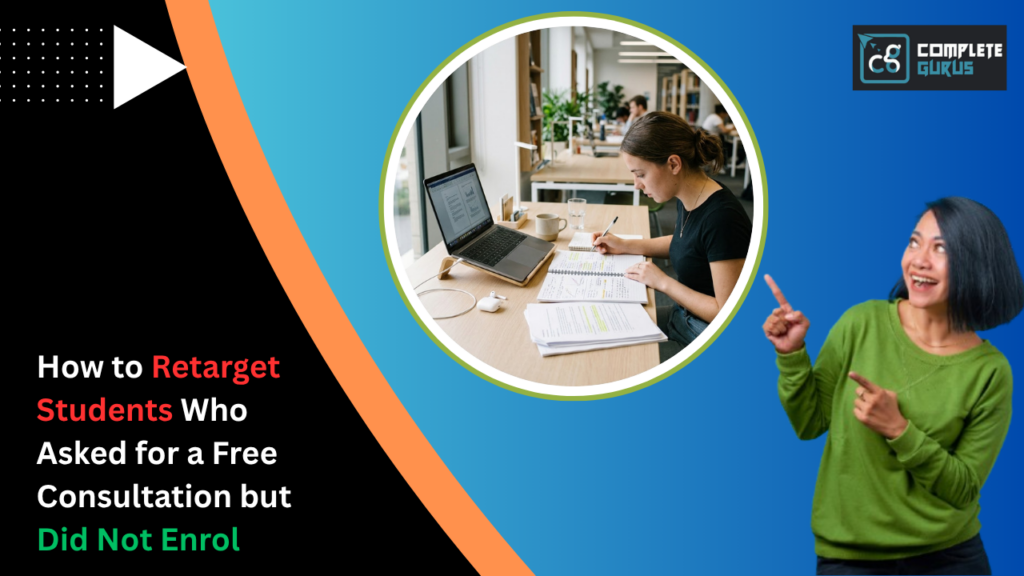
You ran the ad, the student filled in the form, and your team booked a free consultation. Then nothing happened. They didn’t show up, or they showed up, nodded politely, and never came back. It’s frustrating, because that person was closer to buying than almost anyone else in your pipeline. This guide is about what to do next. You’ll see how to work out why they stalled, how to group them by what they actually did, what to say to each group on Facebook and Instagram, how email and automation keep the conversation alive, and how to measure the whole effort without fooling yourself. It’s written for owners and managers of coaching, test prep, and education businesses who want those quiet leads back without turning into the brand that nags.
A Skipped Enrolment Is Not a Lost Student
Let’s start with a small reframe, because it changes how you spend money. When someone books a free consultation, they have already done the hard part. They noticed you, trusted you enough to give a phone number or an email, and set aside time in a busy week. Plenty of people never get that far with any brand.
So when they don’t enrol, it rarely means “no.” More often it means “not yet,” or “I’m still scared,” or “my cousin told me about another course and I need to compare.” Education is a high-stakes purchase. A parent may be weighing fees against a family budget. A medical graduate may be juggling clinical rotations and wondering whether this is the right month to commit. Nobody makes that decision in a single phone call.
Treating these people as dead leads is one of the most expensive habits a prep or coaching business can have, because you’ve already paid to find them. Your ad budget bought the click, your team’s time bought the conversation, and then the whole investment gets abandoned right before it could pay off. Retargeting simply means you refuse to waste that effort. You stay in view, you stay useful, and you give the person a comfortable way to return when they’re ready.
Complete Gurus builds its Meta Ads work on this same idea. The agency runs full-funnel campaigns on Facebook and Instagram, from cold prospecting through to retargeting and retention, and for good reason. The money is often in the follow-through rather than the first touch.

Figure Out Why They Went Quiet First
Before you write a single ad, sit down and think about the reasons people walk away after a free consultation. If you skip this step, your retargeting will be a guessing game, and your messages will land like a stranger shouting generic offers across a crowded room.
Cost is the obvious one, but it comes in different flavours. Some people genuinely can’t afford the fee. Others can, but they weren’t convinced it was worth it, which is a very different problem. A third group simply wanted a payment plan and didn’t feel comfortable asking.
Then there’s the trust gap. A prospective student may have liked the counsellor but still wondered whether your results are real, whether the faculty are as good as the website suggests, or whether the course actually matches the current exam pattern. Someone preparing for a licensing exam will quietly check all of this on forums and social media before they hand over money.
Timing causes a lot of drop-off too. The consultation might have happened during exam season, a family event, or a hospital posting. Interest was real; the calendar just got in the way.
Finally, there are the people who never really got an answer. Maybe the counsellor rushed, or the one question that mattered didn’t get addressed, or nobody followed up after the call. Those students aren’t lost to a competitor. They’re lost to silence.
Pull your last two or three months of consultation notes and read them like a detective. Ask your counselors what they heard most often. You’ll almost always find three or four recurring hesitations, and those become the backbone of your entire retargeting message set. This is the unglamorous part of the work, but it’s why some follow-up campaigns feel thoughtful and others feel like noise.
Group People by What They Actually Did
Here’s where many businesses go wrong. They lump everyone who “didn’t enroll” into one audience and show them the same ad. That’s like handing every patient in a waiting room the same prescription.
Think about the real behaviours. Some people booked a consultation and never showed. Some attended, asked detailed questions, and then disappeared. Some attended, got a price quote, and went cold right after. Some asked for a callback that your team never managed to return. Each of those stories needs a different next move.
The person who never showed up probably needs a gentler nudge and an easier way to rebook. Maybe their slot was inconvenient, so a message offering flexible evening or weekend timings does more than any discount ever could. The person who attended and asked sharp questions is clearly serious, so they deserve substance: a short video from a faculty member answering the exact doubt they raised, or a student story from someone with a similar background. The person who went silent after hearing the price might respond to clear information about payment options, what’s included, and what the guarantee or refund terms look like.
On Meta, you can build these groups in several ways. Uploading your consultation list lets you reach those exact people on Facebook and Instagram, matched through the contact details they gave you. You can also build audiences from website visitors who reached the booking page but didn’t finish, people who watched a good portion of a lecture preview, and anyone who engaged with your page or profile. Layering these together lets you speak to a student who attended the consultation and then visited your pricing page twice in a different way from someone who only watched a video.
This is the kind of structure Complete Gurus sets up for clients, with audience segmentation and retargeting handled as part of Meta Ads management so every group sees a message that fits where they actually are.
Write Follow-Up Ads That Sound Like a Person
The tone of retargeting ads matters more than almost anything else. A student who has already spoken to your team will notice immediately if your ads suddenly start screaming “Last chance! Enroll now!” That reads as desperation, and it undoes the warmth your counsellor built.
Think of the ad as a continuation of the conversation. If the consultation was friendly and informative, the follow-up should be too. A short video of a faculty member saying, in plain words, “A lot of students ask us whether three months is enough to prepare, and here’s how we think about it” does far more work than a flashy banner. It feels like someone from your team remembered the question and came back with an answer.
Proof tends to carry the most weight at this stage, but only when it’s honest. Medical students and graduates in particular have a sharp eye for inflated claims. A specific story from a student with a similar starting point, told in their own voice, beats a headline number every time. If you have permission to share it, a short clip or a simple screenshot of a genuine message works better than something polished by a designer.
Address the hesitation directly. If cost keeps coming up in consultation notes, make an ad that talks about it openly: what the fee includes, how instalments work, what happens if the student decides the course isn’t for them. If worry about exam fit is the problem, show how your material is built and kept current. When you name the doubt out loud, people relax, because they feel understood rather than sold to.
There’s also room for a gentle, low-pressure offer. A free mock test, a short study plan review, or a seat at an upcoming live session gives the student a reason to re-engage without feeling they’ve been cornered. If you run cohorts with real start dates, mention them, since a genuine deadline motivates far better than an invented one.
Treat Instagram and Facebook as Different Rooms
It’s tempting to upload one video and run it everywhere, but the two platforms feel quite different to the people using them, and your follow-up should respect that.
Instagram is where people scroll quickly, often between study sessions or during a break. Short vertical videos, Stories, and Reels work well because they’re light and personal. A thirty-second clip of a faculty member breaking down one confusing concept, or a Story from your team answering a question students keep asking, feels natural there. Instagram is also where a bit of personality helps. Faces, voices, and small behind-the-scenes moments build the kind of familiarity that makes a returning student think, “Oh, I know these people.”
Facebook tends to attract people who are happy to read a little more, compare options, and sit in groups swapping advice. Slightly longer videos, text-led posts, and testimonials with a few paragraphs of context do well. Many students and parents still trust Facebook when they’re researching a decision that involves real money, so this is a good place for the more detailed reassurance: the full story behind a result, a walkthrough of how your programme works, or a clear explanation of fees and support.
Keep the creative difference on each, even if the underlying message is the same. A Reel and a feed ad should never be the same file pasted twice. Complete Gurus works with both platforms as part of its Instagram marketing and Facebook ad services, which is helpful when you want a consistent message that still feels native to wherever the student sees it.
Let Email and Automation Do the Quiet Work
Ads are only half of a sensible follow-up plan. Anyone who gave you an email address during the consultation process has effectively invited you into their inbox, and that is a much calmer place to continue a conversation than a busy social feed.
The best follow-up emails read like they were written by the counsellor the student spoke to. They reference the actual conversation, they’re short, and they offer something useful. A student who asked about study schedules might get a simple sample weekly plan. Someone worried about price might get a clear breakdown of options. A student who didn’t attend might get a friendly note with a link to rebook at a time that suits them.
Where automation earns its place is in making this feel personal at scale. A good sequence responds to behaviour. If someone opens your email and clicks through to the pricing page, the next message can address cost. If they watch the faculty video, the next one can introduce a student story. If they ignore everything for a week, the tone softens and the frequency drops. Nobody on your team has to track this by hand, yet each person gets a path that matches what they’ve shown interest in.
This is also where email and ads start working together. Someone who gets a thoughtful email and then sees a related ad a day later begins to feel that your brand is paying attention rather than blasting everyone with the same promo. Complete Gurus offers email marketing and marketing automation alongside its paid media work, and for education businesses those services are often what turn paid traffic into a steady stream of enrolments. The social ads bring the student back to the conversation, while the nurture sequence helps them decide.
Sort Out the Human Side Before Blaming the Ads
Sometimes the biggest leak has nothing to do with advertising. If your follow-up depends on a counsellor calling back, and the call takes three days, the student has already moved on mentally. No retargeting campaign can fully repair that.
Speed matters enormously after a consultation request. Even a short, friendly message within a few hours, confirming the booking or thanking them for attending, makes a difference. If your team is small, automate the first reply and make sure a real person follows up the same day. After a consultation, send a short recap with the answers to the main questions that came up. It shows you listened, and it gives the student something to refer back to when they’re talking to family or comparing options.
It also helps to give your counselors a simple way to record why someone didn’t enroll. A single note like “worried about timing” or “wants to see sample lessons” feeds directly into the messages you create later. Without that, your ads are written from guesswork. With it, they’re written from real conversations.
Also be honest about whether the consultation itself is doing its job. If people regularly leave without a clear next step, or if the call feels more like a sales pitch than an actual conversation about their goals, you might be creating the drop-off yourself. Retargeting can help recover some of those students, but a better consultation reduces how many you need to recover in the first place.
Mind the Timing, the Frequency, and When to Stop
A common mistake is showing the same ad too often. Someone who has already spoken with your team will tolerate a friendly reminder, but they’ll quickly resent an ad that follows them around for weeks. Fatigue sets in fast, particularly with students who spend a lot of time on their phones.
A more respectful rhythm usually works better. In the first few days after the consultation, stay close, with a recap email and perhaps one ad that answers their most likely question. After that, space things out. Rotate creative so the person sees something fresh rather than the same clip on repeat. Cap how often any one person sees your ads, and give them breathing room.
It’s also worth deciding in advance how long you’ll keep following up. For a high-consideration purchase like exam prep, a window of a few weeks to a couple of months is often reasonable, because a student’s timeline can shift. Once that window closes, move them gently into a lighter nurture track, such as an occasional helpful email or a seat on your newsletter, so you’re not pushing an ad at someone who has clearly decided to wait. Knowing when to ease off is part of what makes your brand feel trustworthy rather than relentless.
Seasonality plays a role too. If your students prepare around specific exam windows, align your retargeting with those cycles. A student who wasn’t ready in March may be very ready in the weeks before registration opens or when a new cohort begins, so keep your messages flexible enough to match.
Measure What Actually Matters
Dashboards can be wonderfully misleading. You might see a pile of clicks, impressions, and engagement on your retargeting ads and feel good, while nobody is actually enrolling. The number that matters most is how many of your consultation no-shows and non-enrollers turn into paying students, and what it costs you to win each one back.
Start by tracking the recovery rate from your consultation list: out of everyone who booked but didn’t enrol, how many came back and signed up within, say, sixty days? Then look at the cost of those recovered enrolments compared with what you pay to acquire a brand new student from cold traffic. In most education businesses, recovering a warm lead is noticeably cheaper than finding a stranger, which is the whole reason this work pays off.
Be patient with the data. A student who sees your follow-up this week might not enroll for a month, so judging a campaign after three days will mislead you. Compare groups over a sensible stretch of time, and pay attention to which segment responds best. You might discover that people who attended but didn’t buy respond brilliantly to student stories, while no-shows respond better to a simple invitation to rebook. Those insights let you put your budget where it actually works.
Pay attention to quality as well. A hundred half-interested people re-engaging is less valuable than a few who genuinely fit your programme. And make sure your reporting is readable. Complete Gurus builds client reporting around weekly dashboards that show spend, revenue, ROAS, and conversion data in plain English, with no vanity metrics. Whoever you work with, ask for that level of clarity, because a report that can’t tell you whether you’re making or losing money isn’t doing its job.

Respect Privacy and Keep Trust Intact
Retargeting depends on people’s data, so it deserves a careful hand, especially when the audience is students and graduates making big life decisions. Only use contact details that people willingly gave you, be clear in your forms about how you’ll follow up, and make it easy to opt out of emails. If someone tells you they’re not interested, respect that and remove them from your campaigns rather than letting an automated system keep chasing them.
Keep your messages truthful as well. Don’t hint that spots are nearly gone when they aren’t, and don’t claim results you can’t back up. Students who have been through a consultation have already formed an impression of your honesty, and one exaggerated ad can undo it quickly. Trust is the thing that eventually turns a hesitant prospect into an enrolled student, and it’s far easier to protect than to rebuild.
Finally, keep an eye on how platform rules around data and audience targeting evolve, since Meta adjusts these from time to time. A partner who works with the platform every day will notice changes sooner than a busy team that checks in occasionally, which is one more reason many education businesses prefer not to run all of this alone.
Suggested Reading: How to Build a Facebook and Instagram Funnel for USMLE Prep Companies
Conclusion
Getting someone to book a free consultation is a real achievement, and letting that effort fade away because they didn’t enrol on the spot is a quiet kind of waste. The students who stall after a consultation usually haven’t said no. They’re waiting for a bit more reassurance, a clearer answer, a better moment, or simply a friendly reminder that you’re still around.
The path back is surprisingly human. Figure out why people hesitate, group them by what they actually did, speak to each group in a voice that feels like a continuation of your counsellor’s conversation, and let email and thoughtful ads keep that conversation warm without overdoing it. Fix the slow callbacks and vague consultations that create drop-off in the first place, respect people’s privacy, and measure the cost of winning a student back rather than counting clicks.
If you’d like experienced hands guiding this, visit https://completegurus.com/. Complete Gurus is a performance marketing agency with more than thirteen years in Google Ads and Meta Ads, with dedicated work in digital marketing for medical test prep companies and coaching institutes. The team can build and manage your Facebook and Instagram retargeting, tie it into email marketing and automation, and report on it weekly in plain English, backed by a 90-day growth guarantee and a free audit that shows where your current campaigns are losing students.

Ashutosh Mishra is an AI Visibility & Performance Marketing Expert with 14+ years of experience helping businesses grow through AI Visibility (AEO/GEO), Google Ads, Meta Ads, and SEO. He partners with founders and business leaders to build data-driven growth strategies that increase visibility, improve marketing performance, and help businesses get discovered, trusted, and recommended in the age of AI.