
Quick Summary
This blog explains how a structured digital marketing strategy transformed a travel business from struggling with low bookings to generating more relevant inquiries and confirmed tours. The key was moving beyond attractive packages and generic social media posts to targeting travelers based on their interests, search intent, demographics, behavior, and stage in the booking journey. Google Ads helped reach ready-to-book customers, while social media advertising, remarketing, local SEO, and useful travel content expanded reach and built trust.
The article also emphasizes that advertising alone is not enough. A fast, mobile-friendly website, clear package information, strong reviews, helpful content, analytics, and consistent campaign optimization all contribute to converting visitors into customers. Ultimately, combining SEO, Google Ads, social media advertising, content marketing, local SEO, remarketing, website optimization, and performance tracking creates a connected marketing system that can generate more qualified leads and sustainable tour bookings.
 If you had told me a few years ago that travel marketing ads could completely change the way people discovered and booked tours, I probably would have been skeptical. Like many tour operators and travel businesses, I believed that having a good website, attractive packages, and a few social media posts would naturally bring customers. Unfortunately, that wasn’t the reality.
My website attracted visitors now and then, but very few people actually booked a tour. Some would browse multiple pages, ask a few questions, and disappear. Others would compare prices and never return. It felt frustrating because I knew the travel experiences I offered were worth every penny, yet the bookings simply weren’t coming.
Everything changed when I started using a structured travel marketing strategy backed by targeted advertising. Instead of trying to reach everyone, I learned how to reach the right travelers at the right moment. The difference wasn’t just more website traffic—it was real inquiries, genuine conversations, and confirmed tour bookings.
This journey taught me that travel marketing isn’t about spending the biggest advertising budget. It’s about understanding travelers, creating trust, and putting your business in front of people who are already planning their next adventure.
Why Great Tour Packages Alone Were Never Enough
One of the biggest lessons I learned was that quality alone doesn’t guarantee visibility.
The travel industry has become incredibly competitive. Every destination has dozens of operators offering similar itineraries, hotel partnerships, transportation options, and sightseeing experiences. Even if your package is better than your competitors, potential customers may never discover it.
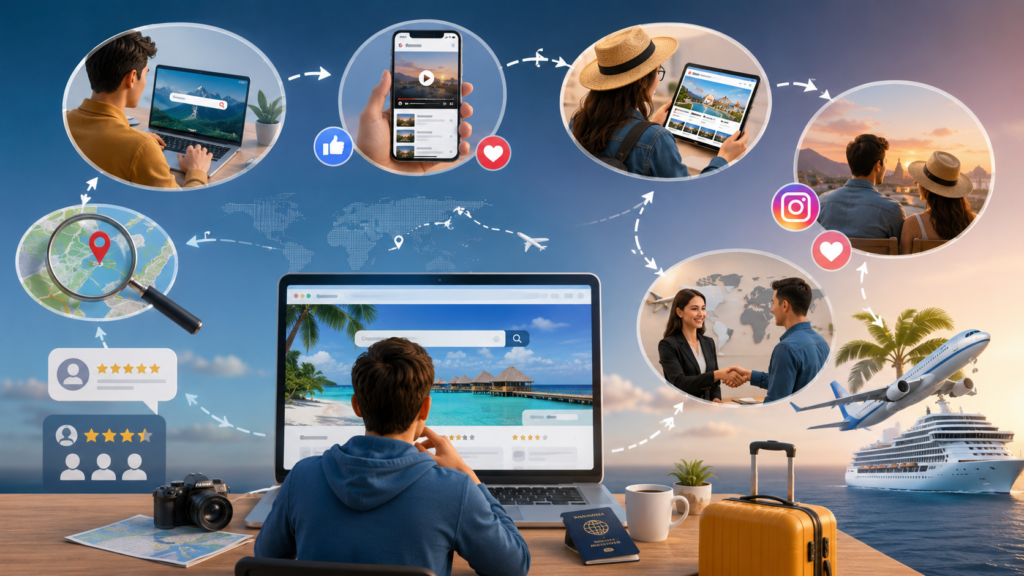
Travelers today begin their journey online. They search for destinations, compare itineraries, watch travel videos, read reviews, and spend days or even weeks researching before making a booking decision.
Without proper digital marketing, your tours remain hidden among thousands of competing offers.
I realized that I wasn’t competing only with local travel agencies anymore. I was competing with businesses from across the country and sometimes across the world.
That meant I needed a smarter approach.
Understanding What Travelers Really Want
Travel marketing isn’t simply about promoting destinations.
People don’t book a tour because of a list of attractions.
They book because they imagine themselves experiencing something memorable.
Some want peaceful mountain mornings.
Others dream of family vacations without planning every detail.
Many want honeymoon memories they’ll cherish forever.
Adventure lovers look for excitement.
Senior travelers seek comfort.
Corporate groups value smooth organization.
Families want safety and convenience.
The moment I shifted my marketing from selling packages to solving travel needs, my advertisements started performing much better.
Instead of saying “5 Nights and 6 Days Tour Package,” the messaging focused on the experience people could expect.
That emotional connection made an enormous difference.
How Smart Travel Marketing Ads Changed Everything
Once I started running professionally planned travel ads, I noticed something remarkable.
The people contacting me were already interested.
They weren’t random visitors.
They had searched for destinations.
They had visited travel websites.
Some had watched destination videos.
Others had compared prices online.
The advertisements reached users who were already planning a vacation.
Instead of convincing someone to travel, I was simply helping them choose my services.
This dramatically improved inquiry quality.
People asked meaningful questions.
They wanted availability.
They wanted customization.
Most importantly, many of them booked.
That was the biggest difference between ordinary advertising and targeted travel marketing.
Creating Ads That Feel Personal
One mistake many travel businesses make is creating advertisements that look exactly like everyone else’s.
Stock photos.
Generic slogans.
Discount offers.
Limited-time deals.
While discounts may attract clicks, they don’t always attract serious travelers.
Instead, personalized advertisements helped create genuine interest.
The campaigns focused on destinations, experiences, family holidays, honeymoon trips, educational tours, adventure vacations, spiritual journeys, and seasonal travel opportunities.
Each advertisement spoke directly to a specific audience instead of trying to appeal to everyone.
That personal touch made people feel understood.
And people naturally respond to businesses that understand what they’re looking for.
Google Ads Helped Me Reach Ready-to-Book Customers
One of the biggest turning points came through Google Ads.
Unlike traditional advertising, Google allows businesses to appear exactly when people are searching for services.
Someone searching for tour packages, travel planning, holiday bookings, educational trips, honeymoon destinations, or customized itineraries is already interested.
These aren’t cold audiences.
They’re potential customers with intent.
Appearing in front of these users dramatically increased quality leads.
Instead of chasing customers, I started meeting them exactly where their travel planning began.
Social Media Became More Than Just Posting Pictures
Before improving my marketing strategy, I treated social media like an online photo album.
Beautiful landscapes.
Hotel pictures.
Travel memories.
Occasional offers.
While attractive content received likes, likes rarely turned into bookings.
Once paid advertising entered the strategy, everything changed.
Campaigns reached carefully selected audiences based on travel interests, locations, demographics, online behavior, and previous engagement.
Instead of hoping someone would accidentally discover my page, my tours appeared directly in front of people most likely to book.
The conversations became more genuine.
People requested itineraries.
Families asked for customized vacations.
Corporate clients inquired about group tours.
Students looked for educational travel opportunities.
The audience became much more relevant.
Search Engine Optimization Continued Bringing Long-Term Results
Advertising generates immediate visibility, but organic search builds long-term authority.
I learned that publishing useful travel content consistently helped attract visitors without relying entirely on paid campaigns.
Articles answering traveler questions, destination guides, seasonal travel advice, packing tips, budget planning suggestions, and itinerary ideas gradually improved search visibility.
When people repeatedly found helpful information from my business, they naturally trusted the brand more.
Eventually, many visitors who first discovered educational content returned later to book tours.
That combination of paid advertising and SEO created a healthy marketing balance.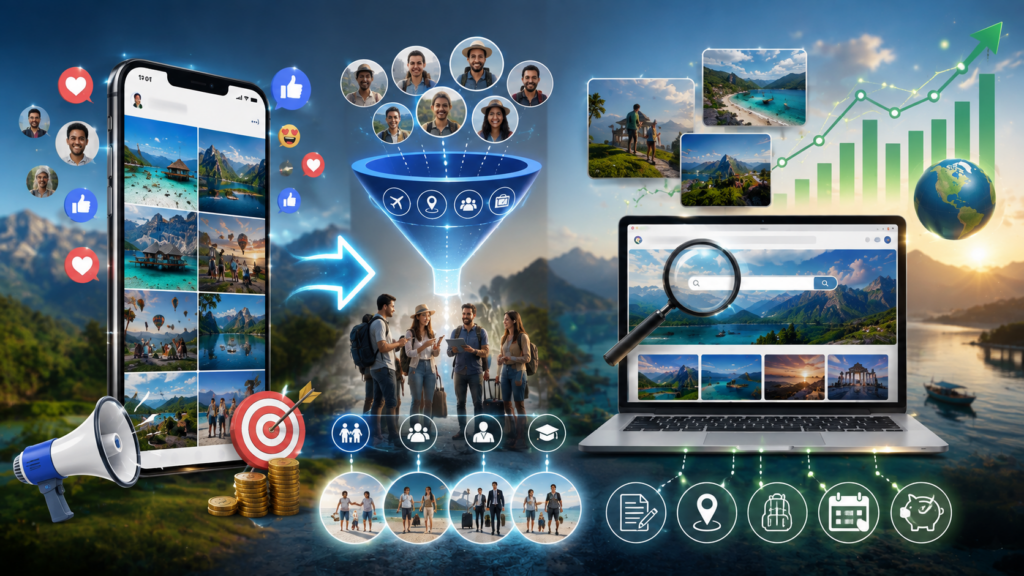
Website Experience Matters More Than Most Businesses Realize
Driving traffic is only half the job.
If visitors land on a slow, confusing website, they’ll leave within seconds.
I invested time in improving website performance, clearer package information, faster loading pages, mobile responsiveness, better inquiry forms, trust signals, customer testimonials, and easy navigation.
Every small improvement reduced friction during the booking process.
People found answers quickly.
They could compare packages easily.
They knew how to contact us.
The booking journey became much smoother.
Advertising brought visitors.
A better website converted them.
Remarketing Brought Back Interested Travelers
One of the most valuable discoveries was remarketing.
Most travelers don’t book immediately.
They research.
They compare.
They discuss plans with family.
They check vacation dates.
Sometimes they simply get distracted.
Remarketing advertisements gently reminded previous visitors about destinations they had already explored.
Instead of disappearing after one website visit, my business stayed visible throughout their decision-making process.
Many bookings came weeks after the initial website visit because the brand remained familiar.
Local Search Helped Generate Nearby Customers
Many travel businesses overlook local visibility.
People often search for nearby travel agencies before making bookings.
Optimizing local business listings, collecting authentic customer reviews, maintaining accurate business information, and improving local search presence increased inquiries from nearby customers.
Trust grows quickly when travelers can see genuine reviews from people in their own city.
Local search became another consistent source of bookings.
Content Marketing Built Confidence Before the First Conversation
Travel is an emotional purchase.
People spend significant amounts of money.
They trust businesses with precious family vacations.
Confidence matters.
Instead of only promoting destinations, educational content answered real traveler concerns.
Budget planning.
Visa guidance.
Seasonal weather.
Packing recommendations.
Travel safety.
Family-friendly activities.
Destination comparisons.
This helpful approach positioned the business as an advisor rather than simply another travel seller.
When customers finally contacted us, much of the trust had already been established.
Analytics Changed Guesswork into Smart Decisions
Earlier, marketing decisions were mostly assumptions.
I didn’t know which advertisements performed well.
I couldn’t identify where inquiries came from.
Budget allocation felt uncertain.
Analytics completely changed that.
Tracking visitor behavior, advertising performance, conversion rates, inquiry sources, keyword performance, audience engagement, and campaign results provided clear insights.
Poor-performing campaigns could be improved.
Successful campaigns received larger budgets.
Marketing became data-driven instead of emotional.
This significantly improved return on investment.
Consistency Produced Better Results Than One-Time Campaigns
One important lesson was that successful travel marketing isn’t about launching one advertisement and expecting miracles.
Travel demand changes throughout the year.
Different destinations become popular during different seasons.
Customer interests evolve.
Consistent optimization, fresh creatives, updated offers, seasonal campaigns, audience refinement, and ongoing content creation kept performance improving month after month.
Marketing became an ongoing business activity rather than a temporary experiment.

Building Trust Was More Powerful Than Offering Discounts
Many travel businesses compete only on price.
I discovered that trust often matters more.
Authentic customer reviews.
Professional communication.
Clear cancellation policies.
Transparent pricing.
Real travel photographs.
Prompt responses.
Useful destination advice.
These elements created confidence before customers even spoke with us.
People don’t necessarily book the cheapest package.
They book the one they trust most.
Complete Digital Marketing Made Every Channel Work Together
The biggest transformation happened when every marketing activity worked as one complete system rather than separate efforts.
Search engine optimization increased visibility.
Google Ads generated immediate inquiries.
Social media advertising expanded audience reach.
Content marketing built credibility.
Website optimization improved conversions.
Local SEO strengthened nearby discovery.
Performance tracking refined future campaigns.
Remarketing recovered missed opportunities.
Together, these services created a marketing ecosystem that continuously attracted new travelers while nurturing returning customers.
Instead of relying on a single channel, every platform supported the others, producing more stable and predictable booking growth.
The Real Difference Was Reaching the Right Audience
Looking back, I realize the success wasn’t simply because I spent money on advertisements.
The real difference came from reaching the right people with the right message at exactly the right time.
Travelers searching for vacations found helpful information instead of aggressive sales pitches.
Families discovered experiences that matched their needs.
Couples found honeymoon inspiration.
Students explored educational tours.
Adventure seekers found exciting opportunities.
Business travelers received organized travel solutions.
Every campaign became more relevant because it focused on people rather than impressions.
That’s what ultimately turned marketing into actual bookings.
Suggested Reading: How Google Ads Helped My HVAC Business Beat Local Competition
Conclusion
Getting real tour bookings wasn’t about luck or offering the lowest prices. It came from building a complete digital marketing strategy that connected with travelers throughout their decision-making journey. By combining search engine optimization, Google Ads, social media advertising, website optimization, content marketing, local SEO, remarketing, and performance analytics, I stopped chasing customers and started attracting people who were genuinely ready to travel. If you’re struggling to generate consistent travel inquiries, working with an experienced digital marketing partner can make a measurable difference. Complete Gurus provides tailored digital marketing solutions for travel businesses, including SEO, Google Ads, Meta Ads, website development, content marketing, local SEO, conversion optimization, and performance-driven strategies designed to increase quality leads and real bookings. Learn more about how their team helps travel businesses grow by visiting https://completegurus.com/.

Ashutosh Mishra is an AI Visibility & Performance Marketing Expert with 14+ years of experience helping businesses grow through AI Visibility (AEO/GEO), Google Ads, Meta Ads, and SEO. He partners with founders and business leaders to build data-driven growth strategies that increase visibility, improve marketing performance, and help businesses get discovered, trusted, and recommended in the age of AI.