


Quick Summary
The blog explains how Instagram marketing helped a new clothing brand grow from almost no engagement to its first 100 orders without relying on viral content or aggressive selling. Instead, growth came from understanding the right audience, telling authentic product stories, maintaining a recognisable brand voice and visual identity, responding personally to customers, and using Instagram Stories and educational content to build relationships and trust.
The key lesson is that sustainable Instagram growth comes from trust and consistency rather than shortcuts. Genuine conversations turned engagement into sales, customer experiences created social proof, and patient, purposeful content gradually made orders more predictable. The first 100 orders ultimately came from building belief in the brand one post, story and customer interaction at a time.
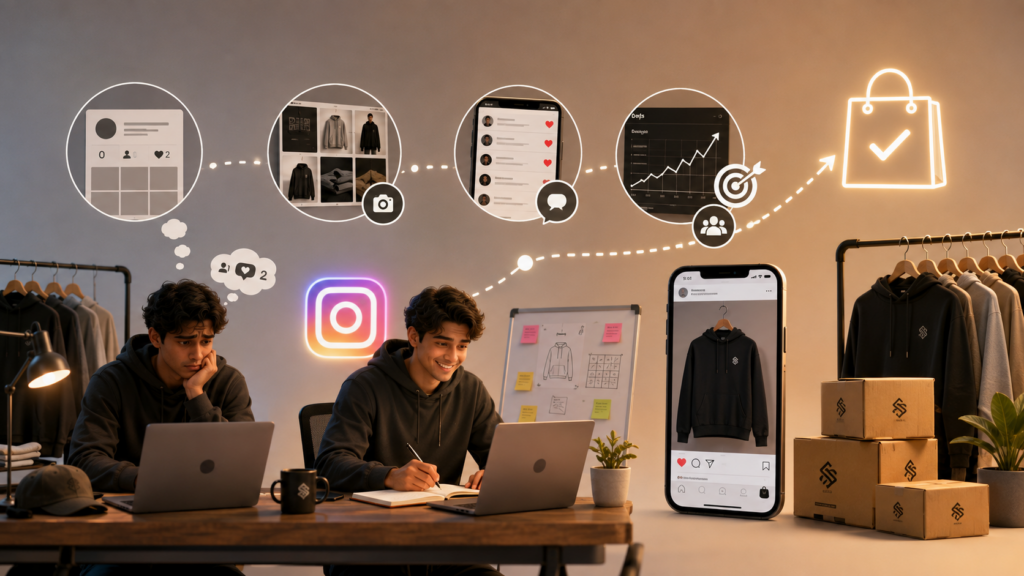
When I first launched my clothing brand, Instagram felt like a gamble. Not the flashy, all-or-nothing kind, but the quiet kind where you keep asking yourself whether the time you’re investing will ever come back to you. I wasn’t chasing virality. I wasn’t dreaming of millions of followers overnight. All I wanted was proof. Proof that someone out there would see my designs, connect with the story behind them, and actually click “Buy.”
What I didn’t realize back then was that Instagram isn’t really about selling clothes. It’s about selling belief. Belief in a brand, belief in consistency, belief that there’s a real human on the other side of the screen who understands style, quality, and trust. That understanding changed everything and it’s exactly what got my clothing brand its first 100 orders.
Starting With Zero Followers and a Lot of Doubt
Every success story likes to gloss over the awkward beginning. The part where your Instagram page has single-digit likes and most of them are from friends who feel obligated. That was me. My feed looked clean, my designs were ready, but engagement was painfully slow. No DMs. No comments from strangers. No sales notifications lighting up my phone.
What kept me going was a mindset shift. Instead of asking, “Why isn’t Instagram working?” I started asking, “How do real brands actually grow here?” That’s when I stumbled upon strategic digital marketing frameworks shared by platforms like Complete Gurus, where the emphasis isn’t on shortcuts, but on systems that build traction naturally.
Understanding That Customers Don’t Buy Clothes, They Buy Stories
One of the biggest mistakes I made early on was posting my products like a catalog. Flat lays. Studio shots. Price tags. It looked professional, but it felt empty. People weren’t stopping to look because there was nothing to feel.
The turning point came when I reframed my content around stories. I started sharing why a design existed. What inspired a particular fabric. How a color was chosen. I posted behind-the-scenes moments that weren’t polished but were honest. Instagram rewarded that honesty with reach, and more importantly, with curiosity.
Customers didn’t just see a hoodie or a dress anymore. They saw intention. And intention builds trust faster than any discount ever could.
Why Instagram Became My Best Salesperson
Instagram works because it mirrors real human behavior. People don’t wake up wanting to be sold to. They wake up wanting to feel inspired, understood, or entertained. When your brand becomes part of that emotional rhythm, selling stops feeling like selling.
I stopped pushing my products and started positioning them. Instead of saying “Buy now,” I showed how my clothes fit into real lives. A casual coffee run. A long workday. A weekend outing. Those moments felt familiar to my audience, and familiarity breeds comfort.
This is where Instagram outperformed every other channel I tried. It didn’t feel transactional. It felt conversational.
Finding the Right Audience Instead of Chasing Everyone
Another hard lesson was realizing that not everyone is my customer and that’s okay. At first, I wanted everyone to like my brand. That mindset diluted my messaging. Once I got clear on who my clothing was really for, everything sharpened.
I adjusted captions to speak directly to that person. I used language they’d actually use. I posted at times they were likely scrolling. Slowly, Instagram’s algorithm caught on, and my content started landing in front of people who genuinely cared.
This wasn’t accidental. It came from understanding audience behavior, something I kept refining by studying proven digital marketing insights and real-world case studies similar to what Complete Gurus emphasizes strategy before scale.
Content Consistency That Didn’t Feel Robotic
Consistency is one of those words that gets thrown around so much it loses meaning. Posting daily doesn’t help if your content feels forced. I learned to focus on rhythm instead of pressure.
Some weeks I posted more. Some weeks less. But I always stayed aligned with my brand voice. My captions sounded like me. My visuals stayed recognizable. Over time, people began to recognize my posts without even seeing the username. That’s when you know branding is working.
Consistency isn’t about frequency. It’s about familiarity.
How Engagement Turned Into Conversations, and Conversations Turned Into Orders
The first DM from a stranger felt unreal. Someone asking about sizing. Someone else complimenting a design. I replied to every message personally, without templates or automation. Those conversations mattered.
Instagram rewards engagement, but customers reward authenticity. When people felt heard, they remembered my brand. Some didn’t buy immediately, but weeks later they came back. And when they did, they didn’t ask many questions. Trust had already been built.
Those early conversations laid the foundation for my first real orders. Not viral posts. Not ads. Just genuine human interaction.
The First Sale That Changed Everything
I still remember the first order notification. It wasn’t a big number. But emotionally, it was massive. It proved the system worked. That one order validated every hour spent creating content, responding to messages, and refining strategy.
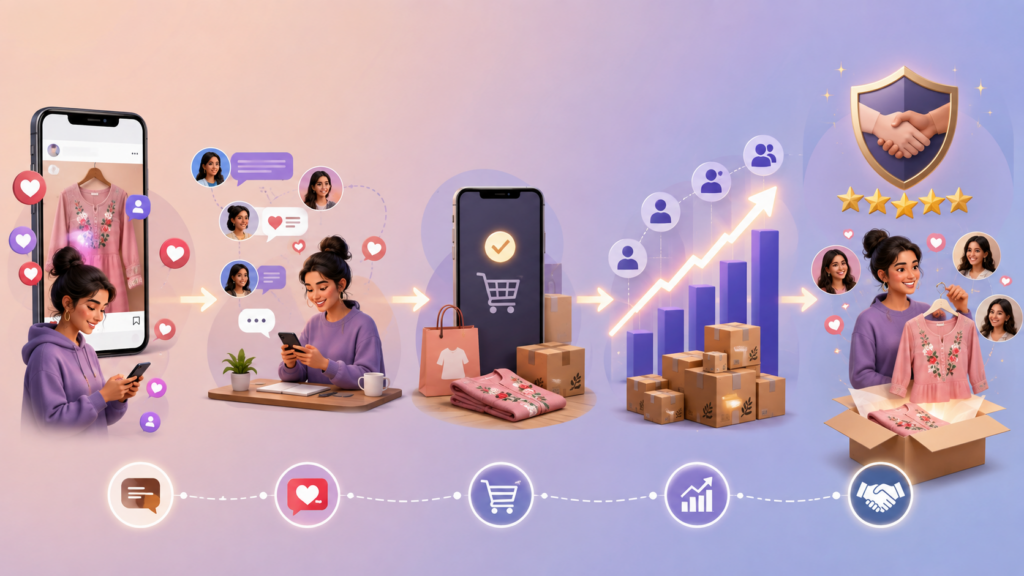
From there, momentum built naturally. One order turned into five. Five turned into twenty. And before I knew it, I had crossed my first 100 orders almost entirely driven by Instagram.
Not because I hacked the algorithm, but because I respected the platform and the people on it.
Why Trust Outperformed Discounts Every Time
I experimented with offers, but nothing worked as well as trust. Customers who followed my journey were less price-sensitive. They weren’t buying just fabric and stitching. They were buying into a brand they felt connected to.
Instagram allowed me to show consistency over time. And consistency builds credibility. When customers trust you, they don’t need convincing, they need reassurance.
That reassurance came from showing up, being transparent, and delivering what I promised.
When Content Stopped Being Noise and Started Creating Demand
There’s a subtle shift that happens on Instagram when your content stops blending in and starts standing out. It’s not dramatic. You don’t wake up viral. What changes is how people react. They pause. They read captions. They save posts. They come back.
That’s when I realized my content was no longer noisy. It was creating demand.
I stopped posting just to “stay active” and started posting with intent. Each piece of content had a reason to exist. Some posts were meant to spark conversation. Others were meant to educate. Some simply reinforced the brand’s personality. When content has purpose, the audience feels it even if they can’t articulate why.
Demand isn’t created by shouting louder. It’s created by showing up smarter.
Learning to Speak Like a Brand, Not a Seller
One of the biggest breakthroughs for my clothing brand was developing a brand voice that felt natural. Early on, my captions sounded like ads. Polished, correct, and completely forgettable. Once I allowed myself to sound like a real person, engagement shifted almost immediately.
I started writing captions the way I’d talk to a customer in person. Honest. Slightly imperfect. Confident without being pushy. That tone made people comfortable enough to engage, and engagement led to visibility.
This is where understanding digital communication strategy really matters. Platforms like Complete Gurus emphasize that branding is not just visual it’s verbal. The way you speak online defines how people perceive your value.
When my brand started sounding consistent across posts, stories, and DMs, customers began to trust that consistency.
Why Instagram Stories Became My Secret Weapon
Feed posts built credibility, but stories built relationships. Stories allowed me to be present without being perfect. I showed packaging days, fabric swatches, order prep moments, even small setbacks.
What surprised me was how much people cared. They replied to stories. They asked questions. They rooted for the brand. Stories created intimacy in a way no other format could.
That intimacy translated into sales because customers felt involved. When they saw a product drop, it didn’t feel like a launch, it felt like the next chapter of a story they were already following.
Instagram Stories didn’t just keep my brand visible. They made it feel alive.
Social Proof That Didn’t Feel Forced
At first, I hesitated to share customer feedback. It felt awkward. But once the first few orders came in, I realized something important: people trust other people more than they trust brands.
I began sharing screenshots of DMs, tagged posts, and honest reactions. No exaggeration. No over-editing. Just real responses from real customers. That social proof quietly did what no ad copy ever could.
Potential buyers saw themselves reflected in existing customers. That reflection reduced hesitation. When someone sees others enjoying your product, buying feels safer.
Instagram thrives on shared experiences, and social proof is simply shared confidence.
The Role of Visual Consistency in Building Recognition
My designs mattered, but how I presented them mattered just as much. I paid attention to lighting, background, and overall aesthetic. Not to impress but to be recognizable.
Over time, my feed developed a rhythm. A mood. A visual identity. People started recognizing my posts before reading captions. That’s when I understood the power of visual branding.
Consistency doesn’t mean boring. It means intentional. It means your brand has a look and feel that feels familiar, even as the content evolves.
This kind of visual discipline isn’t accidental. It’s strategic. And it’s something I refined by studying branding frameworks similar to those taught by Complete Gurus, where clarity always comes before creativity.
How Engagement Became a Two-Way Street
I stopped treating engagement like a metric and started treating it like a conversation. I replied to comments thoughtfully. I asked questions in captions. I acknowledged people who showed up consistently.
Instagram noticed, but more importantly, customers noticed.
When people feel seen, they stick around. When they stick around, they eventually buy. Engagement wasn’t just boosting reach, it was building relationships.
Those relationships created loyalty even before the first purchase.
Turning Hesitation Into Confidence Through Education
Many customers don’t hesitate because they don’t want the product. They hesitate because they don’t understand it yet. Instagram became my education platform.
I explained fabric choices. I showed fit details. I talked about care instructions. I addressed common concerns casually through posts and stories. Education reduces friction.
Instead of answering the same questions repeatedly in DMs, I let content do the heavy lifting. By the time someone reached out, they were already halfway convinced.
Education doesn’t feel like marketing when it’s honest. It feels like help.
The Psychological Shift That Triggered Consistent Orders
There was a moment when orders stopped feeling random. They became predictable. Not guaranteed but expected. That shift happened when I stopped waiting for validation and started trusting the process.
Confidence reflects outward. When I believed in my brand, customers felt it. My captions sounded surer. My launches felt calmer. That energy translated.
Instagram is sensitive to authenticity. People can sense when a brand is unsure of itself. Once I stopped seeking approval and focused on value, growth followed.
Why Patience Outperformed Every Growth Hack
I tried shortcuts. Trending audio. Viral formats. Some worked temporarily. None built lasting results. What worked was patience paired with strategy.
Growth that sticks is slow at first. Almost invisible. But it compounds. Every post builds on the last. Every conversation adds weight to your brand.
Instagram rewarded my patience with consistency. Customers rewarded it with trust.
And trust is what took my clothing brand from its first sale to its first 100 orders.

What Changed After the First 100 Orders
Crossing the first 100 orders didn’t suddenly make everything easy, but it changed how I looked at my brand. Instagram stopped feeling like an experiment and started feeling like infrastructure. I knew what kind of content brought conversations. I understood which posts built trust and which ones quietly nudged people toward buying.
Most importantly, I stopped chasing approval. I wasn’t trying to impress the algorithm anymore. I was showing up for the audience that had already shown faith in my work. That shift brought clarity. And clarity brought momentum.
The brand felt real now not just to customers, but to me.
Why Instagram Marketing Worked When Nothing Else Did
Instagram worked because it allowed my clothing brand to grow the way real relationships grow. Slowly, visibly, and with context. Customers didn’t discover my brand in one moment. They warmed up to it over time. They watched. They got engaged. They trusted me. And then they bought it.
There was no pressure-heavy sales funnel. No aggressive pushing. Just consistent presence, honest storytelling, and a clear brand voice that didn’t pretend to be anything it wasn’t.
That’s the part most people miss. Instagram doesn’t reward perfection. It rewards intention.
The Biggest Lesson I’d Share With Anyone Starting Out
If there’s one thing this journey taught me, it’s that your first customers don’t come from trying to sell harder. They come from understanding better. Understanding your audience. Understanding your brand. Understanding the platform you’re using.
Instagram didn’t give my clothing brand its first 100 orders because of luck. It happened because every post, every reply, and every story worked together to build belief. Belief turns viewers into followers. Followers into customers. Customers into advocates.
Suggested Reading: Content vs. Ads: What Works Better for Long-Term Results?
Conclusion
Looking back, Instagram marketing didn’t just help me sell clothes, it helped me build confidence in my brand. It showed me that when you focus on people instead of numbers, growth follows naturally. The first 100 orders weren’t the result of viral success, but of consistent effort, thoughtful strategy, and learning how to communicate value in a crowded digital space. For anyone trying to turn an idea into a brand, this journey proves that with the right guidance, mindset, and marketing approach, meaningful growth is absolutely achievable and that’s exactly where platforms like https://completegurus.com/ play a crucial role in helping brands move from uncertainty to real, measurable success.

Ashutosh Mishra is an AI Visibility & Performance Marketing Expert with 14+ years of experience helping businesses grow through AI Visibility (AEO/GEO), Google Ads, Meta Ads, and SEO. He partners with founders and business leaders to build data-driven growth strategies that increase visibility, improve marketing performance, and help businesses get discovered, trusted, and recommended in the age of AI.