
Quick Summary
On-Page SEO is the foundation of a successful SEO strategy because it helps search engines understand what your website is about, who it serves, and which searches it should appear for. By optimising keywords, search intent, title tags, meta descriptions, content, URLs, heading structure and internal links, businesses can make their pages clearer, more relevant and easier for both users and search engines to navigate.
Strong On-Page SEO also creates a better foundation for off-page SEO and link building. Rather than relying on backlinks alone, businesses should first ensure their pages provide useful content, clear structure and a strong user experience. This makes subsequent SEO efforts more effective and supports sustainable organic visibility and rankings.
Every time you search for something on Google whether it’s “best coffee shop near me” or “how to fix a leaking tap” you’re tapping into a system built with one mission: deliver the most relevant, useful results from billions of websites. Behind the scenes, that “system” is powered by complex algorithms, machine learning, user experience ratings, and a whole world of optimization practices. Among all these practices, there’s one that stands at the very beginning of any successful SEO journey On-Page SEO.
But why is On-Page SEO the first step to ranking any website? Why can’t you jump straight to backlinks, paid ads, or social media hype? To answer that, let’s explore what On-Page SEO really is, how it influences your website’s visibility, and why it should be the foundation before anything else.
Today, we’ll unpack this in a conversational way that not only teaches you the strategy but lets you feel why it matters for your business, whether you’re launching a blog, an online store, or a service website.
The Heart of Search Engines: Understanding How They Read Your Site
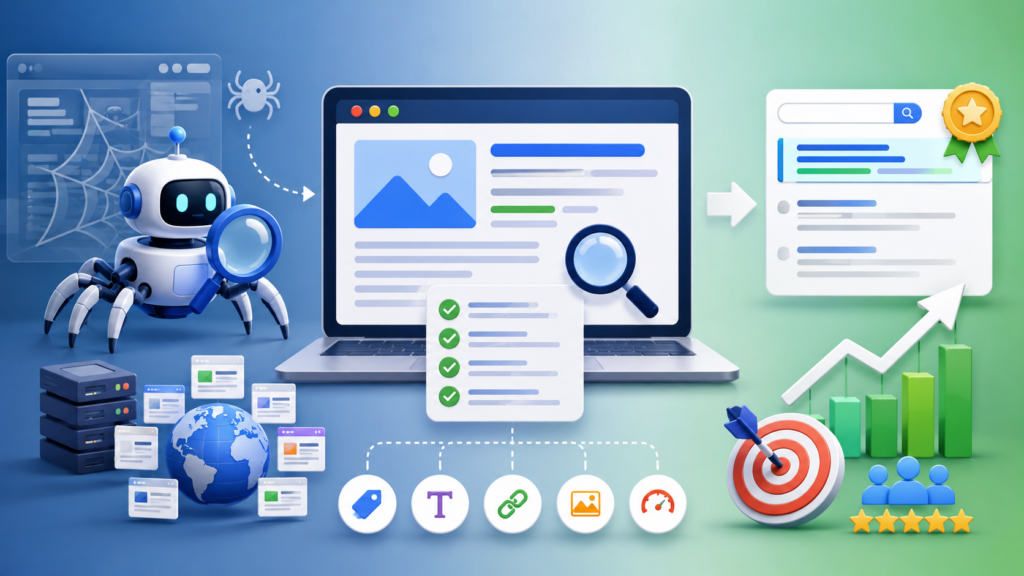
Imagine search engines like Google as curious readers who can’t see your website the way humans do. They don’t hear your brand story, and they don’t look at the colors on your homepage. Instead, they read your site through code text, structure, tags, and user signals. This is where On-Page SEO becomes your voice.
On-Page SEO tells search engines what your content is about, who it’s for, and why it deserves to show up when someone types a query. From titles and meta descriptions, to keywords and headings, every piece of information you optimize creates a clearer signal to search engines about your page’s purpose.
Without this clarity, your content becomes like a book without a title lost on a huge shelf with no one knowing where to place it.
Search engines look for relevance and quality. And On-Page SEO is what helps deliver both.
On-Page SEO: The Foundation of Digital Visibility
Let’s say you’re a local bakery in Varanasi trying to rank for “best fresh bread.” You might have the most delicious recipes and a loyal walk-in crowd, but online visibility won’t happen by chance. On-Page SEO is the first step in that journey because it shapes how your website appears to Google, helping it match your site with the right queries.
On-Page SEO includes several elements including keyword usage, quality of content, internal linking, URL structure, heading hierarchy, and more. When done right, these elements don’t just attract search engines; they guide them. That’s why most professional SEO services, including those offered by Complete Gurus, put strong emphasis on On-Page Optimization before tackling other SEO aspects like off-page or technical tweaks.
Just like laying a strong foundation makes a house stable, On-Page SEO makes your website understandable and rankable.
How On-Page SEO Speaks to Both Users and Search Engines
One of the beautiful things about On-Page SEO is that it serves a dual purpose. First, it gives search engine crawlers the right signals. Second, it makes sure your visitors have a great experience.
Take a moment to think about your own internet behavior. When you land on a page and the title doesn’t match your expectation, or the content feels sloppy, you leave quickly. Search engines track this behavior (bounce rate, page time, click-through rate). If many visitors behave this way on your site, Google will assume your page isn’t helpful and might lower its rank.
When On-Page SEO is done correctly, your content resonates with the user’s helpful headings, useful language, clear intent which in turn improves how users interact with your website. This human-first quality signals to search engines that your page is valuable.
This is why experts always begin here: because user experience and search engine understanding must align if you want lasting online visibility.
Keywords: The Language of Your Audience
Keywords are often misunderstood. They’re not just random words you sprinkle into your content. They are the very language your audience uses when seeking solutions online.
On-Page SEO starts with understanding intent. What are people searching for? Are they informational (“what is On-Page SEO?”), transactional (“buy running shoes online”), or navigational (“Nike official site”)? Once you map that intent, your keywords stop being guesswork and become targeted pathways that guide users to your site.
When you match your content with well-researched keywords in strategic spots such as titles, headings, and naturally within the body you create a clear cue for search engines. Your page becomes relevant not just in topic but in context.
Not surprisingly, many businesses underutilize keywords or use them incorrectly. That’s why On-Page SEO involves thoughtful keyword analysis before anything else. It’s a proactive move, not a reactive one.
Meta Tags and Titles: Your First Impression in Search Results
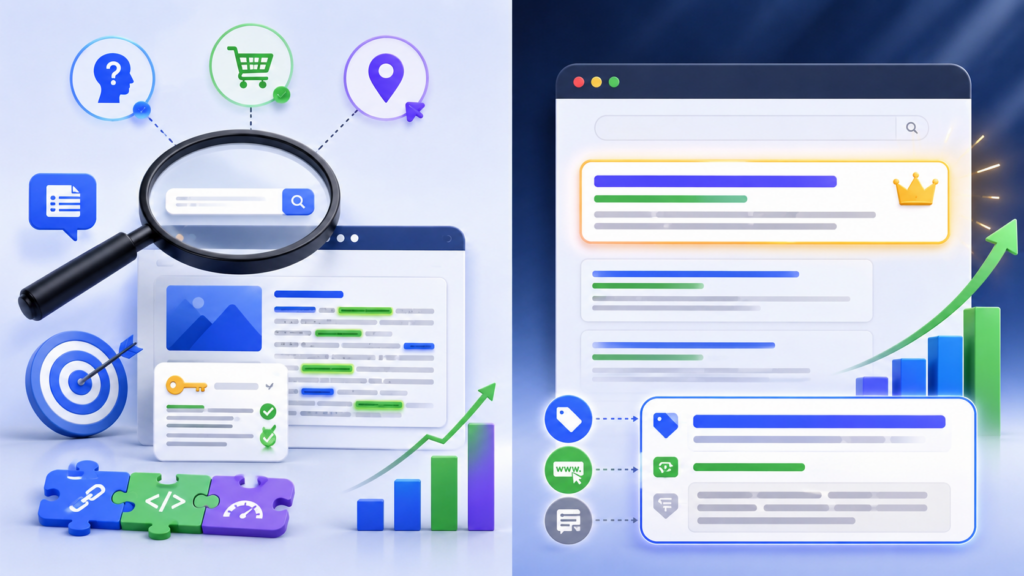
When someone types a query on Google, the first thing they see are the title tag and the meta description. Think of these as your website’s business card in search results.
Title tags tell the user and search engine what the page is about. Meta descriptions offer a small summary that entices the reader to click through.
A clear, keyword-focused title tag improves click-through rates. Better click-through rates send positive performance signals to Google, which can elevate your ranking.
This is one of the most critical parts of On-Page SEO because it affects how people perceive your site before they even land on it.
Content That Answers Intent Rather Than Just Fills Space
Content is at the center of On-Page SEO. But here’s the catch: content is not about length it’s about depth, relevance, and usefulness. You can publish 10,000 words and still not rank if your content doesn’t answer the audience’s questions with clarity.
Search engines interpret content Quality by how well it matches the user’s intent, how unique it is compared to others, how much engagement it gets, and how well it answers searchable queries.
Your content should be written for humans first and search engines second. This means clear language, practical examples, easily digestible structure, and naturally integrated keywords.
Technical quality helps search engines read it. Emotional quality keeps users engaged. When this balance exists, On-Page SEO becomes more than just a checklist; it becomes a communication strategy with your audience.
URL Structure: Making Navigation Simple for Crawlers and Users
Sometimes people overlook this, but URLs matter. A clean, descriptive URL tells both users and crawlers what the page contains. A structure like yourwebsite.com/bakery-bread-guide is clearer than yourwebsite.com/page1234.
Right URLs improve transparency and help search engines index your pages more accurately.
This is part of On-Page SEO that many businesses miss, yet it’s foundational because it connects structure with discoverability.
Headings and Subheadings: Guiding the Reader’s Eye and Search Engines’ Crawlers
Headings (H1, H2, H3) do more than break up text. They act like signposts for both users and search engine bots.
An optimized heading structure ensures key ideas are highlighted. It tells search engines which parts of your content are most important, helping them understand the hierarchy and relevance of your information.
This clarity boosts the likelihood of ranking for relevant keywords.
Internal Linking: Creating a Web of Context Within Your Site
Internal linking is another powerful component of On-Page SEO that’s often underrated. By linking related content within your own website, you help search engines move through your pages more efficiently. It also keeps users engaged longer by suggesting related information.
A thoughtful internal linking structure signals authority and relevance across your own pages which in turn improves the visibility of the entire site.
When every page supports others through relevant links, your SEO foundation becomes interconnected and strong.

User Experience Signals: The Silent Ranking Influence
On-Page SEO has a direct impact on how users behave on your website. If your page loads slowly, people leave. If your content doesn’t match expectations, they leave. If your site isn’t mobile-friendly, search engines penalize you.
Good On-Page SEO improves readability, navigation, and engagement. Search engines interpret positive user behavior as a signal of usefulness and rank accordingly.
This is why modern SEO isn’t about tricks anymore. It’s about creating real, measurable value that users appreciate and search engines reward.
On-Page SEO Sets the Stage for Off-Page Success
Once your On-Page SEO is in order, off-page efforts like link building, social sharing, and brand mentions become more effective. Why? Because other sites want to link to pages that are already relevant and valuable.
You can build dozens of backlinks to a poorly optimized page, and chances are it still might not rank well. On the other hand, a well-optimized page stands a far better chance of benefiting from external votes of confidence which are backlinks.
This is why On-Page SEO should come first. It ensures that everything external efforts push toward is already strong and understandable.
Real Businesses Don’t Compete on Luck They Compete on Strategy
If you’re a business owner or marketer, chances are you’ve seen competitors outrank you even when their products or services aren’t better. Often, the difference isn’t quality, it’s optimization strategy.
And at the heart of that strategy is On-Page SEO the things that make search engines understand who you are, what you offer, and whom you serve.
This foundational step cannot be skipped. Every other SEO effort off-page, technical, local, or mobile builds on top of it.
Why Professional Guidance Matters for On-Page SEO
Learning SEO on your own is possible, but keeping up with changes, algorithm updates, and best practices can be overwhelming. Search engine algorithms evolve constantly, and what worked yesterday might not work today.
Working with seasoned SEO professionals ensures that your On-Page SEO is grounded in strategy rather than guesswork. These experts don’t just apply tactics, they craft optimized narratives that resonate with both users and search engines.
That’s the difference between ranking temporarily and ranking consistently.
Suggested Reading: How Local SEO Helped My Clinic Get Constant Appointment Calls
Conclusion
On-Page SEO is more than a technical exercise. It is the first step, the foundation, and the heart of ranking any website in today’s competitive online world. It’s what helps search engines understand your content, what makes your brand visible to your audience, and what keeps visitors engaged once they land on your pages.
Done right, it translates your website into the language search engines speak and the experience users crave. It’s where clarity meets strategy, and visibility meets value.
If you want your website to truly rank, On-Page SEO is the first investment you must make not later, not halfway through your strategy, but right at the beginning.
For professional guidance on optimizing your website from the ground up with expert SEO services that start with strategic On-Page SEO and extend to comprehensive SEO campaigns designed for long-term growth, explore the services at https://completegurus.com/ where tailored solutions meet real results.

Ashutosh Mishra is an AI Visibility & Performance Marketing Expert with 14+ years of experience helping businesses grow through AI Visibility (AEO/GEO), Google Ads, Meta Ads, and SEO. He partners with founders and business leaders to build data-driven growth strategies that increase visibility, improve marketing performance, and help businesses get discovered, trusted, and recommended in the age of AI.