
Quick Summary
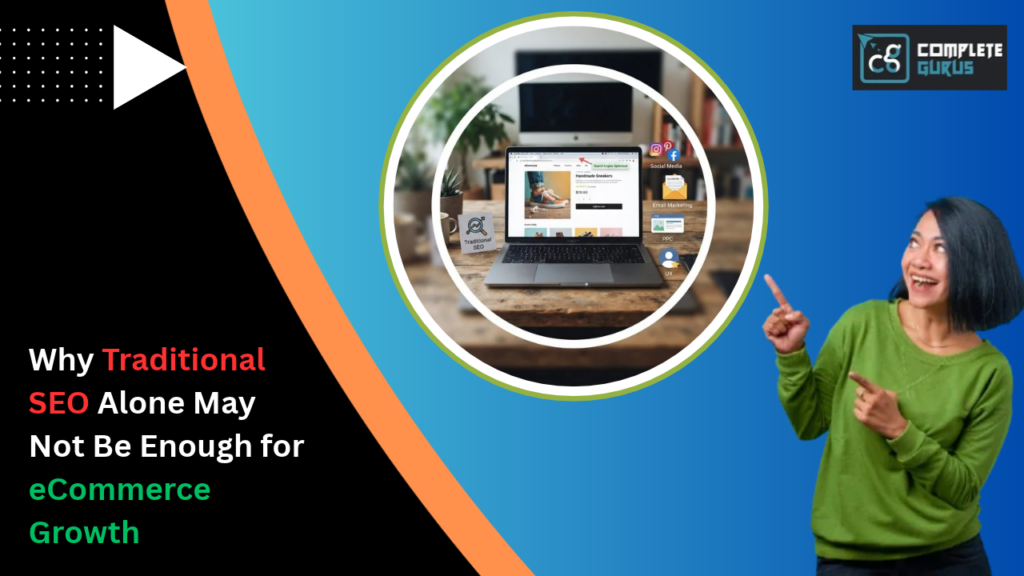
If you run an online store, you have probably been told at some point that SEO is the answer. Rank on page one, collect the traffic, watch the orders roll in. That advice was never wrong, exactly, but it has become incomplete. Search results now include AI-written answers, shopping carousels, sponsored placements, and product suggestions from assistants that did not exist a few years ago. Meanwhile, plenty of buyers discover products on Instagram or Facebook without typing a single query. This article explains why classic SEO still matters but cannot carry your growth alone, what tends to go missing when it is your only channel, and how stores are combining organic work with paid advertising, social campaigns, and AI search visibility to grow in a way that actually shows up in revenue.
Where Traditional SEO Still Earns Its Keep
Let’s start with some fairness, because it would be silly to write off SEO. A well-structured store with clean category pages, fast load times, sensible internal links, and product descriptions written for people rather than crawlers builds something that keeps paying you back. Organic visitors tend to arrive with intent, they do not cost you a click fee, and a page that ranks well can keep pulling in buyers for months or years after you publish it.
There is also a trust effect that is hard to buy. Shoppers see an organic listing and assume the search engine found it relevant on its own merits. Technical foundations matter here too. If your site throws crawl errors, duplicates its product pages across filter combinations, or loads like it is wading through mud on a phone, no amount of clever marketing elsewhere will fully compensate. Platform-specific tuning, whether you are on Shopify, Magento, BigCommerce, or WordPress with WooCommerce, still decides how easily search engines understand what you sell.
So the argument is not that SEO is dead. The argument is that treating it as your entire growth engine puts a heavy load on a channel that was never designed to carry it alone. The rest of this piece is about where it strains and what to do about it.
The Slow Burn Problem Nobody Mentions Up Front
Anyone who has spent time on organic growth knows the uncomfortable truth: it is slow. You publish category copy, fix site speed, build links, restructure navigation, and then you wait. Depending on how competitive your niche is, meaningful movement can take several months, and the early weeks often look like nothing is happening at all.
For a founder with inventory to move and bills to pay, that delay is not an abstract inconvenience. Imagine you have just launched a new line of ceramic planters ahead of the spring gardening rush. A blog post and some optimized product pages will not rank in time. By the time search engines finish evaluating your new URLs, the season you built the range for may already be fading.
Seasonality makes this worse. Shoppers research gifts, home goods, jewelry, and apparel in tight windows around holidays and sale events. Organic rankings do not flex to match your calendar. You cannot ask them to arrive faster because Black Friday is two weeks away. This is the first real gap in an SEO-only approach: it gives you durability, but it rarely gives you speed, and ecommerce is a business where timing is often the difference between a profitable quarter and a sluggish one.
There is another quieter issue. Rankings are a moving target. An algorithm update, a competitor with a bigger content budget, or a marketplace listing that suddenly outranks your own store can erase months of progress in a week. Relying on a single traffic source means your entire revenue line is exposed to forces you do not control.
Shoppers Don’t Search the Way They Used To
Here is where things get more interesting, and more urgent. The way people look for products is changing in front of us. Instead of typing “waterproof hiking boots women size 8” and scrolling through ten blue links, a growing number of shoppers ask a conversational question to an AI assistant and expect a short, confident recommendation back. They might say they need boots for a rainy week in Scotland and a modest budget, and let the assistant narrow the field.
When that happens, the old rules of ranking do not map cleanly onto what gets mentioned. An AI model pulling together an answer is not simply sorting pages by authority. It is looking for clear, well-structured, trustworthy information about products and brands it can describe accurately. If your product pages are vague, your specifications are buried in images, or your brand is barely mentioned anywhere credible, you may simply not appear in the answer, even if you sit comfortably on page one of a traditional results page.
This is the territory that answer engine optimization and generative engine optimization try to address. The idea is to make your catalog legible to the systems that summarize, compare, and recommend. Retail giants are already moving this way. Walmart, for example, has been experimenting with letting shoppers find products through AI conversations rather than a classic search bar, a shift that Complete Gurus has dug into in one of its case studies. When the biggest retailers rewire how discovery works, smaller stores cannot afford to assume the old playbook will keep delivering the same results.
The practical takeaway is simple. Ranking is no longer the only goal. Being understood, cited, and recommended is becoming just as important, and that requires work that traditional SEO checklists rarely cover.
Paid Search Fills the Gaps SEO Cannot Reach Quickly
If organic is the slow, steady foundation, paid search is the accelerator. Google Ads lets you show up for high-intent queries within days rather than months, and for ecommerce that usually means Shopping campaigns, Performance Max, dynamic search ads, and well-built search campaigns working together.
What makes paid so useful is control. You choose which products to push, what you are willing to pay for each sale, and which audiences deserve more attention. Got a high-margin item that is not ranking organically yet? Put the budget behind it. Clearing last season’s stock? Build a campaign around it and switch it off when the shelves are empty. That flexibility is something no content calendar can replicate.
Paid campaigns also generate data that feeds your SEO. Search term reports reveal the exact phrases real shoppers use when they buy, which is gold for deciding which pages to write, which product titles to rewrite, and which categories deserve more depth. Teams that treat paid and organic as rivals miss this loop completely. The sharper approach is to let ads test demand quickly and let SEO lock in the winners for the long haul.
The catch is that poorly managed ad accounts burn cash fast. Broad match keywords with no negatives, feeds with sloppy titles, and campaigns optimized for clicks instead of revenue can drain a budget while the dashboard still looks busy. This is why many store owners bring in specialists who live inside Google Ads daily, particularly for Shopify stores and larger catalogs where feed quality and campaign structure make or break profitability.
Meta Ads and the Shoppers Who Were Never Searching
Search captures demand that already exists. Social advertising creates it. That distinction is easy to overlook if your whole strategy revolves around keywords, but think about how many of your own purchases started with a scroll rather than a search. A scarf that appeared in your feed, a skincare brand a friend shared, a pet accessory you did not know you needed until you saw it demonstrated in a thirty-second clip.
Facebook and Instagram let you meet people in that moment of casual discovery. For fashion, jewelry, beauty, home decor, and pet products, categories where visual appeal drives impulse and desire, this channel can introduce your brand to people who would never have typed your product category into a search bar. Dynamic product ads then follow up with shoppers who viewed an item but did not buy, nudging them back with the exact product they left behind.
A full-funnel approach matters here. Cold audiences need a reason to care. Warm audiences need reassurance, reviews, or a gentle offer. Past customers need a reason to return. Stores that run a single generic campaign and wonder why results are flat usually have not separated these stages. Good creative testing, thoughtful audience segmentation, and honest tracking of cost per purchase turn social from a vanity exercise into a reliable revenue source.
And there is a nice side effect. The more people discover and search for your brand name after seeing your ads, the stronger your branded search volume becomes, which quietly supports your organic performance too. The channels feed each other when they are run with some coordination.
Your Product Pages Now Have Two Audiences
Every product page on your store is being read by two very different readers. One is the human shopper deciding whether to buy. The other is a machine, whether that is a search crawler, a shopping feed processor, or an AI model assembling an answer. Many stores write beautifully for the first and neglect the second.
Structured data is the bridge. Schema markup tells machines, in a format they understand, what a page contains: the product name, price, availability, ratings, shipping details, and more. Without it, systems have to guess, and guesses are where mistakes and omissions creep in. Clean JSON-LD implementation, thoughtful entity optimization, and clearly written product attributes help your items qualify for rich results and make them easier for AI tools to describe correctly.
Marketplaces add another layer. If you sell on Amazon, Walmart, or Etsy alongside your own store, your listings there compete in their own search ecosystems with their own ranking logic. Titles, bullet content, enhanced brand content, and storefront structure all influence whether a shopper ever reaches you. Keeping a consistent brand voice and accurate product data across your site and every marketplace also helps AI systems form a coherent picture of who you are and what you sell.
None of this is glamorous, but it is the kind of groundwork that separates stores that get recommended from stores that get skipped. It sits at the intersection of SEO, content, and data hygiene, which is precisely why it so often falls through the cracks when one person is trying to handle everything.
Measuring What Actually Pays the Bills
Here is a scene many store owners will recognize. The monthly SEO report arrives, full of impressions, keyword positions, and traffic graphs trending nicely upward. Then you check your bank balance and the story feels different. Traffic is not revenue, and rankings are not profit.
An SEO-only mindset tends to encourage vanity metrics because organic attribution is genuinely tricky. Visitors bounce between channels, return days later, and convert through a different route than the one that introduced them. Meanwhile, paid channels offer sharper numbers: spend, revenue, return on ad spend, cost per acquisition. When you combine both, you can finally see the full journey and decide where the next dollar should go.
Return on ad spend deserves particular attention because it connects marketing activity directly to margin. A campaign delivering sales at a loss is not a success, however good the click numbers look. Weekly reporting that shows spend, revenue, ROAS, and conversion data in plain language, without padding, lets you catch problems early and double down on what is working. If your current reports leave you squinting at charts and still unsure whether marketing is paying for itself, that is a signal your measurement needs rethinking.
Conversion rate matters just as much. Pouring more traffic into a store with a confusing checkout, slow pages, or weak product photography only multiplies the waste. Sometimes the smartest growth move is improving what happens after the click, not buying more clicks.

What a Balanced Growth Setup Looks Like in Practice
So what does all this look like when it is put together? Picture a mid-sized Shopify store selling home decor. The foundation is solid technical SEO: fast pages, tidy collections, helpful buying guides, and product pages with proper schema. That is the slow engine, quietly compounding.
On top of it sits Google Shopping and Performance Max, pushing the strongest products during peak seasons and capturing shoppers who are ready to buy right now. Meta campaigns run alongside, showcasing new arrivals to cold audiences, retargeting cart abandoners, and keeping past buyers engaged with fresh collections. Behind the scenes, product data is structured and consistent so AI assistants can describe the range accurately, and the brand shows up on marketplaces where its customers already shop.
Reporting ties it together. Instead of three disconnected dashboards, there is one view showing what each channel contributes, where spend is paying off, and where it is leaking. Decisions become less about hunches and more about evidence. If a keyword converts well in paid search, the team writes organic content around it. If a social creative sparks strong engagement, it informs product page messaging.
Notice that nothing here asks you to abandon SEO. It simply puts SEO where it belongs: as one strong pillar in a structure with several. Stores that think this way tend to be more resilient, because a dip in one channel does not take the whole business down with it.
Suggested Reading: 7 Technical SEO Issues That Could Be Preventing Your Website from Ranking
Conclusion
Traditional SEO is still a worthwhile investment, but it works best as part of a wider system rather than the sole plan. It is slow to start, vulnerable to algorithm shifts, blind to shoppers who discover products on social platforms, and increasingly sidelined by AI-generated answers that follow different rules. Paid search brings speed and control, social advertising creates demand that search cannot, structured data and AI visibility work help machines understand and recommend you, and honest measurement ties every effort back to revenue. The stores that grow steadily are usually the ones that stopped asking which single channel to bet on and started asking how their channels can support each other.
If you would like help building that kind of balanced approach, Complete Gurus is worth a conversation. They are a performance marketing agency with more than thirteen years of experience, handling Google Ads, Meta Ads, SEO, AEO, GEO, and marketplace management for eCommerce and D2C brands, and they back their work with a written 90-day guarantee of at least a 25 percent improvement in ROAS. You get a dedicated strategist, weekly plain-English reporting, and a free audit to show you where revenue is slipping through the cracks. Take a look at https://completegurus.com/ and see what a joined-up growth plan could do for your store.

Ashutosh Mishra is an AI Visibility & Performance Marketing Expert with 14+ years of experience helping businesses grow through AI Visibility (AEO/GEO), Google Ads, Meta Ads, and SEO. He partners with founders and business leaders to build data-driven growth strategies that increase visibility, improve marketing performance, and help businesses get discovered, trusted, and recommended in the age of AI.