
Quick Summary
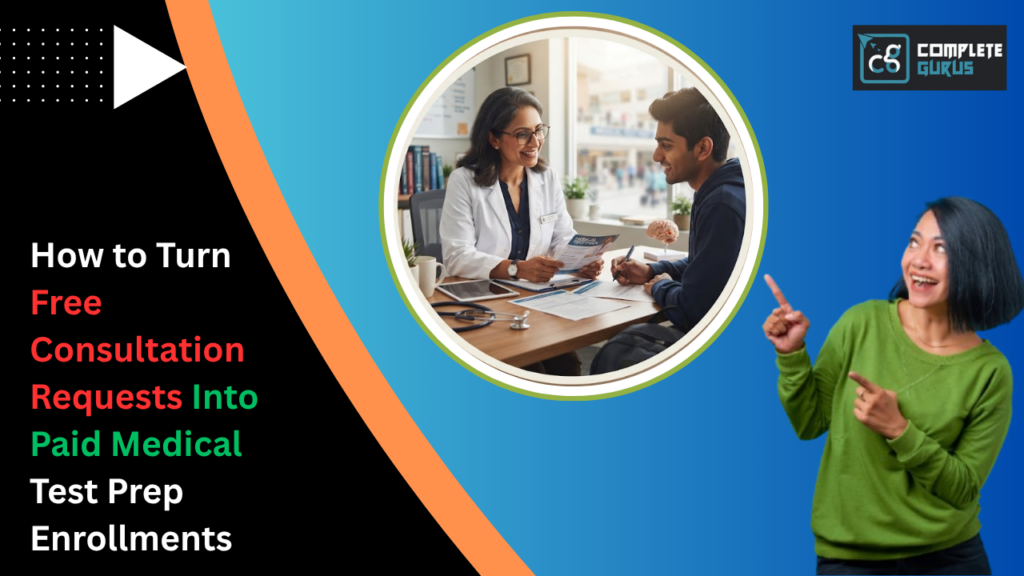
Free consultations are easy to book and painfully easy to lose. A prospective student fills out a form, hops on a call, nods along, says “this sounds great,” and then… disappears. If you run a medical test prep business NCLEX, USMLE, PLAB, NEET, MCAT, whatever your niche you already know this pattern intimately. The gap between “interested” and “enrolled” is where most revenue quietly evaporates. This article walks through exactly how to close that gap: what happens before the consultation even starts, how the conversation itself should be structured, why speed and follow-up matter more than most people admit, and how the systems behind your business your website, your CRM, your marketing funnel either support conversion or silently sabotage it. Along the way, we’ll talk about the kind of digital infrastructure and marketing support that companies like Complete Gurus help test prep businesses build, because a consultation is only as good as the machinery running behind it.
Why Free Consultations Attract Attention But Rarely Convert on Their Own
Here’s an uncomfortable truth: offering a free consultation is not a strategy. It’s a doorway. Anyone can open a door. What matters is what’s on the other side of it.
Medical test prep is a crowded, anxiety-heavy market. Students preparing for the NCLEX or the USMLE aren’t casually browsing; they’re stressed, time-poor, and usually comparing three or four programs at once, sometimes more. A free consultation gets them to raise their hand, but raising a hand and reaching for a wallet are two completely different acts of commitment.
Most test prep businesses treat the consultation as the finish line. They celebrate the booked call as if it were the sale. In reality, the booked call is the beginning of a much more delicate phase one where trust gets built or destroyed within about fifteen minutes. If you walk into that call thinking your job is to “close,” you’ve already lost the plot. Your job is to diagnose a problem the student is living with every single day and show them, credibly, that you understand it better than the five other tabs they have open in their browser.
The businesses that consistently turn these free calls into paid enrollments aren’t doing anything mystical. They’ve simply stopped treating the consultation as a formality and started treating it as the single highest-leverage touchpoint in their entire funnel.

Understanding What Students Actually Want Before They Say Yes
Before you can convert a lead, you need to understand what’s actually running through their head. Someone booking a free consultation for exam prep isn’t shopping the way they’d shop for a pair of shoes. They’re carrying real fear, fear of failing a licensing exam, fear of wasting money they don’t have to spare, fear of falling behind peers who already passed.
That emotional weight changes everything about how you should run the conversation. A student searching for USMLE Step 1 prep at 11 p.m. isn’t looking for a sales pitch about your course modules. They’re looking for reassurance that somebody, somewhere, has seen their exact situation before and knows how to get them through it.
This is where a lot of test prep companies stumble. They feature a number of practice questions, hours of video content, access to a question bank when the student actually wants to know one thing first: does this person understand my specific struggle? Are they going to treat me like a ticket number, or like a person with a deadline and a mortgage and maybe a family depending on this exam going well?
If your consultation opens with a feature rundown, you’ve skipped the part that actually builds trust. Start with listening. Ask about their exam date, their current score or practice test results, what’s tripped them up before, what they’ve already tried. Let them talk longer than you do. People convert toward businesses that make them feel understood, not businesses that talk the fastest.
The First 24 Hours: Why Speed Decides Everything
There’s a statistic that gets thrown around a lot in sales circles, and while the exact numbers vary by industry, the underlying truth holds firm in test prep: the odds of turning a lead into a paying student drop sharply with every hour that passes without contact.
Think about why. A student books a free consultation because they hit a moment of urgency, maybe they just got a disappointing practice exam score, maybe their exam date just got confirmed, maybe a friend mentioned your program. That urgency has a shelf life. If you respond in five minutes, you’re speaking to someone who’s still emotionally engaged with the problem. If you respond in two days, you’re speaking to someone who’s already booked three other consultations, maybe even paid a deposit somewhere else, and has moved on mentally.
Speed isn’t just about being responsive for the sake of good manners. It’s about catching the emotional window while it’s still open. This is one of the biggest, most fixable leaks in test prep businesses. Owners spend enormous energy generating leads through ads, SEO, and referrals, then let those leads sit in an inbox for a day and a half because nobody owns the follow-up process.
Fixing this doesn’t require hiring an army. It requires a system of automated confirmation emails the second someone books, a calendar that syncs instantly, a real human who calls or messages within the hour during business hours, and a fallback process for after-hours inquiries so nothing sits untouched overnight. Businesses that build this kind of responsive infrastructure consistently outperform competitors offering a nearly identical course, simply because they showed up first while the interest was still fresh.
Building a Consultation Experience That Feels Like a Diagnosis, Not a Sales Pitch
Doctors don’t prescribe medication before running tests. Yet plenty of test prep consultations skip straight to pitching a package before anyone has actually diagnosed the student’s weak points. That’s backwards, and students can feel it.
A consultation that converts well usually follows a rhythm that feels less like a sales call and more like a diagnostic session. You start by understanding where the student currently stands on their target exam, their timeline, their previous attempts if any, their study habits, their biggest fear about the exam. Then you reflect that back to them in plain language, showing you’ve actually absorbed what they said rather than waiting for your turn to talk.
Only after that diagnosis should you introduce your program, and even then, frame it as the answer to the specific gaps you just identified together, not as a generic list of features every visitor to your website would hear. If a student mentions they struggle with time management during practice exams, don’t recite your entire curriculum. Talk about how your program specifically addresses pacing and test-taking strategy. If someone mentions they failed a section before, address that directly instead of pretending it wasn’t said.
This kind of tailored conversation takes more skill than a scripted pitch, but it’s dramatically more persuasive. Students remember being understood far longer than they remember being sold to. And because medical test prep decisions often involve real money and real stakes, that feeling of being understood is frequently the deciding factor between “I’ll think about it” and “how do I get started.”
The Follow-Up Sequence Most Test Prep Companies Get Wrong
Somewhere around eighty percent of the effort in most sales processes goes into getting someone to say “maybe,” and almost none of it goes into what happens after. That imbalance shows up constantly in test prep. A consultation ends, the prospective student says they need to think about it, and then… silence. Maybe one follow-up email, generic and forgettable, sent a week later.
The businesses that consistently convert free consultations understand that follow-up isn’t a single event it’s a sequence, and each message in that sequence needs a distinct purpose. The first follow-up, sent within a day, should recap what was discussed and reinforce the specific plan tailored to that student, not a copy-paste template. It reminds them why the call felt valuable in the first place.
A second follow-up, a few days later, works well when it adds value rather than just nudging for a decision, maybe a short resource related to something they mentioned struggling with, or a testimonial from someone who had a nearly identical situation and passed. This shows continued investment in their success rather than just pursuit of their payment.
A third touchpoint should gently address the hesitation directly. If cost came up during the call, this is where you might mention payment plans or a limited enrollment window if one genuinely exists. If timing was the concern, this is where flexibility around start dates gets highlighted. The key is that this sequence isn’t a chain of identical “just checking in” messages each one should feel like it’s moving the conversation forward, not just occupying space in their inbox.
Businesses that build this sequence once, refine it based on what actually gets replies, and then apply it consistently see enrollment rates climb without ever having to increase how much they spend generating new leads. The leads were already there. The follow-up was the missing piece.
Turning Objections Around Price and Time Into Reasons to Enroll
Every free consultation eventually runs into resistance, and for medical test prep, that resistance almost always falls into two buckets: money and time. Students worry the program costs more than they can justify, or they worry they don’t have enough hours in the day to actually use it well.
The instinct many businesses have is to argue against these objections directly to insist the price is fair or that the time commitment is manageable. That approach often backfires because it puts you and the student on opposite sides of the table. A better approach reframes the objection rather than fighting it.
When the price comes up, the conversation shouldn’t be about defending the number. It should be about connecting the investment to what failing the exam actually costs: a delayed license, a delayed job, months of lost income, the emotional toll of retaking an exam that already felt overwhelming once. Framed that way, the price of a quality program often looks small next to the cost of not passing on the first attempt. This isn’t manipulation; it’s simply giving the student the full picture they need to make a genuinely informed decision, since most people underestimate the true cost of delay until someone points it out.
When time is the concern, the answer usually isn’t to promise the program requires less effort than it actually does that sets students up for disappointment and eventual refund requests. Instead, the better move is showing exactly how the program fits into a realistic schedule, using specific examples of study plans built around working professionals, parents, or students juggling other coursework. Specificity beats reassurance every time. A vague “you’ll find the time” convinces nobody. A concrete fifteen-week schedule broken into manageable weekly blocks does.
Using Data and CRM Systems to Track Every Lead Without Losing Momentum
Here’s something that rarely gets discussed openly: most test prep businesses lose enrollments not because their program is weak, but because their lead tracking is a mess. Leads arrive through a contact form, a phone call, an Instagram DM, a WhatsApp message, and an email inquiry, all landing in different places, and nobody has a single view of who’s been contacted, who’s still warm, and who’s gone cold.
A proper CRM system fixes this, and it doesn’t need to be complicated or expensive. What matters is that every consultation request, regardless of where it came from, lands in one place with a clear status: new, contacted, consultation scheduled, consultation completed, follow-up in progress, enrolled, or lost. This kind of visibility lets you spot leaks immediately. If you notice that leads sit for two days before first contact, you’ve found your speed problem. If you notice that consultations happen but follow-up rarely gets logged, you’ve found your sequencing problem.
Beyond tracking, data tells you which channels actually produce enrollments, not just inquiries. A social media ad might generate the most consultation bookings, but if those bookings convert at half the rate of leads coming through organic search or referrals, you’re potentially over-investing in a channel that looks good on the surface but performs poorly where it counts. Businesses that regularly review this kind of data adjust their marketing spend toward what actually fills seats, not just what fills a calendar.
This is one of the areas where working with a team that understands both the technical setup of CRM tools and the marketing side of things pays off enormously, because these two things need to talk to each other constantly. A lead capture form on your website is only useful if it feeds directly into a system your consultation team actually checks and updates.
The Role of Website Design and Landing Pages in the Conversion Journey
It’s easy to underestimate how much of the “free consultation to paid enrollment” journey actually starts before anyone books a call. Your website is doing silent, constant work or it’s quietly costing you enrollments you’ll never even know you lost.
Think about the last time you landed on a cluttered, outdated website while researching something important. Chances are you left within seconds, not because the underlying service was bad, but because the presentation didn’t inspire confidence. Medical test prep students, already anxious about their exams, are especially sensitive to this. A slow, confusing, or dated website reads as a red flag about the quality of the program itself, fairly or not.
A landing page built specifically for consultation bookings should do a few things well: state clearly and immediately who the program is for, address the core fear the visitor is likely carrying, show credible proof pass rates, testimonials, instructor credentials and make booking a consultation feel like a two-click decision rather than a scavenger hunt through a navigation menu. Every extra field on a booking form, every extra click required to find the “get started” button, is a small tax on your conversion rate.
This is also where good web design work becomes directly tied to revenue rather than just aesthetics. A well-structured, fast-loading site with a clean booking flow can lift consultation bookings noticeably compared to a generic template stitched together years ago and never revisited. It’s not about flashy design for its own sake, it’s about removing friction between someone’s curiosity and their decision to talk to you.
Why Your Digital Marketing Strategy Shapes Who Books a Consultation in the First Place
Conversion doesn’t start at the consultation. It starts with who you’re attracting in the first place. A marketing strategy that pulls in the wrong audience of people who aren’t seriously preparing for their exam, or who are shopping purely on price will always produce weak consultation-to-enrollment numbers, no matter how skilled your team is on the call.
Search engine optimization plays a bigger role here than many test prep businesses realize. Someone actively searching for something specific, like preparation strategies for a particular exam section they’re struggling with, is showing far more intent than someone who clicked a broad, generic ad. Ranking well for these specific, intent-driven searches brings in students who are already partway convinced they need help, which makes the consultation conversation dramatically easier.
Social media marketing works differently but complements this well. It builds familiarity and trust before someone ever fills out a form. A student who has already seen a few helpful, genuine posts about exam strategy from your brand walks into a free consultation with a head start on trust that a cold lead simply doesn’t have. This is why content that actually helps sample questions, study tips, and honest breakdowns of what the exam actually tests tends to outperform purely promotional content in the long run.
The businesses that see the highest consultation-to-enrollment rates usually aren’t the ones spending the most on ads. They’re the ones whose marketing and consultation process are aligned, where the messaging that attracted the lead matches exactly what gets reinforced on the call. Mismatched expectations between your marketing and your actual consultation are one of the quietest conversion killers in the industry.
Training Your Consultation Team to Sell Without Sounding Like Salespeople
If you’re running consultations yourself, you probably already have decent instincts about your students. But as businesses grow and consultations get handed off to admissions counselors or a growing sales team, quality control becomes a real challenge, and inconsistency here quietly erodes conversion rates.
The strongest consultation teams share a few habits. They ask more questions than they answer in the first half of the call. They resist the urge to fill silence. Sometimes a student needs a moment to think before responding, and jumping in to fill that gap can feel pushy. They know their program well enough to speak about it specifically rather than in vague marketing language, because specificity signals competence far more than enthusiasm does.
They also know when to be honest about fit. Counterintuitively, telling a student your program might not be the right match for their particular situation, maybe their timeline is too short, or their needs would be better served by a different format builds far more trust than trying to force a sale that won’t work out. Word travels fast in tight-knit student communities preparing for the same licensing exams, and a reputation for honesty compounds over time into referrals that no amount of ad spend can replicate.
Regular call reviews, whether through recordings or shadowing, help maintain this standard as a team grows. What feels natural to a founder who’s done hundreds of these calls doesn’t automatically transfer to a new hire without some structured coaching around it.

Retention Starts at Enrollment: Setting Expectations That Stick
One thing that gets overlooked in conversations about turning consultations into enrollments is what happens immediately after someone says yes. The way you handle those first few days after enrollment doesn’t just affect satisfaction it directly affects your future consultation-to-enrollment rate, because happy students become your best source of referrals and testimonials, and disappointed ones become quiet reasons future leads hesitate.
Setting clear, honest expectations during the consultation about what the program actually involves, how much time it realistically requires, and what kind of support students can expect prevents the kind of early disappointment that leads to refund requests or negative word of mouth. Overpromising during a sales call might close a few extra enrollments in the short term, but it tends to cost far more in reputation over the following months.
A smooth onboarding experience, a welcome call, clear first steps, an easy-to-navigate learning platform reinforces that the decision to enroll was a good one. This matters more than it might seem, because buyer’s remorse is real, especially with a purchase tied to something as emotionally loaded as a licensing exam. The businesses that treat the first week after enrollment with as much care as the consultation itself tend to see stronger retention and, over time, a growing base of former students actively recommending them to the next wave of test-takers.
Suggested Reading: Does ChatGPT Ads Use CPC or CPM Pricing?
Conclusion
Turning free consultation requests into paid medical test prep enrollments isn’t about a single clever script or one magic follow-up email. It’s the sum of many smaller decisions done consistently well, responding fast while urgency is still alive, listening before pitching, following up with purpose instead of just persistence, tracking every lead so nothing slips through the cracks, and making sure your website and marketing set the right expectations from the very first click. Students preparing for medical licensing exams are making a high-stakes decision under real pressure, and the businesses that win their trust are the ones that treat the entire journey, from first ad impression to first day of class, as one continuous relationship rather than a series of disconnected transactions. Get those pieces working together, and the free consultation stops being a formality and starts being exactly what it should be: the moment a stressed, uncertain student decides they’ve finally found the right people to help them get through their exam.
If you’re a test prep business trying to build this kind of system but don’t have the in-house web development, marketing, or CRM expertise to pull it together, this is exactly where Complete Gurus fits in. They work with businesses looking to hire affordable, experienced developers, designers, SEO specialists, social media marketers, and virtual assistants, starting at rates as low as $3 an hour, without the overhead of building a full internal team. Whether it’s rebuilding a slow, outdated booking page into something that actually converts, setting up a CRM workflow that keeps every consultation lead visible and followed up on time, running SEO to attract students who are already searching with intent, or managing the day-to-day marketing and virtual assistant work that keeps a growing test prep business organized, Complete Gurus provides the kind of dedicated, vetted talent that lets you focus on what you do best: helping students actually pass their exams, while the systems behind your enrollments finally start working for you instead of against you.
Want this saved as a Word document or formatted as a downloadable file instead?

Ashutosh Mishra is an AI Visibility & Performance Marketing Expert with 14+ years of experience helping businesses grow through AI Visibility (AEO/GEO), Google Ads, Meta Ads, and SEO. He partners with founders and business leaders to build data-driven growth strategies that increase visibility, improve marketing performance, and help businesses get discovered, trusted, and recommended in the age of AI.