
Quick Summary
Combining Google Ads and Facebook Ads gives kids’ apparel brands a stronger, full-funnel digital marketing strategy. Google Ads helps capture high-intent shoppers actively searching for children’s clothing, while Facebook and Instagram Ads help brands reach new parents, build awareness and engage potential customers through visually appealing fashion content.
By using both platforms together, kids’ apparel brands can connect with customers throughout the buying journey, from initial discovery and consideration to retargeting and purchase. Tracking performance, testing audiences and creatives, and continuously optimising campaigns can help improve conversions, control acquisition costs and generate better ROI.
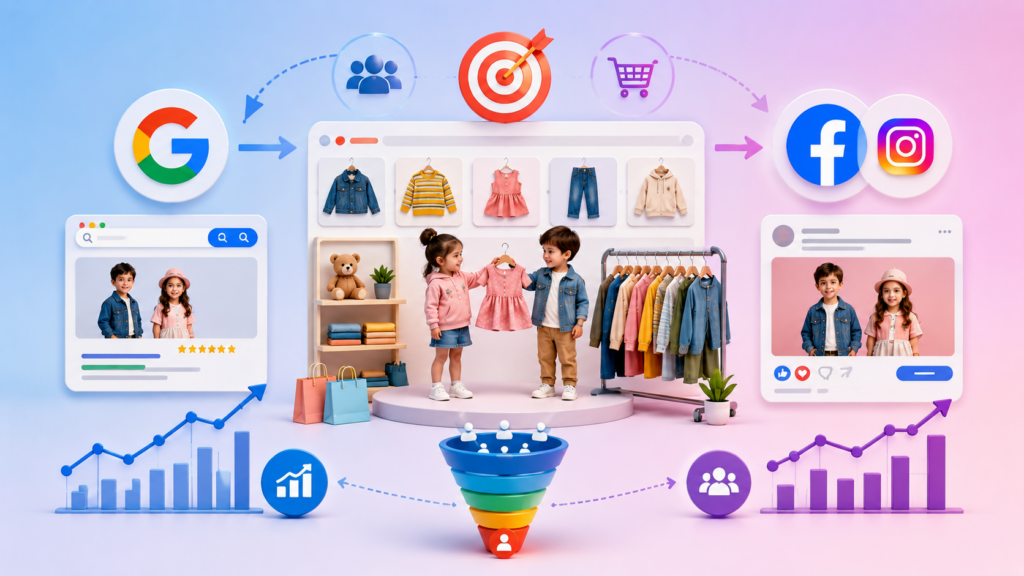
In today’s digitally driven marketplace, kids’ apparel brands are thriving by leveraging smart, data-backed marketing strategies. Among the most powerful tools in a modern marketer’s arsenal are Google and Facebook Ads. When used in tandem, they can amplify reach, drive conversions, and create a strong brand presence.
In this in-depth guide, we’ll explore how to effectively combine Google and Facebook Ads for kids’ apparel, crafting a marketing strategy that drives real, measurable results.
Why Kids’ Apparel Brands Need a Solid Ad Strategy
The children’s clothing market is highly competitive. With thousands of local and global brands vying for the attention of parents, standing out requires more than cute clothes and trendy designs.
You need visibility. You need trust. You need conversions.
And that’s where Google and Facebook Ads come in. These platforms allow brands to:
- Reach highly targeted audiences (especially parents)
- Drive both online and in-store sales
- Retarget visitors who didn’t buy the first time
- Showcase seasonal and promotional collections
Understanding the Platforms: Google vs. Facebook
Google Ads
Google Ads excels at intent-based marketing. Parents who search for terms like “best organic baby clothes” or “affordable kids’ party wear” are already looking to buy. Your ad can appear right at the moment they’re making a decision.
Benefits of Google Ads for Kids’ Apparel:
- Appear in search results when users are ready to buy
- Ideal for showcasing product listings via Google Shopping
- Drive high-quality traffic to product or category pages
Facebook (Meta) Ads
Facebook and Instagram (part of Meta) dominate when it comes to visual storytelling and interest-based targeting.
Benefits of Facebook Ads for Apparel Brands:
- Visual ads (carousel, video, stories) are perfect for displaying outfits
- Detailed audience targeting (parents of toddlers, fashion-conscious moms, etc.)
- Great for brand awareness and retargeting campaigns
If you’re unsure how to execute these campaigns professionally, hire expert digital marketers who understand both platforms inside-out.
Creating a Unified Ad Strategy
To truly harness the power of Google and Facebook Ads for kids’ apparel, your campaigns must be integrated and complementary. Here’s how to do it:
1. Define Your Target Audience
Who are you selling to? It’s not just “parents” — narrow it down:
- Age group of the kids (infants, toddlers, pre-teens)
- Style preference (trendy, organic, seasonal, occasion wear)
- Buyer behavior (online shoppers, discount seekers, boutique lovers)
Facebook allows targeting parents by the age of their children. Google helps you capture those actively searching. Use this dual approach to cover both intent and discovery.
2. Create Coordinated Campaign Themes
Let’s say you’re launching a Summer Collection:
- Google Ads: Target high-conversion search keywords like “summer dresses for girls”, “lightweight boys’ rompers”.
- Facebook Ads: Create a video showing kids playing outdoors in your outfits, promoting the “Summer Vibes” collection.
Both platforms push the same message from different angles—visibility + intent = conversions.
3. Build Landing Pages That Convert
You can run the best ads in the world, but if your website doesn’t deliver a seamless experience, sales will drop.
What makes a great landing page?
- Fast loading speed
- Mobile responsiveness
- Clear product info & sizing guide
- Easy navigation & checkout process
Need help optimizing your online store or landing pages? Consider hiring a professional developer and designer to enhance the user experience.
How to Run Successful Meta Ads for Organic and Sustainable Kids’ Clothing
 4. Leverage Retargeting to Maximize ROI
Only a fraction of visitors convert on their first visit. Retargeting can bring them back.
- Google Display Network: Show product banners on other websites they browse.
- Facebook Dynamic Ads: Automatically show the exact products a visitor viewed earlier.
Example: A mom checks out a blue dungaree for her toddler but doesn’t buy. A few days later, she sees the same product in her Instagram feed—now discounted. The result? A likely conversion.
5. Invest in Seasonal & Promotional Campaigns
The kids’ apparel industry thrives on seasonality and events—back to school, holidays, festivals, birthdays.
Design campaigns around:
- Festive clothing collections
- Limited-time offers
- “Buy more, save more” deals
On Google, bid on timely keywords like “Easter outfits for babies”. On Facebook, roll out eye-catching creatives with a countdown timer.
6. Use UGC and Social Proof in Facebook Ads
Parents trust other parents. Showcase real customers wearing your products. Encourage photo reviews or run contests asking customers to post pictures of their kids in your outfits.
UGC (User Generated Content) can increase engagement and trust dramatically—ideal for Facebook and Instagram feeds.
7. Monitor, Test, Optimize
Success isn’t about setting and forgetting ads. Use data to:
- Identify top-performing keywords and creatives
- Adjust bids and targeting
- Test A/B versions of ad copy, visuals, and CTAs
If this sounds overwhelming, get in touch with our digital marketing experts. We can create and manage high-ROI campaigns for you.
8. Budgeting Smartly
How much should you spend on these ads?
For kids’ apparel, your budget should consider:
- Customer Lifetime Value (CLV)
- Average order value
- Return on Ad Spend (ROAS) goals
Start with a split test budget, allocating 60% to Google (for search & shopping ads) and 40% to Facebook (for visuals & retargeting). Over time, shift the budget based on performance insights.
Also, make sure your financial backend is optimized—our accounting services can help you track ad expenses and ROI more clearly.
Bonus Tips to Maximize Ad Impact
✅ Collaborate with Influencers
Kids’ fashion influencers on Instagram can significantly boost trust and visibility.
✅ Localize Your Ads
If you’re a boutique or local brand, use geo-targeting to run ads only in nearby cities or states.
✅ Offer Freebies or Discounts
“Free Headband with Every Dress” or “10% Off on First Order” are great hooks for first-time buyers.
Real-Life Example:
Let’s say you’re a brand called “LittleSun.”
- On Google Ads, you run search ads for “eco-friendly baby clothes.”
- On Facebook, you show a carousel ad with smiling toddlers in your collection, plus a testimonial from a happy parent.
- A user clicks your ad, views the site but doesn’t buy. Two days later, she sees a retargeting ad on Instagram: “Still thinking? Enjoy 10% off your first order.”
Boom! Sale closed. This is the power of a dual-platform approach.
The Power of Google Shopping Ads for Kids’ Fashion Retailers
Conclusion: Combine, Don’t Choose
To stand out in the competitive world of kids’ fashion, you need more than just a cute collection—you need a smart, integrated marketing strategy. By combining Google and Facebook Ads, you can reach parents at every stage of their buying journey—from awareness to decision-making to purchase.
Whether you’re just getting started or want to optimize your campaigns, we’re here to help. From ads to landing pages, from developers to designers, you’ll find all the support you need at Complete Gurus.

Ashutosh Mishra is an AI Visibility & Performance Marketing Expert with 14+ years of experience helping businesses grow through AI Visibility (AEO/GEO), Google Ads, Meta Ads, and SEO. He partners with founders and business leaders to build data-driven growth strategies that increase visibility, improve marketing performance, and help businesses get discovered, trusted, and recommended in the age of AI.