
Quick Summary
This article shares a personal, experience-based account of how the author grew app installs organically through App Store Optimization (ASO) instead of paid advertising. Key tactics covered include keyword research aligned with real user search intent (favoring long-tail phrases over competitive terms), optimizing the app title and description for both discoverability and conversion, improving visual assets like icons and screenshots, encouraging well-timed positive reviews, running continuous A/B tests, localizing listings for global markets, and studying competitor apps for insights. The piece frames ASO as an ongoing, data-driven process rather than a one-time fix.
The article concludes by noting that sustained, consistent optimization across these areas led to steady organic growth in installs and visibility over several months, and closes with a promotional mention of “Complete Gurus,” an agency offering professional ASO services for developers looking to accelerate similar results.
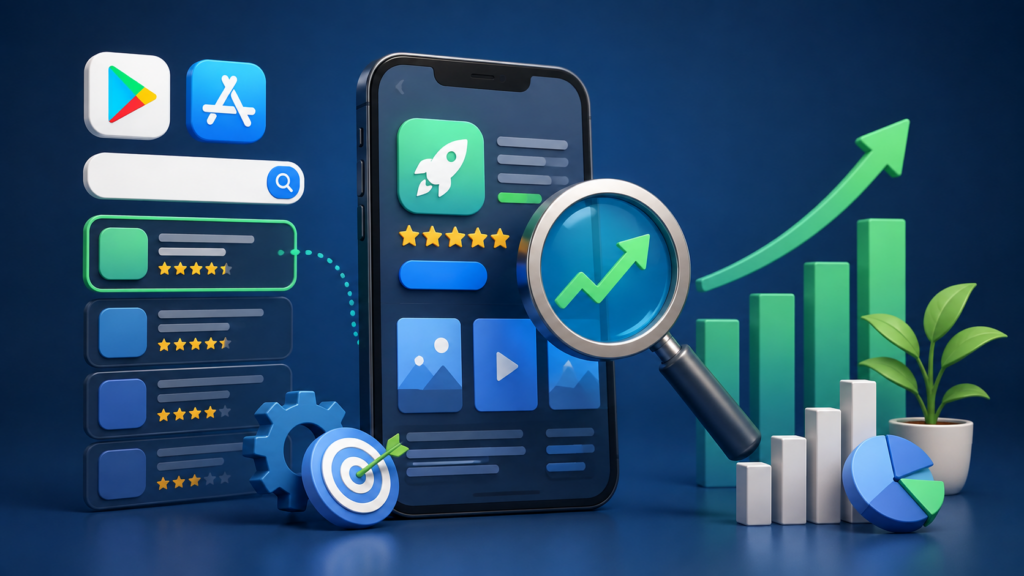
The mobile app market is crowded, competitive, and constantly evolving. Millions of apps compete for attention on platforms like Google Play and Apple’s App Store. In such a crowded environment, getting installed without spending money on advertisements may seem nearly impossible. Yet many successful apps grow organically using a powerful strategy known as App Store Optimization, or ASO.
ASO focuses on improving an app’s visibility in app store search results and converting visitors into users through optimized listings, keywords, visuals, and ratings. Studies show that most app downloads come from organic search within app stores, which makes ASO one of the most cost-effective strategies for increasing installs.
When I first launched my app, installs were painfully slow. The app was good, the design was clean, and the functionality worked perfectly. Yet users simply couldn’t find it. Paid ads were not an option for my budget, so I had to rely on smarter strategies instead of spending money.
What followed was a journey of experimentation, research, and continuous optimization. By implementing strong ASO strategies, I was able to dramatically increase installs without running a single paid ad campaign. The process wasn’t instant, but the results were powerful and sustainable.
This article shares the real strategies that made the biggest difference.
Understanding the Real Power of ASO
Before diving into specific tactics, it’s important to understand why ASO matters so much for app growth.
App stores operate like search engines. When a user searches for something like “fitness tracker,” “budget planner,” or “photo editor,” the store algorithm decides which apps appear first. If your app listing is optimized correctly, it will appear higher in those search results.
Higher visibility means more impressions. More impressions lead to more clicks. And more clicks eventually translate into more installs.
Unlike paid ads, ASO builds long-term organic growth. A properly optimized app can keep generating downloads for months or even years without additional marketing costs.
When I realized this, I stopped focusing on marketing tricks and started focusing on discoverability.
The First Lesson: Apps Don’t Grow If Users Can’t Find Them
The biggest mistake many developers make is assuming that a good product will automatically attract users.
Unfortunately, that’s not how app stores work.
Without proper optimization, even the best apps can remain invisible. The store algorithm simply doesn’t know which users should see your app.
That’s why ASO focuses heavily on matching your app with the exact keywords that users search for.
Once I started analyzing how people searched for apps similar to mine, I discovered a simple truth: my app listing was not aligned with real user searches.
Fixing that became my first major strategy.
Keyword Research That Matches Real User Intent
Keyword research is the backbone of ASO. Every successful optimization strategy begins with understanding how users search.
Instead of guessing keywords, I started researching phrases users typed into the app store search bar.
These were not always the obvious ones.
Sometimes the best keywords were long-tail phrases that competitors ignored. For example, instead of targeting a very competitive keyword like “fitness app,” a phrase like “daily home workout planner” could attract more specific users with less competition.
Successful ASO strategies focus on relevance rather than volume. The goal is not just traffic, but traffic from users who actually want your app.
Once I discovered the right keywords, I integrated them naturally into several parts of my app listing.
These included the title, subtitle, and description. App store algorithms combine these elements when determining which searches your app should appear for.
The results were gradual but noticeable. Within a few weeks, my app started appearing in search results that previously showed only competitors.
Optimizing the App Title for Maximum Visibility
Your app title is one of the most powerful ranking signals in ASO.
App stores treat the title almost like a headline for search indexing. If your main keyword appears in the title, the algorithm understands that your app is relevant to that search.
However, the title must remain readable and attractive to users.
Instead of stuffing keywords, I focused on clarity.
A strong title should instantly communicate what the app does and why someone should download it.
For example, instead of a vague name like “FitTrack,” a title like “FitTrack – Daily Home Workout Planner” communicates both branding and functionality.
This simple change improved my search visibility significantly.
Writing Descriptions That Convert Visitors into Installs
While keywords help users discover your app, the description plays a different role.
Its purpose is persuasion.
When users land on your app page, they want quick answers to several questions:
What does this app do
How will it help me
Why should I choose it instead of others
The description must address these questions clearly and quickly.
Instead of writing a long technical explanation, I focused on storytelling. I explained the problem users face and how the app solves it.
Short paragraphs, engaging language, and strong value propositions helped convert more visitors into downloads.
The first few lines of the description became especially important because they appear in the preview section of the listing.
Visual Optimization That Drives More Clicks
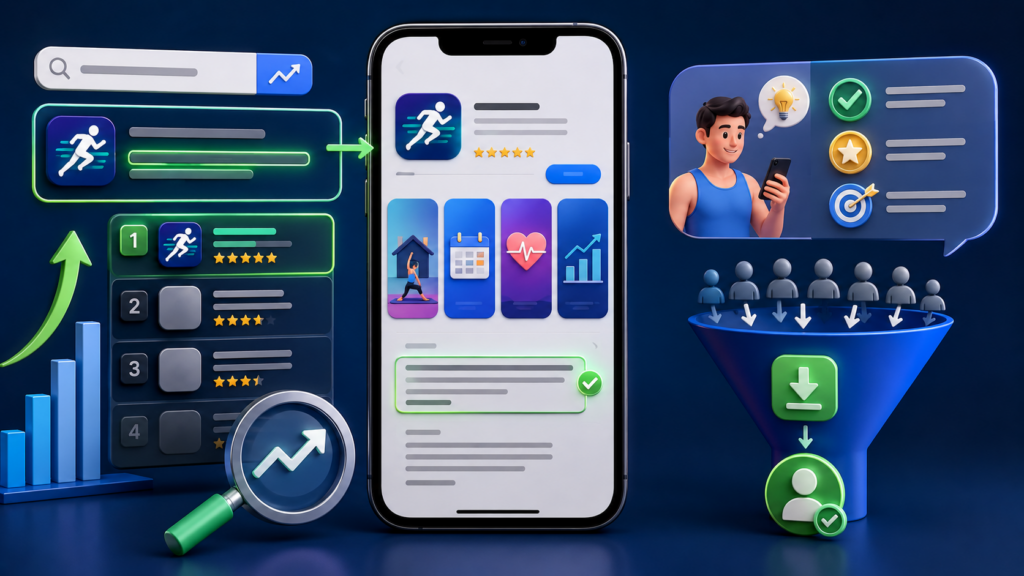
One of the most underestimated ASO strategies is visual optimization.
Users rarely read everything on the page. Instead, they scan screenshots and visuals to decide whether an app looks useful.
Icons, screenshots, and preview videos play a critical role in convincing users to download.
An appealing icon immediately attracts attention in search results. Screenshots then tell the story of how the app works.
After redesigning my app screenshots, I saw a noticeable increase in conversion rates.
Instead of showing random screens, I designed visuals that highlighted the main benefits of the app.
Each screenshot explained a feature and its advantage for the user.
Clear visuals often communicate value faster than text.
Improving Ratings and Reviews for Better Rankings
User ratings and reviews influence both visibility and trust.
Apps with higher ratings tend to rank better and attract more downloads.
Encouraging positive feedback became an important part of my ASO strategy.
Instead of forcing users to leave reviews, I focused on timing.
After users completed a successful action in the app, a friendly prompt asked for feedback.
Happy users were more likely to leave positive reviews at that moment.
Responding to reviews also helped improve the overall perception of the app.
App stores consider user engagement and satisfaction when ranking apps, so maintaining a good rating can significantly improve discoverability.

Continuous A/B Testing for Better Performance
ASO is not a one-time task.
It requires constant experimentation.
I started testing different versions of icons, screenshots, and descriptions to see which ones performed better.
A/B testing allowed me to compare different versions of my app page and measure which one generated more installs.
Even small changes sometimes produced surprising results.
For example, changing the background color of screenshots or adjusting headline text could significantly increase conversions.
Continuous optimization gradually improved both visibility and downloads.
Localization to Reach New Global Audiences
Another powerful ASO strategy was localization.
Instead of targeting only English-speaking users, I adapted my app listing for other languages and regions.
This included translating keywords, descriptions, and screenshots.
Localization allowed my app to appear in search results in multiple countries.
Many developers overlook this opportunity, but global markets can generate a huge number of installs.
Even simple localization changes can expand your audience dramatically.
Learning from Competitor Apps
Competitor analysis became one of the most valuable parts of my ASO process.
By studying top apps in my category, I could identify patterns.
Which keywords were they targeting
How were they structuring their titles
What kind of screenshots did they use
This research helped me understand what worked and what didn’t.
It also revealed gaps in the market where my app could stand out.
Instead of copying competitors, I focused on improving what they were already doing.
This approach allowed my app to compete with larger brands despite having a smaller marketing budget.
Tracking Performance and Adapting Strategies
Data plays a crucial role in ASO success.
Every change must be measured.
I monitored keyword rankings, conversion rates, and install trends regularly. If a strategy didn’t improve results, it was adjusted or replaced.
Successful apps constantly adapt to changes in user behavior and store algorithms.
This ongoing optimization ensures that the app continues growing over time.
How Organic ASO Growth Changed My App
The results of these strategies did not appear overnight.
However, after several months of consistent optimization, the growth became undeniable.
Installs increased steadily without any advertising costs.
Search visibility improved, conversion rates increased, and user engagement became stronger.
The most satisfying part was knowing that the growth was sustainable.
Instead of depending on paid campaigns, the app generated organic downloads through search discovery.
Suggested Reading: Why My App Was Not Ranking in Play Store (And How ASO Fixed It)
Conclusion
Growing an app without ads may seem challenging, but it is absolutely possible with the right approach. App Store Optimization focuses on the fundamentals of discoverability, user experience, and conversion.
When keyword research, metadata optimization, visual assets, reviews, and continuous testing work together, the results can be remarkable. ASO allows apps to gain visibility, attract the right users, and build long-term organic growth without relying on expensive advertising campaigns.
For businesses and developers who want to improve their app’s performance in the app stores, working with experienced professionals can accelerate results significantly. The experts at Complete Gurus specialize in improving app visibility through data-driven App Store Optimization strategies. Their team focuses on keyword research, app listing optimization, visual asset improvement, and review management to help apps rank higher and gain more organic downloads. If you are looking to increase installs without relying heavily on ads, exploring the professional ASO solutions available at Complete Gurus can be a powerful step toward sustainable app growth.

Ashutosh Mishra is an AI Visibility & Performance Marketing Expert with 14+ years of experience helping businesses grow through AI Visibility (AEO/GEO), Google Ads, Meta Ads, and SEO. He partners with founders and business leaders to build data-driven growth strategies that increase visibility, improve marketing performance, and help businesses get discovered, trusted, and recommended in the age of AI.