
Quick Summary
This blog post shares a personal narrative about shifting from an exhausting outbound sales approach (cold emails, cold calls) to using LinkedIn strategically to attract high-ticket B2B clients. The author explains how treating their LinkedIn profile like a landing page rather than a resume, posting intentional and insight-driven content instead of random updates, and prioritizing genuine conversations over hard selling gradually built authority and trust with decision-makers.
The core themes are consistency over virality, patience in B2B sales cycles, personal branding over logo-based marketing, and “selling without selling” through education and clarity. The piece concludes by positioning LinkedIn as a long-term ecosystem for client acquisition rather than a quick-win tactic, and points readers toward Complete Gurus for LinkedIn marketing, branding, and lead generation services.

There was a time when I believed landing high-ticket B2B clients required endless cold emails, uncomfortable sales calls, and a constant chase that drained both energy and confidence. I was working hard, showing up every day, doing what most people said would work yet the results were inconsistent. Some months felt promising, while others felt like starting from scratch all over again.
Then something shifted. Not overnight, not magically, but steadily and powerfully. That shift came from understanding and leveraging LinkedIn marketing in a way that felt natural, strategic, and human. What started as an experiment eventually became the most reliable source of premium clients who respected my work, valued my expertise, and were willing to invest accordingly.
This is not a story about shortcuts. It’s about clarity, positioning, and building genuine authority in a space where decision-makers actually pay attention.
The Moment I Realized I Was Doing It All Wrong
For a long time, I treated LinkedIn like a digital resume. I would log in occasionally, update a few details, maybe like a post or two, and log out. It felt passive, almost irrelevant compared to the “real” marketing I thought was happening elsewhere.
But here’s what I didn’t realize back then LinkedIn wasn’t just another social platform. It was a room full of business owners, founders, CEOs, and decision-makers actively looking for solutions.
The problem wasn’t LinkedIn. The problem was how I was using it.
I was invisible.
And invisibility doesn’t attract high-ticket clients.
Understanding the Psychology of High-Ticket Clients
Before anything changed externally, something had to change internally my understanding of who I was trying to attract.
High-ticket B2B clients don’t respond to noise. They don’t engage with generic pitches or desperate outreach. They are looking for clarity, authority, and confidence.
They want to feel like you understand their problems before they even explain them.
That realization changed everything.
Instead of asking, “How do I sell more?” I started asking, “How do I position myself as someone worth buying from?”
That question became the foundation of my LinkedIn strategy.
Building a Profile That Speaks Before I Do
The first transformation didn’t happen in my content. It happened on my profile.
I stopped treating it like a resume and started treating it like a landing page.
Every section had a purpose. The headline was no longer about my job title, it was about the result I delivered. The summary wasn’t a list of achievements, it became a story that connected with the reader’s challenges. Even my featured section became a curated showcase of proof, credibility, and transformation.
When someone landed on my profile, they didn’t see what I did. They saw how I could help them.
And that small shift started attracting the right kind of attention.
From Posting Randomly to Creating Intentional Content
At first, my content was inconsistent. I posted when I felt like it, wrote whatever came to mind, and hoped something would resonate.
It rarely did.
Then I began to study what actually worked not just in terms of likes, but in terms of conversations and conversions.
I realized that high-ticket clients don’t engage with surface-level content. They engage with insight.
So I changed my approach.
I started sharing experiences, not just information. I spoke about real challenges, real client scenarios, and real solutions. Instead of trying to impress, I focused on being clear and relatable.
Some posts talked about mistakes I made. Others highlighted patterns I noticed in my industry. Many simply addressed questions my ideal clients were already asking in their heads.
That’s when engagement started to feel different.
People weren’t just liking my posts, they were messaging me.
Why Consistency Became My Competitive Advantage
One of the biggest myths I believed early on was that going viral was the key to success.
It isn’t.
Consistency is.
Showing up regularly builds familiarity. Familiarity built trust. And trust opened doors to conversations that mattered.
There were weeks when my posts didn’t perform exceptionally well, but something interesting still happened. People were watching quietly.
They were observing, evaluating, and forming an impression over time.
And when they were finally ready, they reached out.
High-ticket clients don’t usually engage immediately. But they do notice consistency.
The Power of Conversations Over Conversions
At some point, I stopped chasing conversions directly.
Instead, I focused on conversations.
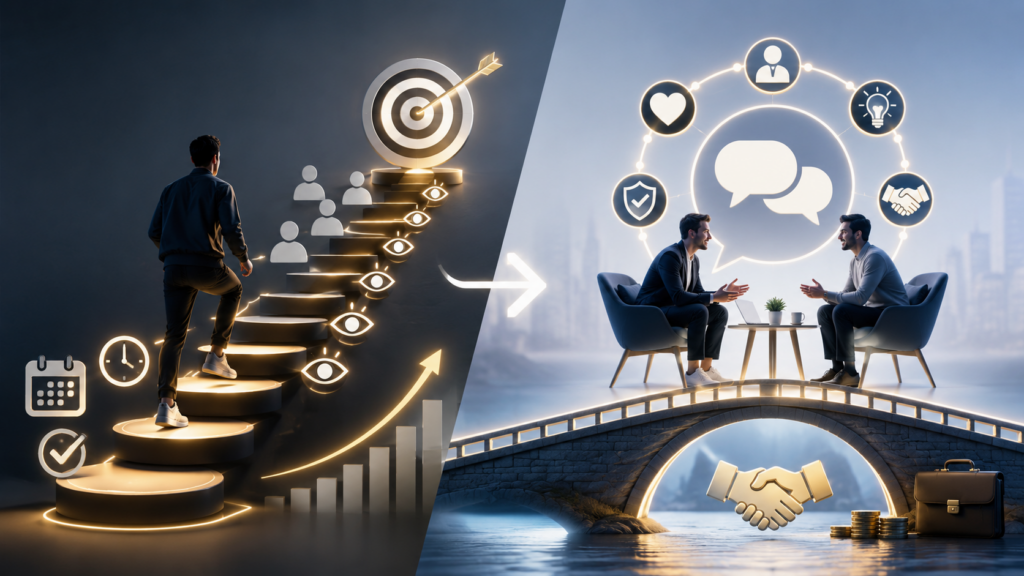
When someone commented on my post, I replied thoughtfully. When someone connected with me, I didn’t send a sales pitch, I started a genuine conversation. I asked questions, listened carefully, and responded with intention.
This changed the tone of my interactions completely.
Instead of feeling like a salesperson, I felt like a consultant.
And people responded differently.
They opened up about their challenges. They shared details about their business. They trusted me with information they wouldn’t normally share with someone trying to sell to them.
That trust became the bridge to high-value deals.
How Authority Is Built Without Claiming It
There’s something interesting about authority on LinkedIn.
You don’t build it by saying, “I’m an expert.”
You build it by showing how you think.
When I started breaking down complex ideas into simple, practical insights, people began to see me differently. When I shared real outcomes and explained the process behind them, my credibility grew naturally.
I didn’t need to convince anyone.
My content did that for me.
Over time, people started referencing my posts in conversations. They mentioned things I had written weeks earlier. That’s when I knew something had shifted.
I wasn’t just posting content anymore.
I was shaping perception.
The Role of Strategic Positioning in High-Ticket Sales
One of the biggest lessons I learned was that pricing is directly connected to positioning.
If you present yourself as a generalist, you attract general inquiries. But if you position yourself as someone who solves specific, high-value problems, you attract serious clients.
I refined my messaging to reflect that.
Instead of talking about broad services, I focused on outcomes. Instead of appealing to everyone, I spoke directly to a defined audience.
That clarity made it easier for the right people to recognize me as the right fit.
And when they did, price was no longer the primary concern.
Why Inbound Always Outperformed Outbound for Me
Before LinkedIn, most of my efforts were outbound. I was reaching out, pitching, following up, and hoping for responses.
It was exhausting.
LinkedIn flipped that dynamic.
When done right, it created inbound opportunities for people coming to me, already interested, already aware, already considering working together.
These conversations were completely different.
There was less resistance, less convincing, and far more alignment.
Inbound didn’t just make things easier, it made them more effective.
Leveraging Storytelling to Build Real Connections
Facts inform, but stories connect.
When I began sharing stories about client journeys, personal challenges, and lessons learned something changed.
People started relating to my content on a deeper level.
They saw themselves in those stories. They recognized their own struggles and aspirations.
And that emotional connection made them more likely to trust me.
Storytelling became one of the most powerful tools in my LinkedIn strategy.
Understanding Timing and Patience in B2B Marketing
One of the most important things I learned is that B2B decisions take time.
High-ticket clients don’t make impulsive decisions. They observe, evaluate, and think carefully before committing.
That means your content needs to nurture them over time.
There were clients who reached out to me after months of following my content. Some even mentioned that they had been silently watching for a long time before initiating a conversation.
If I had given up earlier, those opportunities would have never materialized.
Patience isn’t optional in LinkedIn marketing, it’s essential.
The Hidden Impact of Personal Branding
At first, I thought LinkedIn marketing was about promoting services.
It isn’t.
It’s about building a personal brand.
People don’t connect with logos. They connect with individuals.
When I allowed my personality to come through my thoughts, opinions, and perspectives my content became more relatable and memorable.
That’s when people started recognizing me, not just my work.
And recognition is a powerful driver of trust.
How I Integrated Multiple Digital Marketing Services
As my LinkedIn presence grew, so did the opportunities to offer more than just one service.
Clients who came in for one solution often needed others whether it was branding, lead generation, ad campaigns, or content strategy.
Because I had positioned myself as someone who understands business growth holistically, it felt natural to expand those conversations.
This is where having a broader digital marketing ecosystem became valuable.
Instead of being a one-service provider, I became a growth partner.
And that significantly increased the value of each client relationship.

The Subtle Art of Selling Without Selling
One of the most interesting outcomes of LinkedIn marketing is that you don’t have to sell aggressively.
In fact, the more you try to push, the less effective it becomes.
Instead, I focused on educating, sharing, and guiding.
When people understood the value I bring, selling became a natural extension of the conversation.
There was no pressure.
Just clarity.
And clarity converts.
What Truly Made the Difference
Looking back, it wasn’t one single tactic that changed everything.
It was a combination of clarity, consistency, and connection.
Understanding my audience deeply. Showing up regularly. Engaging meaningfully. Positioning strategically.
All of these elements worked together to create a system that attracted high-ticket clients consistently.
And the best part?
It didn’t feel forced.
It felt aligned.
Suggested Reading: Facebook Ads vs Google Ads for Doctors – Which Is More Effective?
Conclusion: Turning LinkedIn Into a High-Ticket Client Magnet
If there’s one thing I’ve learned through this journey, it’s that LinkedIn marketing is not about quick wins. It’s about building something sustainable.
When done right, it becomes more than just a platform, it becomes a powerful ecosystem for attracting the right clients, building authority, and growing your business in a way that feels authentic.
For anyone looking to replicate this kind of growth, the focus shouldn’t be on copying strategies blindly. It should be on understanding the principles behind them and applying them in a way that aligns with your voice and your audience.
This is where working with the right guidance can make a significant difference. Platforms and strategies evolve, but the fundamentals of positioning, content, and connection remain consistent. Businesses like Complete Gurus understand this deeply, offering a blend of LinkedIn marketing, branding, lead generation, and performance-driven digital strategies that help businesses not just attract attention, but convert it into meaningful growth. If you’re serious about turning LinkedIn into a high-ticket client acquisition channel, exploring what they offer at https://completegurus.com/ might just be the step that transforms your approach and your results.

Ashutosh Mishra is an AI Visibility & Performance Marketing Expert with 14+ years of experience helping businesses grow through AI Visibility (AEO/GEO), Google Ads, Meta Ads, and SEO. He partners with founders and business leaders to build data-driven growth strategies that increase visibility, improve marketing performance, and help businesses get discovered, trusted, and recommended in the age of AI.